By JEFF POWELL MBE, SPORTS WRITER AND BOXING COLUMNIST
Even the most hardened boxing fans can occasionally be taken aback by the staggering depths of brutality that two human beings are capable of inflicting upon each other inside the squared circle. This reality becomes even more pronounced when the combatants are heavyweights, towering athletes whose every landed blow carries the force of a falling anvil.
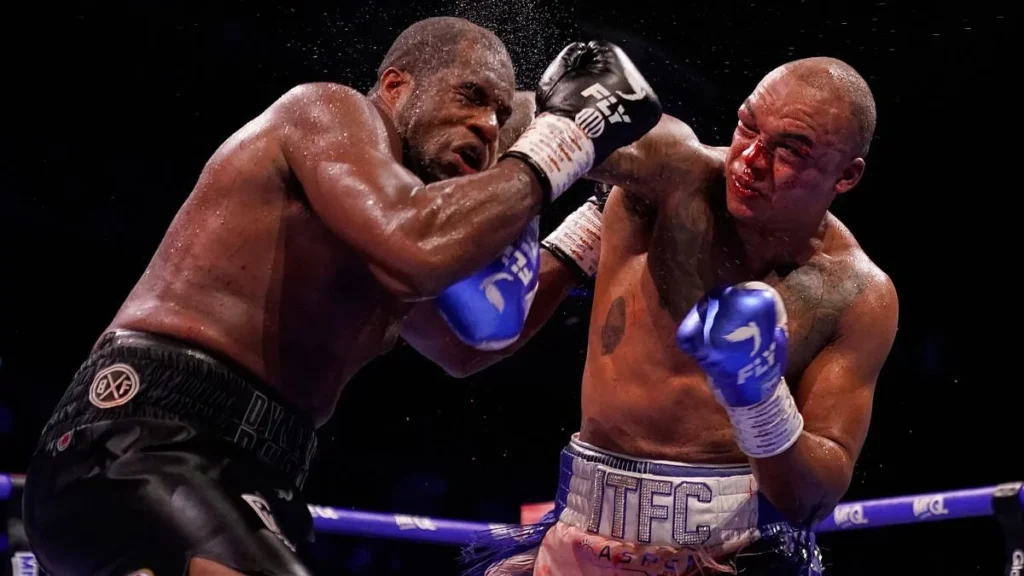
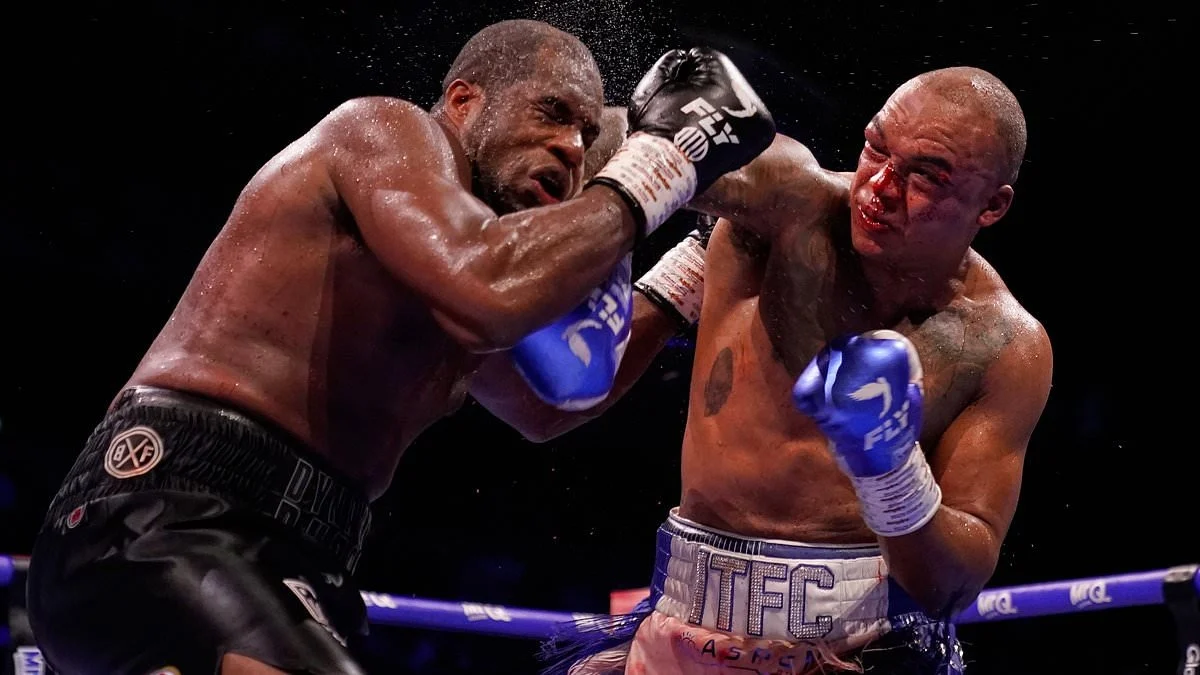
Such was the visceral spectacle witnessed on a Saturday night this past May, when Daniel Dubois and Fabio Wardley battered hell’s bells out of each other inside Manchester’s state-of-the-art Co-op Live Arena. In what instantly transformed into a modern domestic classic, Wardley shocked observers by dropping his world title challenger twice in the opening three rounds. Yet, heavyweight boxing is a sport defined by shifting momentum and sheer resilience. Just 28 seconds into the eleventh round, the tide had turned so violently that Dubois had to be physically pulled off the champion. Wardley had been reduced to a bleeding, battered, but remarkably still-standing wreck.
For mere mortals watching from ringside or through television screens across the globe, the natural reaction can only be a mix of awe and horror: How on earth do they endure it? How can human bodies absorb such punishment and immediately crave more?
"We’re fighters," Dubois says simply, reflecting on the shared trauma of their first encounter. "Honoured to share a ring with him."
Wardley, whose unorthodox path to the pinnacle of the sport is well-documented, shares a similar philosophical acceptance of the violent craft. "Born to do it," says the champion, who first discovered his innate aptitude for combat when he initially tried his hand at white-collar boxing. "Love being in with such a great fighter."
What kind of mindset drives athletes to willingly walk back toward the fire? What goes through their minds at the prospect of doing it all over again, as they are scheduled to do on Saturday night at London’s iconic O2 Arena? Do they not pause to consider the severe long-term health hazards that this sledgehammer head-banging presents to their neurological well-being?
Prepare yourselves, dear gentle readers, for the unvarnished, chilling honesty of Daniel Dubois when confronted with the sobering reality of the sport’s greatest risk.
"Dementia? If you’re talking about dementia, no point worrying," Dubois says with chilling nonchalance. "We’ve probably got it already."
It is a stark, unfiltered insight into the psychology of men who fight not merely for a living, but driven by a primal lust for glory, the intoxicating thrill of battle, the roar of a captive crowd, the glare of the blinding arena lights, and, perhaps above all else, their unyielding manly pride.
On nights like this, the stakes extend far beyond personal pride; they are fighting for a world championship. This Saturday, the prize is once again the WBO heavyweight belt that Dubois dramatically ripped from Wardley’s fairy-tale grasp five grueling months ago in Manchester.
One might wonder if elite athletes experience crippling anxiety ahead of such a high-stakes collision. For Dubois, fear is not an obstacle to be avoided, but a vital fuel to be harnessed.
"I live with the chaos," Dubois explains. "Chaos all day every day and especially on the night. I love the fear. It gives me the power. I hold the chaos in until it’s at its peak when the first bell goes. Then it explodes as I let it out. Which brings power and clarity."
Wardley arrives from a notably different background, having transitioned from the world of commerce into the upper echelons of professional prizefighting. Naturally, he brings an altogether opposite mindset to the canvas.
"No one wants to lose a world title, but if it has to be, then what really matters is how it happens," Wardley reflects. "I feel more relaxed and confident having proved I can engage a top-level fighter in a great fight, which everyone expected me to lose easily. Calm makes me better."
That hard-earned calm is fortified by the extensive lessons he and his team have absorbed over the five months since suffering the first and only defeat of his professional career.
"We’ve studied every critical moment of the first fight," Wardley notes. "And I’ve adapted where necessary. Had to, because I have more to work on than Daniel with all his experience. But we’ve not only looked at me. We’ve looked at him. He’s not as adaptable as me. He’s not suddenly going to become light-footed and free moving. I’ll give him something different."
To those strategic adjustments, Dubois offers a characteristically blunt retort, dismissing the notion that Wardley can fundamentally alter the dynamics of the rematch.
"I’ll give him another beating. Bash him up. Smash him worse than before. And quicker. We didn’t know quite what he might do in the first fight. Now I know what to expect," Dubois warns. "I also know that he’s not good enough to adapt. I’m his daddy now."
That is clarity, Dubois style. In his assessment, he even discounts those two dramatic early knockdowns that sent shockwaves through the Manchester arena. As a competitor who has occasionally been known as a slow starter—though certainly not when he demolished Anthony Joshua from the opening bell—Dubois remains unfazed by early setbacks.
"Things happen in boxing. You can get caught," he says. "लेकिन I also know now that he doesn’t have the power. No real power."
For his part, Wardley disputes the narrative that he was as severely compromised as the visual evidence suggested during the concluding moments of their first bout. Their respective corner teams have also locked horns in the media regarding the timing and necessity of the eleventh-hour stoppage. Don Charles, Dubois’s seasoned coach, has maintained that the towel should have been thrown in much earlier to spare his opponent further punishment.
Conversely, Wardley firmly supports his trainer, Ben Davison, and stands by the assertion that he remained entirely competitive, still firing punches back at his adversary.
"The optics looked bad, what with the blood and the bruising and the punches. But I trust my team to take care of me. Trust them with my life," Wardley insists. "A lot of the punches were glancing, and in the tenth round, I shook him with an uppercut. If the big right that followed had connected cleanly, we might have had a different ending."
Beyond the immediate championship stakes on Saturday night, the horizons for both men stretch toward even greater riches and historical significance. Wardley, the man who successfully escaped office drudgery to chase an improbable boxing dream, harbours ambitions of facing the winner of the upcoming December showdown between Anthony Joshua and Tyson Fury. Dubois shares similar aspirations for the lucrative mega-fights waiting on the horizon, while also keeping his sights firmly fixed on a broader legacy: unifying all the remaining world titles that were previously vacated by Oleksandr Usyk.
Will the final chapter written at the O2 Arena on Saturday night diverge significantly from the dramatic script of their first meeting? In all likelihood, it will not. ‘Dynamite Dan’ appears to have extracted the more valuable technical knowledge from their initial war, backed by his wider breadth of elite-level experience. Indeed, Dubois has rarely looked this bullish, focused, and physically imposing in the build-up to a fight.
What boxing enthusiasts around the world know for absolute certain is that when these two gladiators step back under the bright lights, they will deliver another unforgettable thriller.