

The discipline of athletic preparation and high-performance strength training is experiencing a continuous, rapid evolution, driven largely by the shift toward data-informed decision-making. Where coaches and athletes once relied almost exclusively on subjective assessments such as perceived exertion or rigid percentage-based maximum strength models, real-time diagnostic hardware has increasingly become an indispensable standard in modern weight rooms.
Among the tools driving this transformation is the Enode Pro sensor, an advanced hardware and software solution engineered to capture granular movement data across a spectrum of resistance exercises. By offering objective diagnostics during physical execution, the sensor has established itself as an essential component for sports practitioners, conditioning professionals, and competitive athletes seeking to optimize load prescription, monitor fatigue, and refine the execution of velocity-based training.
What Is the Enode Sensor?
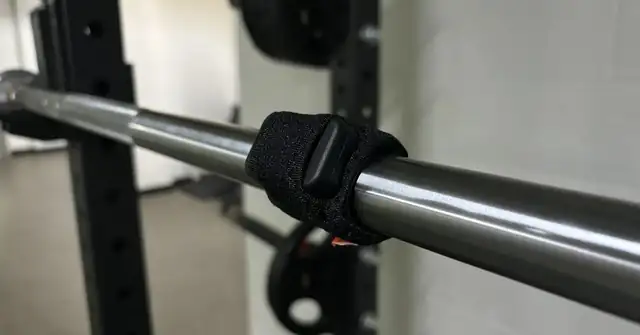
At its core, the Enode sensor is a compact, lightweight diagnostic unit designed to collect precise performance metrics across diverse athletic training environments. Engineered for broad utility and minimal physical disruption, the device can be securely affixed to standard barbells, dumbbells, and kettlebells, allowing practitioners to harvest instantaneous biofeedback across virtually any lifting modality.
A persistent issue historically associated with measurement technology in strength training has been physical interference. Traditional linear position transducers, which rely on physical tether cables running from the floor to the bar, can constrain an athlete’s natural path of motion, tangle during explosive dynamic movements, or introduce safety liabilities in fast-paced gym settings.
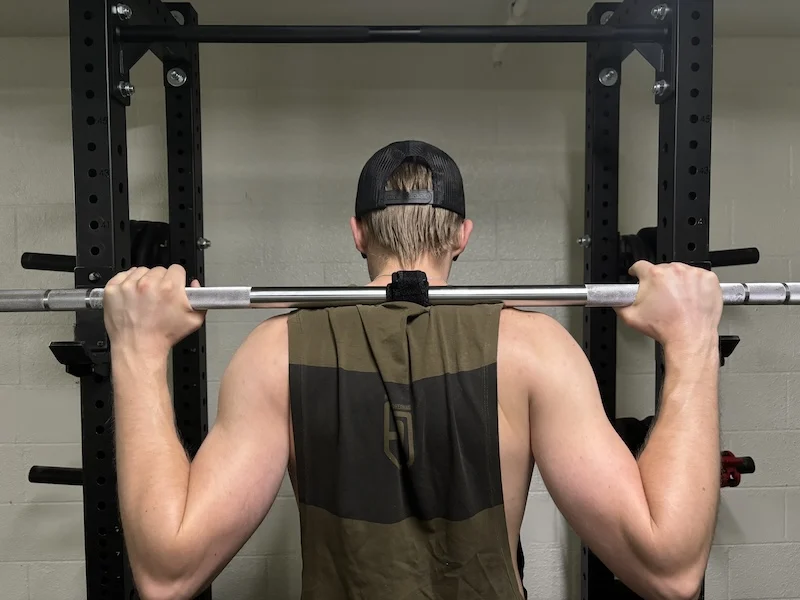
The Enode unit addresses these constraints through a compact, self-contained form factor. During heavy compound movements, such as the back squat, the unit sits unobtrusively inside a specialized barbell sleeve attached directly to the shaft of the bar. Even when positioned close to the lifter’s back, upper traps, and shoulders, the low-profile sensor remains out of the athlete’s way, allowing natural, uninhibited biomechanics while maintaining reliable metric capture.

Key Features and Functional Capabilities of the Enode Pro
The Enode Pro system integrates sophisticated hardware components with an intuitive software ecosystem designed to meet the rigorous demands of elite athletic environments. The unit’s primary appeal lies in its marriage of portability, durable construction, and high-frequency movement capture.
The device relies on advanced internal inertial measurement technology that tracks acceleration, displacement, and angular trajectory through space. This allows the unit to accurately detect repetitive cycles of work without the need for manual tallying, recording repetition-by-repetition data directly to a paired mobile application or analysis dashboard.
Furthermore, the physical build reflects the rugged demands of athletic performance centers. Built to withstand sudden drops, high impact, and continuous cyclic stress, the sensor pairs physical resilience with a long-lasting internal battery capable of supporting extensive team-wide sessions without interruptions. The streamlined wireless connection pairs automatically with companion devices, removing friction and latency during high-stakes training sessions.
What Does the Enode Sensor Monitor?
Rather than focusing on a single data point, the Enode sensor functions as an expansive monitoring laboratory, measuring a broad suite of kinetic and kinematic parameters. In modern performance environments, tracking a singular outcome—such as weight successfully lifted—often fails to capture the true neuromuscular cost or quality of movement. The Enode bridge this diagnostic gap by offering deep visibility into how an athlete moves a specific resistance.
Among the critical metrics captured are:
- Bar and Implement Velocity: The unit captures peak and mean velocity across the entire concentric range of motion, providing immediate insight into the speed of movement at various loads.
- Power Output: By calculating the relationship between the prescribed mass and the measured acceleration, the sensor computes peak and mean power outputs expressed in watts.
- Range of Motion and Bar Path: The device precisely charts vertical displacement, allowing coaches to identify truncated repetitions, inconsistencies in depth during squats, or lateral deviations in bar path.
- Eccentric and Concentric Phase Durations: The sensor segments lifts into distinct phases, detailing eccentric duration, transition turnaround times, and concentric execution speed.
- Neuromuscular Fatigue and Velocity Loss: By analyzing the drop in speed from the first repetition to subsequent attempts within a single set, the system quantifies localized and central fatigue, allowing practitioners to terminate sets precisely when performance degradation occurs.
This depth of telemetry ensures that training regimens are optimized for qualitative excellence rather than arbitrary volume, preserving athletic freshness while targeting designated adaptation windows.
Unboxing: What Is Included with the Enode System
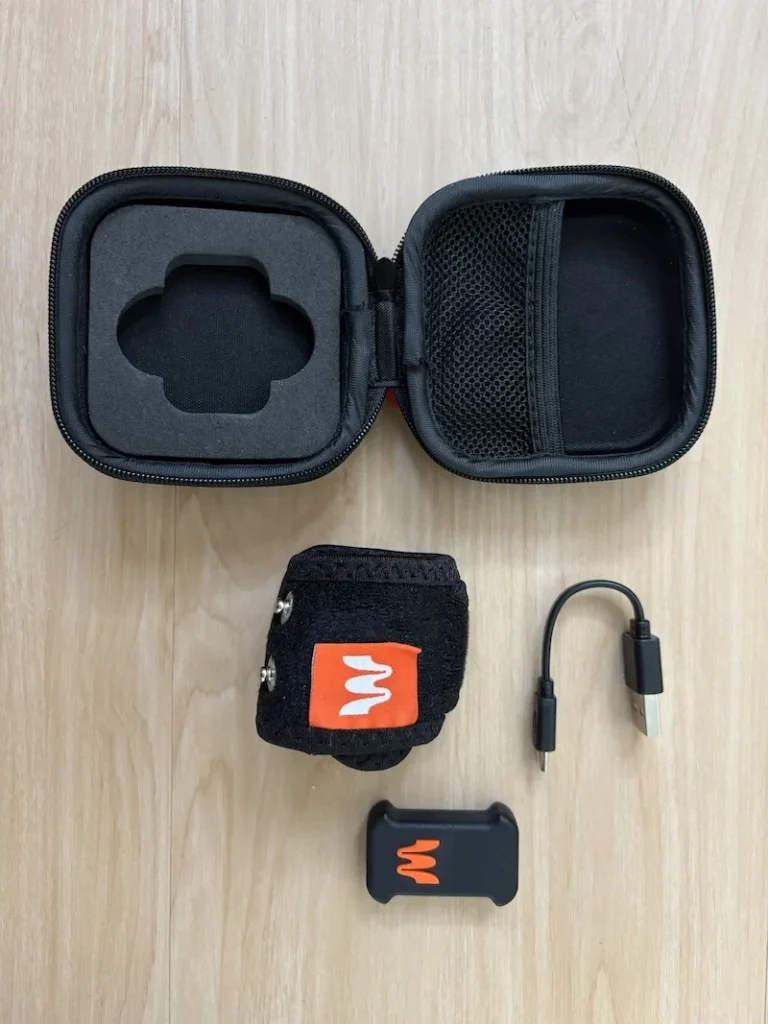
When acquired through specialized performance distributors such as SimpliFaster, the Enode sensor arrives as an all-inclusive system ready for immediate field implementation. The product bundle is structured to accommodate the mobility requirements of traveling teams, private performance coaches, and independent athletes alike.
The standard commercial package includes:
- The Enode Pro hardware sensor unit.
- A durable, protective travel case featuring custom foam cutouts and internal mesh compartments to secure components during transit.
- A heavy-duty barbell sleeve engineered to fasten the unit securely to standard and Olympic bars.
- A dedicated wristband and peripheral attachment accessories to facilitate work with alternate implements such as dumbbells and kettlebells.
- A high-durability charging cable designed for rapid turnaround between training blocks.
The comprehensive out-of-the-box bundle ensures that coaches are not required to source third-party fasteners or protective sleeves independently, simplifying setup right from the point of unboxing.
Recommended Training Applications and Methodologies
The Enode Pro is widely utilized across performance disciplines, but its foremost application is found within velocity-based training (VBT). In a traditional training framework, athletes often lift fixed percentages of a historical one-repetition maximum (1RM). However, an athlete’s daily readiness fluctuates significantly due to sleep deficits, academic or psychological stress, nutritional inconsistencies, and systemic travel fatigue. Consequently, an absolute load of 85% of 1RM may represent an actual intensity of 95% on a day marked by high systemic fatigue, elevating the athlete’s risk of overtraining or soft-tissue injury.

VBT replaces static percentages with real-time velocity targets. Because velocity correlates directly with percentage of 1RM across standard multi-joint movements, tracking bar speed enables coaches to calibrate the actual load lifted on a given day to match target physiological outcomes.
Beyond general VBT, the Enode Pro supports several specialized training applications:
- Maximal Strength and Force Development: Ensuring that heavy loads intended to build raw limit strength are moved with maximal voluntary intent against high mechanical resistance.
- Explosive Power and Rate of Force Development (RFD): Monitoring rapid, dynamic exercises such as jump squats, bench throws, or Olympic lifting variations to verify that athletes hit specified velocity thresholds designed to maximize speed-strength and power qualities.
- Fatigue Management and Auto-Regulation: Utilizing predetermined velocity loss thresholds (e.g., cutting a set when mean velocity drops by 10% to 20%) to prevent excessive metabolic fatigue and minimize post-session recovery windows.
- Return-to-Play and Clinical Rehabilitation: Benchmarking movement consistency, range of motion, and velocity recovery during rehabilitation protocols to ensure injured athletes demonstrate symmetric, objective performance restoration before resuming competitive play.
Purchasing and Expansion Options
The Enode Pro sensor is distributed through the SimpliFaster online retail platform, which serves as a specialized provider of athletic diagnostic and track-and-field technology.
To support scalable implementation across various organizational tiers, SimpliFaster also provides supplementary equipment packages and accessories tailored to larger team environments. These options include multi-sensor team charging cases, peripheral hip belts designed for jumping and bodyweight diagnostic monitoring, and extra mounting sleeves. These modular expansions make it feasible for collegiate departments, professional sports franchises, and private training facilities to transition seamlessly from individual athlete testing to entire squad implementations.
Final Considerations
The Enode Pro represents an important milestone in modern sports science, bridging the historical divide between sophisticated biomechanical laboratories and day-to-day weight room practice. By condensing complex kinetic and kinematic monitoring into a durable, unobtrusive unit, it enables practitioners to execute highly targeted training regimens guided by real-time objective data rather than guesswork.
Whether employed for high-level velocity-based training, systematic rehabilitation protocols, or longitudinal neuromuscular fatigue tracking, the sensor provides the clarity required to elevate athletic preparation and minimize injury risks across diverse athletic settings.
Frequently Asked Questions
What is the Enode Pro?
The Enode Pro is a compact, high-precision measurement sensor engineered to capture and analyze athletic performance metrics during strength training. By delivering real-time telemetry regarding movement velocity, power output, displacement, and mechanical force, the device empowers athletes and coaching staffs to make data-backed training adjustments that maximize athletic adaptations while reducing overtraining risks.
What styles of training are compatible with the Enode sensor?
The sensor supports an extensive range of training modalities. While commonly deployed in powerlifting, Olympic weightlifting, and compound barbell training, its flexible attachment options make it compatible with dumbbells, kettlebells, and dynamic bodyweight movements. It is regularly utilized across power development, maximal strength cycles, functional rehabilitation programs, and systemic athletic conditioning.
Is the Enode sensor suitable for velocity-based training?
Yes, the Enode sensor is specifically designed to support velocity-based training frameworks. It delivers immediate, repetition-by-repetition data on mean and peak bar speed, power output, and set-level velocity decline. These granular data points enable practitioners to auto-regulate daily weights based on the athlete’s real-time neuromuscular readiness, maximizing training stimulus while curtailing excessive physiological fatigue.