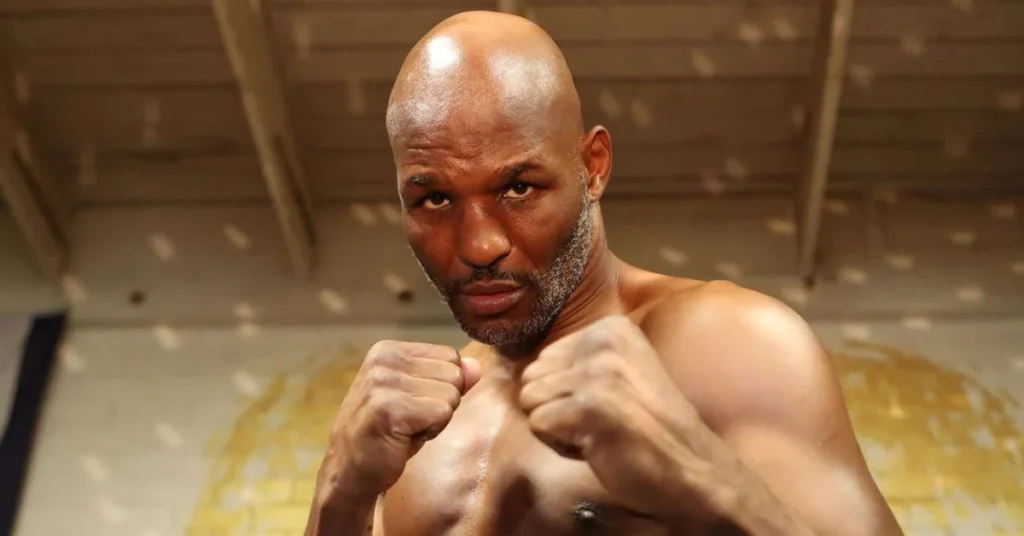

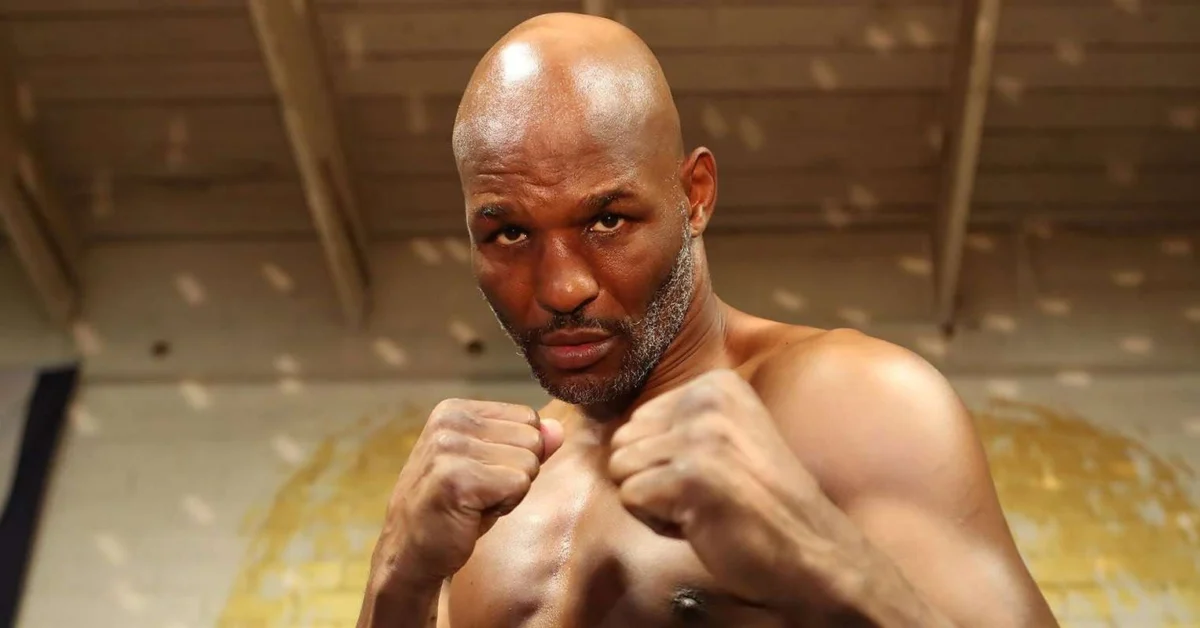
Bernard Hopkins remains an undisputed icon of modern boxing, a fighter whose longevity, ring IQ, and defensive mastery allowed him to compete at the absolute highest level for nearly three decades. Known universally across the sport as "The Executioner," Hopkins enjoyed a professional career that began inauspiciously with a defeat in his 1988 debut, only for the American great to completely rewrite the record books and secure his legacy as one of the finest middleweights and light heavyweights in boxing history.
Reflecting on his legendary career and the extraordinary era of talent he navigated, Hopkins recently offered a deeply candid and revealing assessment of his contemporaries. In a revealing interview with The Ring Magazine, the former undisputed champion opened up about his career-long rivalry with Roy Jones Jr., delivering a definitive verdict on how he would have fared against a prime version of his fiercest adversary. Despite his own immense achievements, Hopkins admitted that an unstoppable, peak-era Roy Jones Jr. simply would have been too much to handle, asserting that no fighter in history could have solved that puzzle.
Hopkins rose to prominence during the mid-1990s, a golden era for the talent-rich middleweight division. His ascension truly accelerated in 1995 when he captured the vacant IBF world middleweight title by delivering a devastating seventh-round stoppage victory over Segundo Mercado. That triumph marked the beginning of a historic championship reign. Hopkins went on to defend his crown an astonishing 20 times, establishing a division record for successful consecutive defenses while systematically cleaning out the weight class.
His dominant run at middleweight culminated in September 2004, when he faced the iconic Oscar De La Hoya in a blockbuster showdown. In front of a raucous crowd and a global audience, Hopkins made history by becoming the first fighter to ever knock out De La Hoya, finishing the Mexican-American superstar with a devastating liver punch in the ninth round. With that victory, Hopkins unified the division, capturing the WBA, WBC, IBF, WBO, and The Ring middleweight titles to become the undisputed champion of the world.
Never one to shy away from daunting challenges, Hopkins later made a seamless transition up to the light heavyweight division. Demonstrating his remarkable adaptability and defensive wizardry, he captured the WBC world title in 2011 by defeating a dangerous Jean Pascal. Although he suffered a narrow majority decision loss to Chad Dawson just one year later, relinquishing his crown, Hopkins characteristically refused to fade away. He bounced back to make history once again, outpointing Tavoris Cloud in 2013 to capture the IBF light heavyweight title at the age of 48, further extending his own record as the oldest fighter to win a major world championship.
Yet, despite scaling these incredible heights and facing a litany of generational talents over a career that stretched into his late forties, Hopkins holds a unique perspective on Roy Jones Jr. The two fighters share a deeply intertwined history, having squared off inside the professional ring twice. Their first encounter took place in May 1993, when a vacant IBF middleweight title was on the line. On that night in Washington, D.C., a youthful Jones utilized his astonishing speed and reflexes to secure a clear unanimous decision victory over Hopkins.
More than a decade later, after both men had cemented their legacies as legends of the sport, they met in a long-awaited rematch in April 2010. This time, fighting at a catchweight near the light heavyweight limit, Hopkins gained his revenge, dominating the later rounds and earning a unanimous decision victory to level their career series at one win apiece. While boxing purists and fans frequently debated the prospect of a trilogy bout, particularly during their absolute athletic primes in the late 1990s, the third fight never materialized.
Speaking with The Ring Magazine, Hopkins provided an honest, tactical breakdown of why facing a prime Roy Jones Jr. presented an insurmountable challenge, even for a defensive savant of his own caliber. Hopkins explained that Jones possessed a rare combination of physical gifts and tactical awareness that completely neutralized the typical offensive patterns opponents relied upon.
"He was smart enough to neutralise my best weapons and smart enough to not get hit by my big shots," Hopkins told The Ring Magazine. "Even though I got my shots in he wouldn’t get hit by more than one. Like if I got one in… and that’s the thing about fighting unique guys… if a guy lands that one shot, normally there’s another coming behind that."
Hopkins elaborated on the unique attributes that separated Jones from every other fighter of their generation, pointing to a supernatural blend of physical traits that overwhelmed opponents before they could even adjust to the speed of the contest. During his absolute peak, Jones was widely regarded as the most dominant pound-for-pound fighter on the planet, combining video-game reflexes with unorthodox angles and devastating one-punch power from both hands.
"He was an all-around thing – best boxer, best defence, offence," Hopkins said. "Early career Roy Jones Jr. – speed, reflexes, unorthodox, that type of thing. No one, no one would have beat Roy Jones at that level, where he was at right there and then."
While boxing history is filled with endless hypothetical matchups and debates over who would emerge victorious between legends in their primes, Hopkins’ assessment offers a rare and candid glimpse from an insider who shared the ring with him. Having stood across the canvas from the best fighters of his era, Hopkins’ tribute to the untouchable brilliance of an early-career Roy Jones Jr. underscores just how formidable his former rival truly was during a reign that defined an unforgettable era of the sport.