To say that the model of sports consumption has changed is a truism in 2026. But it does bear examining what exactly we mean when we say that the way we consume sports today is different from the past. The traditional framework of sports media was built around appointment viewing, localized television broadcasts, and weekly cycles that peaked on matchdays and went completely quiet during the off-days. Today, that linear model has given way to a continuous, always-on ecosystem where following a sport has transformed into a 24/7 pursuit.
Where fans once followed teams closely for their transfers, rivalries, and results, many now follow cultural storylines just as keenly. The pre-match tunnel fit, the post-match viral memes, and the long-form documentary narrative arc have all become central pillars of the modern sporting experience. The final score on the scoreboard still matters enormously, but it increasingly feels like the starting gun of a much larger story rather than the entirety of the competition.
One direct result of this shift is that participation in fandom has fragmented. The classic shared experience—crowded around a living room television screen or packed tightly into the stands of a stadium—is still very much alive and vital. However, running right alongside it is a parallel kind of digital participation. This new wave of engagement is lived out in short-form clips, instant highlights, immediate reaction videos, and memes shared online by fans scattered all over the world, creating a borderless global community.
Crucially, this does not look like a niche behavior constrained solely to Gen Z. According to research from Bango, 59 percent of 25 to 34-year-olds report that they often follow games through short clips, live updates, or social media feeds rather than sitting down to watch the full match from start to finish. This fundamental shift in viewer habits underscores a broader evolution in how audiences allocate their time and attention across a crowded digital landscape.
Social media platforms have naturally played a massive role in accelerating this transformation. The recent industry-wide shift from social graph-based distribution—where users primarily saw content from friends and direct connections—to interest graph-based distribution has fundamentally altered what sports fans see in their daily feeds. Algorithms now serve content based on demonstrated passions rather than social networks alone.
Because of this algorithmic evolution, raw reach is no longer so tightly correlated to traditional audience size. This structural change explains why a single Reel from a relatively niche sports property like SailGP can easily cross the threshold of 100 million views. It also explains how athletes like Alexandra Burghardt, a German Olympian with a modest 100,000 followers, can publish one of the most-viewed sports Reels globally on Instagram. Her standout post quickly climbed to 243 million views and continues to grow. In this new ecosystem, individual personality, distinct taste, and creative execution count for significantly more than scale and legacy media backing alone.
Athletes are uniquely well-positioned to win in this new mode of fandom. There are roughly 1.5 million professional athletes with active accounts on Instagram alone, and roughly one in three platform users follows at least one athlete. At a massive global tentpole event like the Olympic Games, countless entities—including teams, national federations, official broadcasters, traditional publishers, and fans—are all posting about the exact same event simultaneously.
What athletes tend to bring to that crowded, shared moment is a very particular combination of assets: a recognizable face, a clear personal point of view, and built-in, authentic behind-the-scenes access. In a social media feed that relentlessly rewards the most distinctive take on a story everyone else is already following, that combination seems to travel exceptionally well across borders and demographics.
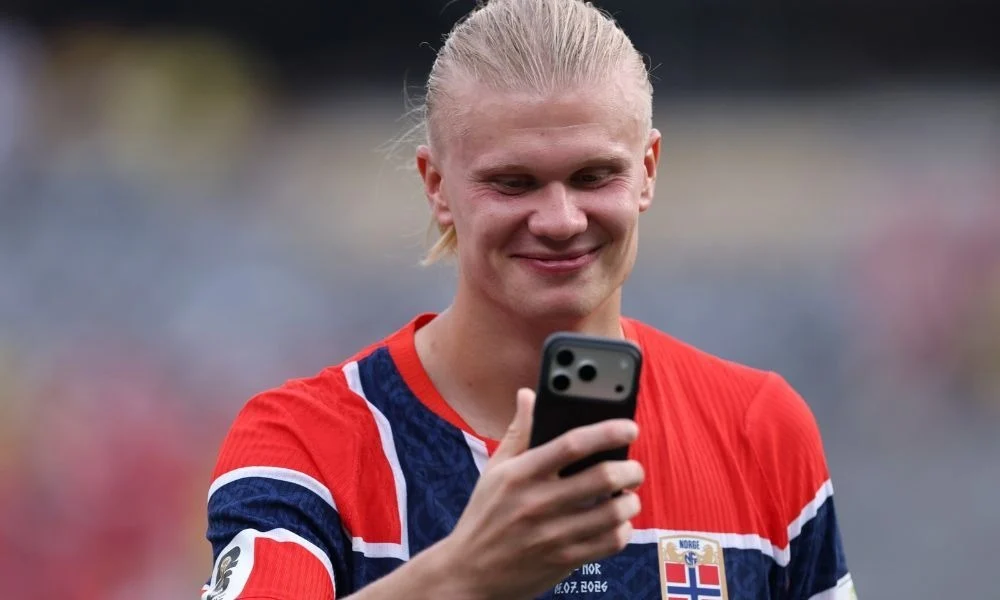
Erling Haaland’s historic run both on and off the field during the summer’s World Cup serves as a textbook case in point. Over the space of just eight weeks, Haaland acquired more than 36 million new Instagram followers. What was most striking about his digital footprint was that his personal, non-matchday posts focusing on training routines, travel, and lighthearted humor averaged three times as many "likes" as his traditional on-pitch content.
He initially reached millions of new households because he was beamed into their living rooms playing elite football, but he captured their lasting affections through the proximity and personality evidenced in his self-authored social content. None of this dynamic diminishes the value of the live broadcast. Sports leagues and traditional broadcasters continue to create the monumental moments that matter most to fans. What is fascinating, however, is how far individual athletes can now help carry those moments across the digital ecosystem.
There is a profound calendar reality at play here as well. Most major professional sports leagues operate on a schedule involving roughly 50 matchdays a year, leaving more than 300 days when nobody is actually playing a competitive game. Athletes naturally fill those 300 dark days with life beyond the pitch: rigorous training sessions, international travel, family milestones, high fashion, and gaming. For anyone thinking seriously about how to keep fans close and engaged year-round, that athlete-generated lifestyle content feels like a vital resource worth paying close attention to.
Some of the most interesting experiments currently emerging across the industry involve media organizations, leagues, and clubs actively bringing athletes closer to their core production and content plans.
When Ferrari allowed Formula 1 drivers Charles Leclerc and Lewis Hamilton to take over its official social channels for a day, the stunt gave @scuderiaferrari its most successful day of engagement in 2026. Similarly, when the Bundesliga asked Jamie Vardy to host Friday night watchalongs, the move put a familiar, charismatic player voice directly around its live broadcast product. Furthermore, what stood out about Fox’s acclaimed World Cup coverage was the creative freedom given to high-profile on-air talent like Zlatan Ibrahimovic and Thierry Henry to be entirely themselves on their own personal channels, successfully pairing traditional broadcast production values with authentic voices that traveled far beyond the live television show.
It remains remarkable that athletes have built these massive digital audiences largely without access to premium match intellectual property. In most professional sports, strict rights agreements mean athletes are legally barred from sharing their own best on-field moments on personal channels. It prompts the imagination to wonder what an athlete like Haaland’s historic summer might have looked like had he possessed the ability to seamlessly supplement his personality-driven lifestyle posts with actual video clips of his goals.
Pointing toward a potential shift in this dynamic, industry observers are watching the Women’s Super League (WSL) with immense interest. The league’s most recent rights deal uniquely grants participating players permission to utilize match clips on their own social media channels shortly after the final whistle blows.
When an athlete is empowered to pair their own authentic voice with direct footage of their own defining moments, the powerful combination of broad distribution plus media rights could spell a step-change in digital engagement for both the individual player and the league as a whole. In this collaborative model, the traditional broadcaster brings unmatched credibility, high production values, and live rights, while the athlete brings trusted voice, relatable tone, and organic distribution.
For leagues, teams, and broadcasters mapping out the seasons ahead, the open question is no longer whether to engage with social media, but rather how to treat sports talent less as an intellectual property risk to be tightly managed and more as an essential distribution partner to build with.