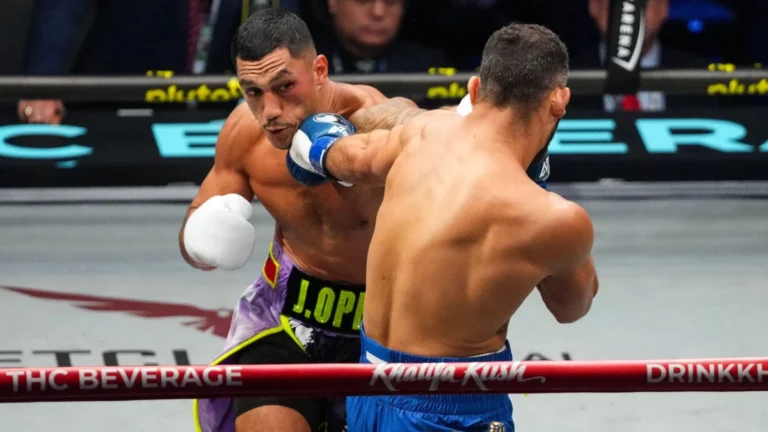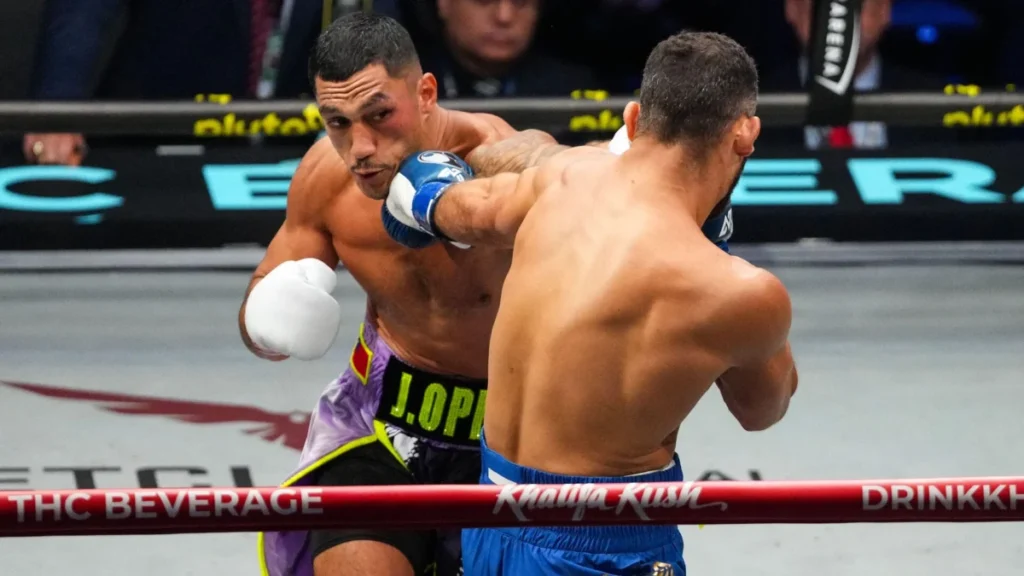

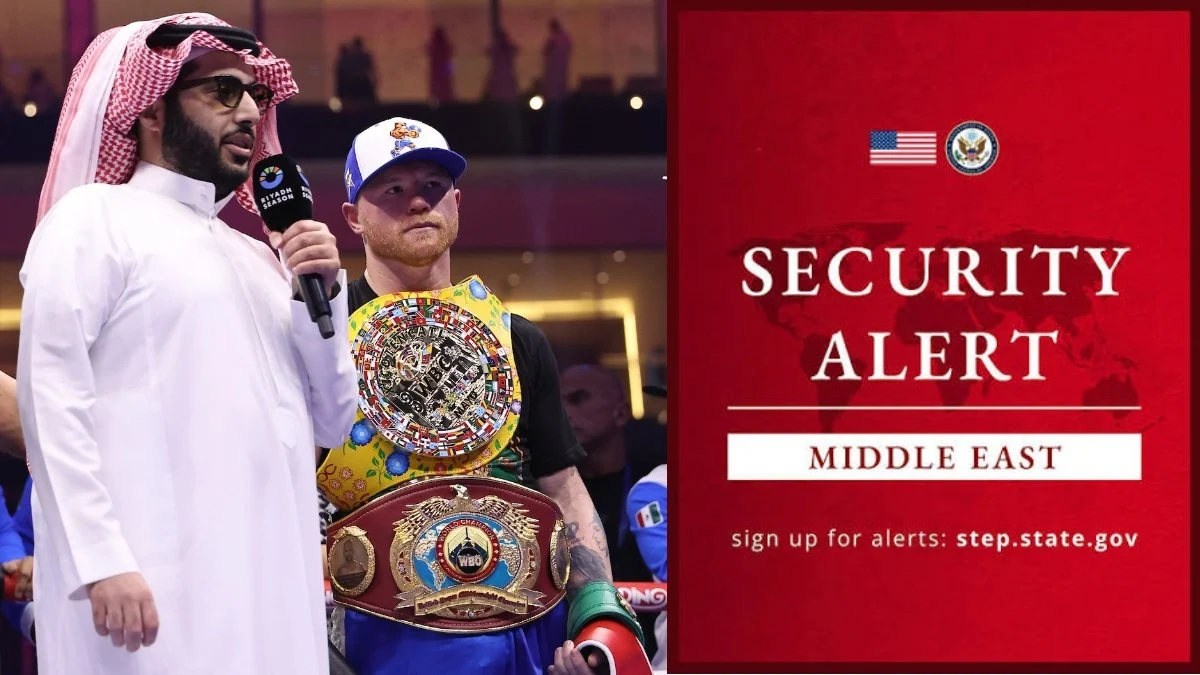
Boxing superstar Canelo Alvarez is reportedly prepared to travel to Saudi Arabia to face Christian Mbilli this coming October, displaying a level of personal fearlessness that starkly contrasts with a rapidly escalating security crisis in the region. While the Mexican icon’s reported stance is one of absolute defiance, it unfolds against a backdrop of severe geopolitical tension, direct aviation threats, and unprecedented defensive precautions being taken at the highest levels of the Saudi leadership.
The high-stakes super-middleweight showdown, currently scheduled for October 31 in Riyadh, has been thrust into a cloud of serious doubt following explicit warnings targeting the kingdom’s airspace and infrastructure. Yet, according to Saudi entertainment chief Turki Alalshikh, Canelo remains entirely unfazed by the deteriorating security environment and has personally communicated his unwavering commitment to fulfilling the bout.
Alalshikh revealed that the unified super-middleweight king reached out directly to affirm that he will step into the Riyadh ring this autumn regardless of external circumstances. According to the chairman of Saudi Arabia’s General Entertainment Authority, Canelo’s message was unequivocal, with Alalshikh noting that the multi-division world champion fears nothing and is determined to press forward with the fight.
This reported message, relayed through Alalshikh, highlights Canelo’s reputation as a fierce competitor who has routinely embraced high-risk scenarios throughout his legendary career. However, the bravado of a world-class athlete stands in stark juxtaposition to the grim reality on the ground, where military threats are actively disrupting normal operations and raising profound safety concerns for anyone scheduled to travel to the region.
The security landscape in Saudi Arabia has grown increasingly precarious in recent weeks. Yahya Saree, the military spokesman for the Houthi movement, issued a direct and public warning to commercial airlines, airport personnel, and international travelers, strongly advising them to completely avoid Saudi airports and airspace. The sweeping advisory explicitly excludes flights serving only the holy cities of Mecca and Medina, effectively branding commercial transit through major hubs like Riyadh as a potential hazard.
In response to these escalating threats, multiple foreign governments have updated their official travel advisories for Saudi Arabia, implementing varying levels of restriction and caution for their citizens. While there is no direct evidence indicating that Canelo has been personally targeted, nor that the boxing event itself has been specifically singled out by hostile actors, the broad nature of the aviation warnings creates unavoidable logistical and safety dilemmas. Canelo, his opponent Christian Mbilli, their respective training camps, and thousands of international media members and boxing fans would all be required to navigate this volatile airspace to attend the event.
Saudi Crown Prince’s Precautions
The gravity of the security situation is further underscored by the extraordinary measures reportedly being taken by the nation’s leadership. According to a recent report by the Wall Street Journal, Crown Prince Mohammed bin Salman has been rotating between heavily guarded palaces that have been specially equipped with secure underground bunkers. These movements are reportedly conducted under the watchful eye of a specially selected and heavily reinforced security detail.
Furthermore, the same reports have highlighted growing concerns regarding the depletion of critical defense assets, specifically missile interceptors. In response to potential aerial threats, the kingdom’s air-defense batteries have reportedly been redeployed to safeguard vital national infrastructure and royal residences.
These high-level defensive adjustments paint a vivid picture of a state bracing for potential conflict. Yet, even as the nation’s most powerful political figure takes shelter in fortified bunkers and redirects defensive military hardware, global sporting promoters are attempting to welcome one of combat sports’ biggest names into the very same capital city for an international entertainment spectacle.
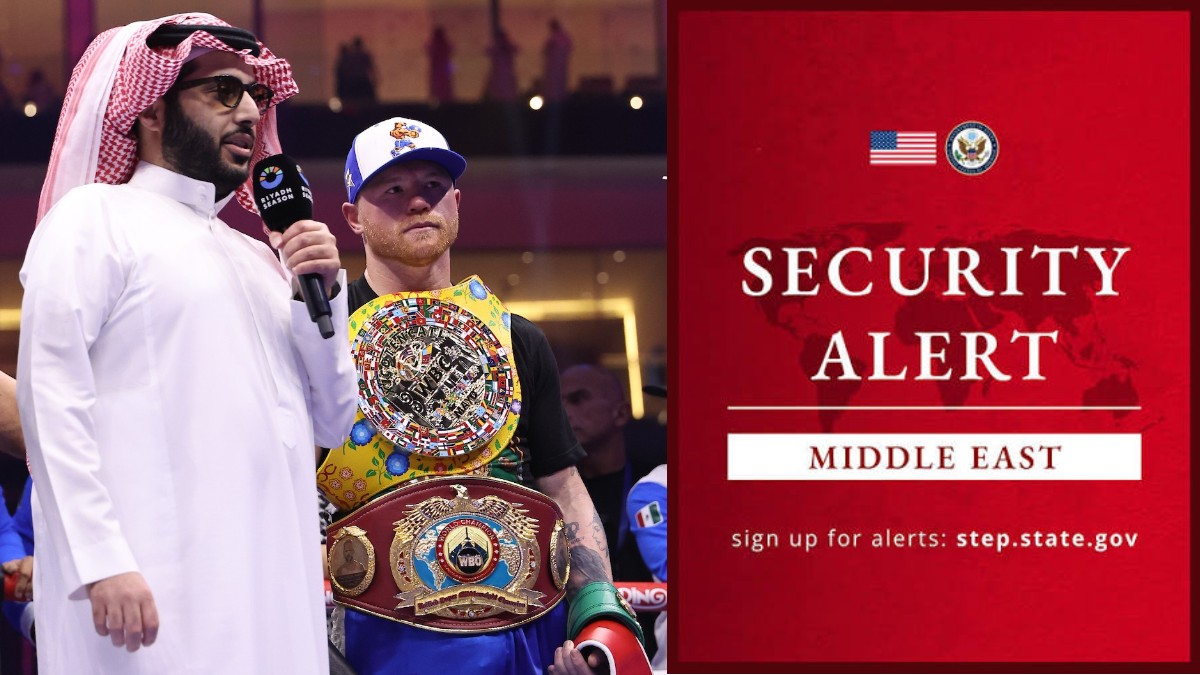
Canelo’s reported willingness to fly into Riyadh and compete before a global audience certainly speaks to his competitive mettle and professional dedication. However, the boxer’s personal courage does little to resolve the fundamental safety questions facing his opponent, their support teams, and the traveling public who would need to be present to make the event a viable reality.
Why Is Turki Pushing Ahead?
Amid this tense geopolitical climate, a central question remains unanswered: why are organizers, led by Turki Alalshikh, so adamant that the Canelo versus Mbilli matchup must proceed in Riyadh?
Over the past several years, Saudi Arabia has invested heavily in transforming itself into a premier global hub for major sporting events. High-profile boxing matches have become a cornerstone of the nation’s strategy to elevate its international profile, diversify its economy, and project an image of modernity and openness to the world. Staging a blockbuster fight featuring a global icon like Canelo Alvarez fits neatly into this ambitious long-term commercial and cultural roadmap.
There are undoubtedly massive financial, contractual, and promotional obligations tethering the event to Riyadh. However, neither Alalshikh nor other key stakeholders have publicly articulated a definitive rationale for keeping the fight in the Saudi capital in defiance of the current security warnings.
One prevailing theory among sports industry observers is that Saudi officials are eager to project stability and demonstrate that the kingdom remains open for business and safe for international visitors, even during periods of regional turbulence. By successfully executing a massive global sports event, the state aims to reinforce confidence in its infrastructure and security apparatus.
Yet, that narrative becomes increasingly difficult to sustain when hostile forces are issuing explicit warnings directed squarely at the country’s aviation corridors and airports. Maintaining that a region is entirely secure for tourism and entertainment events is a hard sell when military spokesmen are cautioning travelers to steer clear of the local airspace.
From a purely logistical standpoint, the fight itself does not strictly need to take place in Riyadh. Boxing history is filled with marquee matchups being relocated to alternative international venues when unforeseen obstacles arise. Moving the bout to a neutral location outside of the immediate zone of tension would allow Canelo and Mbilli to settle their athletic differences in the ring without forcing fighters, cornermen, officials, and international spectators to place themselves in the path of explicit aviation threats.
Despite these prudent alternatives, Alalshikh appears entirely committed to pressing forward with the Riyadh date. The specific motivations driving this unwavering stance remain opaque, leaving the boxing world to weigh the allure of a mega-fight against the stark realities of regional conflict.
As the October 31 date draws closer, the debate highlights a delicate and uncomfortable intersection where elite sports entertainment meets harsh geopolitical danger. While Canelo Alvarez’s legendary fighting spirit may compel him to accept any challenge placed before him, a critical distinction remains between demonstrating athletic fearlessness and ensuring the fundamental safety of all human lives involved.