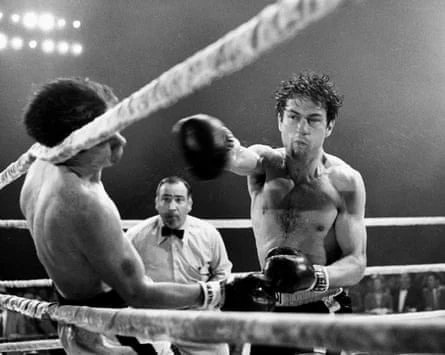




The Genesis of the Iron Mike Myth
During the mid-1980s, the world of professional boxing witnessed the rise of a phenomenon unlike any other. Mike Tyson, at just 20 years old, became the youngest heavyweight champion in history. The myth of his invincibility was not merely a product of his knockout record, but a carefully crafted psychological weapon that paralyzed opponents before the first bell even rang. This aura was built on a foundation of unprecedented speed and terrifying power that left the boxing world in awe.
The Psychological Architecture of Fear
The myth of invincibility was heavily supported by Tyson’s ring persona. By eschewing traditional boxing robes and entrance music for a simple white towel and a somber, silent walk to the ring, he projected the image of a focused executioner. Intimidation was his primary tool, often winning the fight in the dressing room. Opponents were often defeated mentally before they even threw a punch, believing the narrative that Tyson was an unstoppable force of nature.
Unpacking the Peek-a-Boo System
Contrary to the belief that Tyson was just a raw brawler, his success was rooted in the Peek-a-Boo style developed by his mentor, Cus D’Amato. This system emphasized constant head movement, bobbing, and weaving, which turned Tyson into a defensive ghost. The reality was that his invincibility was a product of high-level technical training. He could suddenly materialize from a defensive slip with a fight-ending hook, making him appear untouchable to his peers during his prime years.
The Mythical Peak: 1986 to 1989
During his undisputed reign, Tyson seemed to be a glitch in the heavyweight matrix. Critics and fans alike began to wonder if any human could withstand his onslaught. This period solidified the myth, as Tyson unified the belts and dispatched legends and top contenders with equal ease. The speed at which he finished fights created a sense of inevitability, leading many to believe that the heavyweight division had finally found its ultimate, permanent king.
The Reality Check: Tokyo, 1990
The aura of invincibility was shattered on February 11, 1990, when Buster Douglas knocked out Tyson in Tokyo. This event proved that Tyson was indeed human and vulnerable to a disciplined, long-range jab and a resilient spirit. It exposed the reality that when the fear factor failed, Tyson had to rely on technical adjustments he sometimes lacked. The Douglas fight remains the most significant moment where the myth collided with the harsh reality of boxing physics.
The Impact of Cus D’Amato’s Absence
A significant part of the reality behind Tyson’s decline was the loss of his mentor, Cus D’Amato. Without the stabilizing influence and technical guidance of his father figure, Tyson’s discipline began to wane. The myth was built on a foundation of strict, obsessive training, which slowly eroded in the late 1980s. The reality was that Tyson’s invincibility was tied to a specific support system that, once removed, left him tactically exposed.
Technical Flaws and Defensive Lapses
As the myth faded, boxing analysts began to point out Tyson’s technical limitations. While he was a master of the short-range explosion, he often struggled against taller fighters who could tie him up or use a consistent, stiff jab. His footwork, once impeccable, became more linear as his career progressed. The reality was that his style required a level of peak conditioning that was difficult to maintain over a long career, especially with the distractions of fame.
The Holyfield Paradigm Shift
Evander Holyfield provided the ultimate reality check for the Tyson myth in the mid-90s. Holyfield was not intimidated by Tyson’s persona and used physical strength and tactical clinching to neutralize Tyson’s power. This rivalry demonstrated that a mentally tough opponent could dismantle the Iron Mike archetype through sheer attrition. It showed that the myth relied heavily on the opponent’s willingness to be intimidated, a factor Holyfield completely ignored.
The Role of Media and Marketing
The media played a massive role in maintaining the myth of invincibility long after the reality had changed. Tyson was a commercial powerhouse, and the narrative of the Baddest Man on the Planet was a lucrative one for promoters and television networks. This marketing often overshadowed the technical decline occurring in the gym, leading the public to believe the myth was still alive well into the late 1990s.
Physical Attributes vs. Pure Skill
Tyson’s invincibility was often attributed to raw strength, but the reality was his explosive speed. He was often shorter than his opponents, but his ability to close the distance in a fraction of a second was his true superpower. When his speed diminished with age and lifestyle choices, the invincibility vanished. This highlights the reality that his dominance was tied to a transient physical peak rather than a sustainable, long-term technical advantage.
The Transition of a Heavyweight Era
Tyson’s dominance occurred during a specific window in heavyweight history. The reality is that he thrived when the division lacked a dominant, giant-sized technician. As the 1990s ushered in a new breed of massive, mobile heavyweights like Lennox Lewis, the physical advantages Tyson once enjoyed began to dissipate. The reality of his size disadvantage became more apparent when faced with elite fighters who possessed both height and high-level skill.
The Front-Runner Phenomenon
A critical analysis of Tyson’s career reveals a front-runner tendency. The myth suggested he was a relentless machine, but the reality showed that if an opponent survived the initial storm and fired back with authority, Tyson’s confidence would often waver. This was evident in his later fights where his output dropped significantly after the fourth or fifth round. The myth of the unstoppable force didn’t account for the psychological difficulty Tyson faced when a fight became a grueling war of nerves.
Key Elements of the Tyson Myth
- The 90-second knockout reputation that suggested he was supernatural.
- The perception of inhuman punching power that could end any fight instantly.
- The belief that he could not be hurt or knocked down by standard human effort.
- The idea that he was a primitive, unstoppable force of nature rather than a trained athlete.
The Stark Realities of Professional Boxing
- Every fighter has a shelf life based on their style and physical attributes.
- Technical discipline is significantly harder to maintain than physical strength.
- The psychological edge is fragile and once lost, it is rarely recovered in full.
- Matchmaking and timing are crucial to maintaining any undefeated or invincible aura.
The Legacy of the Iron Mike Era
Ultimately, the myth of Mike Tyson’s invincibility serves as one of the most compelling chapters in sports history. While the reality proved he was a man with flaws and limitations, the impact he had on the sport remains undeniable. He was a master of his craft at his peak, and the myth was a testament to his unique brilliance. The reality of his career is a lesson in the rise and fall of greatness, showing that even the most terrifying figures are subject to the laws of the ring.
Conclusion: Balancing Legend and Fact
To understand Mike Tyson, one must look past the highlight reels and the sensational headlines. The reality of his career is a complex tapestry of unparalleled talent, psychological warfare, and eventual human struggle. He may not have been invincible in the literal sense, but for a brief moment in time, he made the entire world believe he was. That belief, in itself, is the most enduring part of his legendary status in the annals of boxing history.