The Dawn of a New Era in Combat Sports
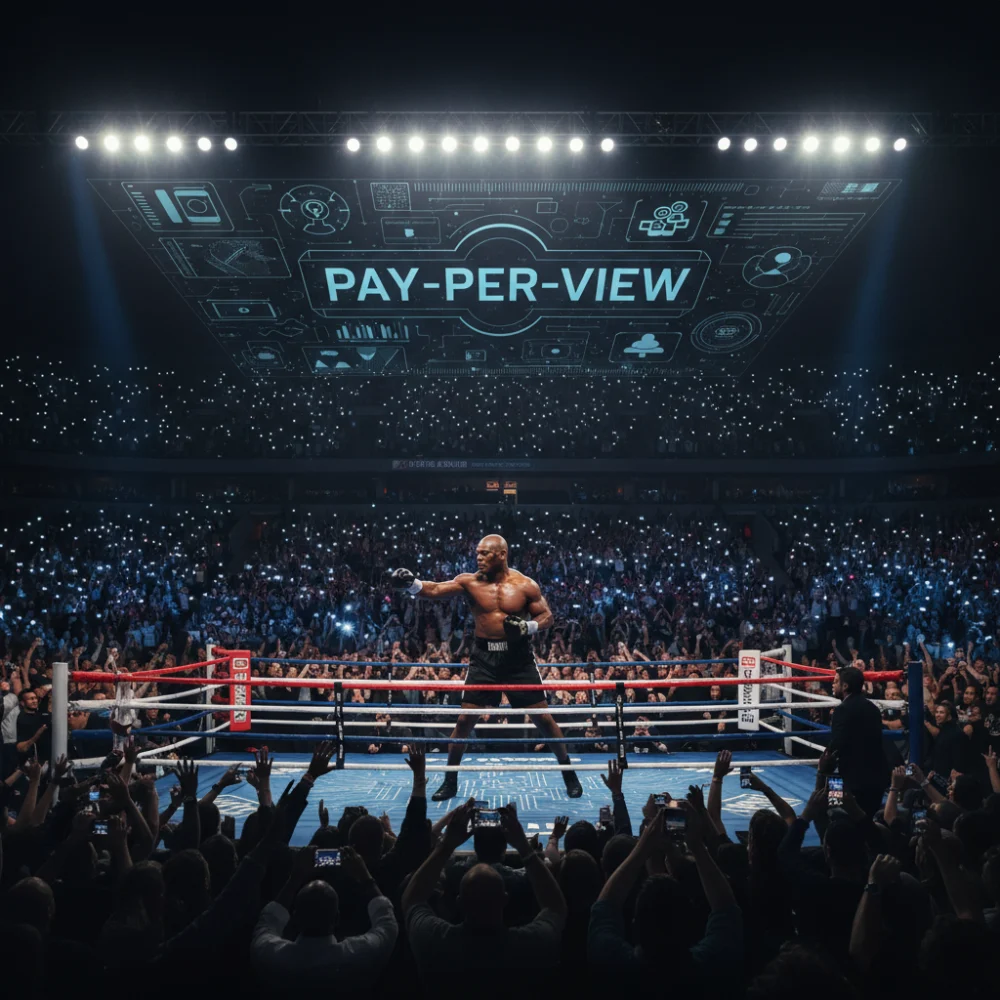
Mike Tyson did more than just knock out opponents in the first round; he fundamentally reshaped the financial landscape of professional boxing. Before his meteoric rise in the mid-1980s, the sport relied heavily on closed-circuit television and live gate receipts. However, the emergence of Iron Mike coincided with the expansion of cable television, creating a perfect storm that allowed Pay-Per-View (PPV) to become the primary revenue driver for the sport. Tyson was the first true superstar who proved that fans were willing to pay a premium price to watch a fight from the comfort of their living rooms.
The Transition from Closed-Circuit to PPV
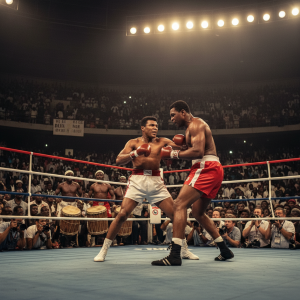
Prior to the Tyson era, major fights like the ‘Thrilla in Manila’ were primarily watched in theaters and arenas via closed-circuit broadcasts. While this model was profitable, it had a limited reach. When Tyson began his destructive path through the heavyweight division, promoters realized that the home audience was an untapped goldmine. By the time Tyson fought Michael Spinks in 1988, the industry had shifted. That fight alone generated massive revenue, signaling to cable providers that boxing could be the ‘killer app’ for subscription-based services.
The 91-Second Phenomenon
One of the most remarkable aspects of Tyson’s PPV dominance was the brevity of his fights. In 1988, fans paid record amounts to watch Tyson dismantle Michael Spinks in just 91 seconds. In any other era, a 91-second main event might have been seen as a rip-off. However, with Tyson, the brevity was the brand. People weren’t paying for a 12-round tactical masterclass; they were paying to witness an explosion of human violence. This changed the marketing of boxing from ‘sporting competition’ to ‘must-see spectacle.’
The Aura of Invincibility as a Marketing Tool
Promoters like Don King understood that Tyson’s aura was his greatest asset. They marketed his fights not just as athletic contests, but as historical events. The narrative was always: ‘Will this be the night someone survives?’ This psychological hook drove buy rates to unprecedented heights. Tyson’s intimidating persona, combined with his high-speed knockouts, created a sense of urgency. If you didn’t buy the PPV, you risked missing a cultural moment that would be talked about for weeks.
Breaking the Million-Buy Barrier
Tyson was the first fighter to consistently break the one-million-buy mark, a feat that was once thought impossible. His 1991 fight against Razor Ruddock and his 1995 return against Peter McNeeley proved that his drawing power was independent of his championship status. Even after serving time in prison, the public’s fascination with Tyson had only grown. The McNeeley fight, which lasted less than one round, pulled in over 1.5 million buys, cementing Tyson as the undisputed king of the box office.
The Holyfield Rivalries and Record-Breaking Revenue
The two fights between Mike Tyson and Evander Holyfield in the mid-90s took PPV to a level that was previously unimaginable. Their second encounter, famously known as the ‘Bite Fight’ in 1997, drew 1.99 million buys. At the time, this was a staggering figure that generated over $100 million in domestic PPV revenue alone. These fights proved that a high-stakes rivalry, combined with Tyson’s unpredictable nature, could attract casual viewers who normally wouldn’t watch boxing.
Controversy as a Commercial Catalyst
Tyson’s career was often marred by controversy, but in the world of PPV, notoriety is often more profitable than virtue. Every headline-grabbing incident—from his legal troubles to his infamous press conference brawls—served as a commercial for his next fight. The ‘villain’ narrative became a cornerstone of PPV marketing. Fans would pay to see Tyson win, but just as many would pay in the hopes of seeing him finally defeated. This binary emotional investment is what makes a PPV star.
The Tyson vs. Lewis Super-Fight
In 2002, the fight between Mike Tyson and Lennox Lewis required a historic collaboration between rival networks HBO and Showtime. This was a testament to Tyson’s gravity; the two biggest entities in boxing television had to put aside their differences to distribute the event because the financial stakes were too high to ignore. The fight generated 1.72 million buys and remained the highest-grossing PPV in history for several years, proving that even in the twilight of his career, Tyson was the biggest draw in the world.
Establishing the ‘Big Event’ Blueprint
The structure of modern PPV events—with high-production shoulder programming like ‘All Access’ or ’24/7’—owes a debt to the Tyson era. The way Tyson’s life and training camps were documented created a reality-TV feel before the genre even existed. Promoters learned that by selling the man, they could sell the fight. This blueprint was later perfected by fighters like Floyd Mayweather and Conor McGregor, but Tyson was the original architect who proved the model worked.
Impact on the Under-card and Undisputed Growth
Tyson’s massive PPV reach also benefited the broader boxing ecosystem. Because millions were tuning in to see Tyson, the fighters on his under-cards received unprecedented exposure. This helped launch the careers of other champions and ensured that the sport had a pipeline of talent. The sheer volume of money Tyson brought into the sport allowed for higher purses across the board, raising the standard of living for professional boxers globally.
The Globalization of Boxing Media
While PPV is primarily a domestic US business model, Tyson’s popularity made it a global phenomenon. His fights were sold to international broadcasters at record prices, creating a global ‘event’ culture. Whether it was Tokyo, London, or Las Vegas, the world stopped to watch Tyson. This globalization laid the groundwork for the modern era where fights are streamed live to millions of devices across different continents simultaneously.
Why the ‘Tyson Model’ is Hard to Replicate
Many have tried to replicate the Tyson PPV success, but few have succeeded because Tyson possessed a unique combination of factors:
- Unmatched Power: The threat of a one-punch knockout at any second.
- Short Fights: Creating a ‘blink and you’ll miss it’ necessity.
- Authentic Intensity: A persona that wasn’t manufactured for the cameras.
- Cultural Cross-over: Appeal that reached far beyond boxing fans.
This combination made him a once-in-a-century commercial force.
The Legacy of the PPV King
Today, the influence of Mike Tyson is visible in every major combat sports event. The pricing tiers, the marketing strategies, and the focus on ‘personality’ over ‘rankings’ are all echoes of the Tyson era. He proved that a single individual could become a platform unto themselves. Even in his 50s, Tyson’s exhibition matches continue to draw massive audiences, proving that the brand he built in the 80s and 90s is one of the most durable in sports history.
Financial Evolution of the Sport
Before Tyson, a million-dollar purse was a rarity reserved for the absolute legends of the sport. Post-Tyson, the ceiling was shattered. He was the first athlete to regularly generate nine-figure revenues for his promoters and networks. This shift forced boxing to become more professional and business-oriented, leading to the sophisticated data-driven marketing we see in the industry today.
Conclusion: The Eternal Impact of Iron Mike
In conclusion, Mike Tyson did not just change how we watch boxing; he changed how the world consumes sports entertainment. He turned the Pay-Per-View model from a niche experiment into a dominant economic force. Every time a fan clicks ‘buy’ on a modern fight card, they are participating in a system that Mike Tyson built with his own two hands. His legacy is not just the knockouts, but the multi-billion dollar industry that continues to thrive on the ‘spectacle’ he perfected.