



Mike Tyson remains one of the most polarizing and fascinating figures in the history of sports. Bursting onto the scene with a ferocity that terrified opponents and captivated audiences, he became the youngest heavyweight champion in history at just 20 years old. However, behind the knockout reels and the championship belts lay a complex narrative of a young boy thrust into a man’s world, ill-equipped to handle the suffocating weight of global superstardom.
The Architect of Iron Mike: Cus D’Amato
To understand the price Tyson paid for his fame, one must first understand the vacuum from which he emerged. Rescued from a juvenile detention center by legendary trainer Cus D’Amato, Tyson was molded from a troubled youth into a fighting machine. D’Amato didn’t just teach Tyson how to peek-a-boo box; he instilled a psychological armor, convincing a scared boy that he was a god of war. This intense mental conditioning created a dichotomy between the sensitive individual Tyson was and the monster he was required to be in the ring.
The tragedy of Tyson’s early career was the untimely death of D’Amato in 1985, just as Mike was on the cusp of greatness. Losing his father figure left Tyson emotionally adrift. While physically he was prepared to dismantle any heavyweight in the world, emotionally he was a rudderless ship in a storm. The discipline and protective bubble D’Amato had provided popped, leaving the young fighter vulnerable to the vultures of the boxing industry.
Too Much, Too Soon
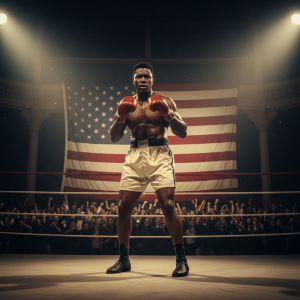
When Tyson defeated Trevor Berbick in 1986 to win the WBC title, he achieved immortality, but he also inherited a kingdom he wasn’t ready to rule. By his early twenties, Tyson was earning tens of millions of dollars. For a kid from Brownsville, Brooklyn, who grew up with nothing, this influx of wealth was overwhelming. Without the guidance of D’Amato, Tyson began to surround himself with an entourage that prioritized partying and spending over discipline and training.
The fame brought with it a level of scrutiny that few human beings ever experience. Every move Tyson made was documented by the tabloids. His marriage to Robin Givens became a public spectacle, dismantling his focus and stripping away his privacy. The media built him up as the ‘Baddest Man on the Planet,’ a persona that Tyson felt compelled to live up to even outside the ring, leading to erratic behavior and violent outbursts.
The Predators Enter the Ring
As Tyson’s fame grew, the protective circle D’Amato had built was replaced by opportunists. The introduction of Don King into Tyson’s life marked a significant turning point. The business of boxing is notoriously ruthless, and Tyson became the ultimate cash cow. He was maneuvered away from the training team that had built him—Kevin Rooney and the Catskill crew—and isolated into a world where ‘yes men’ enabled his worst impulses.
This transition had a tangible effect on his performance. While his natural talent kept him winning for a time, the technical brilliance of his early fights began to fade. He relied more on one-punch power and less on the head movement and combinations that made him untouchable. The discipline required to maintain peak physical condition was eroding under the temptations of his celebrity lifestyle.
The Tokyo Shattering
The price of his chaotic lifestyle came due in 1990 in Tokyo, Japan. Entering the ring against Buster Douglas as a 42-to-1 favorite, Tyson looked invincible to the public, but inside his camp, the rot had set in. He was undertrained and mentally checked out. The knockout loss to Douglas wasn’t just a defeat; it was the shattering of the aura of invincibility that was Tyson’s greatest weapon.
That loss signaled the beginning of a dark decade. The psychological toll of being knocked off the pedestal was immense. Tyson, who had defined his entire self-worth through his dominance in the ring, was forced to confront his humanity. Instead of rebuilding, he spiraled further into controversy, leading to the rape conviction in 1992 that resulted in a prison sentence.
Prison and the Loss of Prime Years
Spending three years in prison during what should have been his athletic prime is perhaps the most quantifiable price Tyson paid. Upon his release, he was physically imposing but technically diminished. The ‘Iron Mike’ of the 80s was gone, replaced by a fighter who fought with rage rather than precision. The fame that had once brought him adulation now brought him infamy.
The psychological scars of early fame manifested in extreme paranoia and isolation. Tyson famously spoke about how he hated the person he had become. The pressure to maintain a lifestyle he couldn’t afford led to financial ruin. despite earning over $400 million in his career, Tyson filed for bankruptcy in 2003. The money was gone, siphoned by promoters, spent on mansions and tigers, and wasted on a lifestyle designed to mask his inner pain.
The Holyfield Incident and Rock Bottom
The infamous ‘Bite Fight’ against Evander Holyfield was a cry of desperation. It was the act of a man who felt cornered, not just by an opponent he couldn’t bully, but by a life he couldn’t control. It resulted in a suspension and further vilification. At this stage, Tyson was more of a sideshow attraction than a serious athlete, a tragic figure consumed by the very persona that made him rich.
However, the story of Mike Tyson does not end in tragedy. The years following his retirement have shown a remarkable transformation. Stripped of the boxing title and the entourage, Tyson was forced to rebuild his identity from the ground up. He began to confront the trauma of his childhood and the toxicity of his early fame with a level of honesty that is rare in public figures.
Redemption and Wisdom
Today, Mike Tyson stands as a survivor. Through his one-man show, his podcast, and his business ventures, he has reinvented himself as a philosopher of sorts. He speaks openly about mental health, the dangers of ego, and the emptiness of material wealth. He has become a cautionary tale, but also a beacon of hope for those struggling with their own demons.
- Loss of Childhood: Tyson never had the chance to grow up normally; he was a weapon before he was a man.
- Financial Illiteracy: Earning millions without knowledge led to exploitation.
- Mental Health: The pressure of being the ‘baddest man’ created severe anxiety and depression.
- Lack of Support: After D’Amato, he lacked genuine guardians.
In conclusion, the price of fame at a young age for Mike Tyson was the loss of his formative years, his financial security, and for a long time, his peace of mind. His journey highlights the critical importance of mentorship and mental health support for young athletes. Tyson survived the fire of early stardom, but he bears the burns to prove it, serving as a living lesson on the perilous cost of achieving too much, too soon.