


For decades, a compelling piece of logic has circulated through the lifting zeitgeist: if the concentric phase is where a lifter naturally fails a repetition, is the eccentric—or lowering—phase truly being utilized to its maximum potential? Because muscles can generally handle significantly more weight during the lowering phase than they can when lifting, the logic follows that standard training leaves the eccentric phase under-loaded. This realization gave rise to the concept of accentuated eccentrics, or eccentric overload training, a technique designed to supercharge muscle growth and strength by introducing heavier loads during the descent.
However, tidy logic is not data. When sports scientists line up the actual research on accentuated eccentrics, the resulting story turns out to be considerably messier than the persuasive sales pitch. A recent study by Yue and colleagues adds new data to this ongoing scientific debate, forcing coaches and athletes to re-evaluate whether manipulating eccentric loads is genuinely worth the logistical trouble for hypertrophy.
To understand the mechanics of this research, it helps to first examine how eccentric overload is traditionally achieved in a laboratory or specialized strength setting. One of the most common methods involves weight releasers. These are detachable hooks that hold extra plates onto the sleeves of a barbell during the eccentric portion of a lift. Once the bar reaches the bottom of the movement, the hooks detach, allowing the lifter to press or squat a significantly lighter concentric load back to the top.
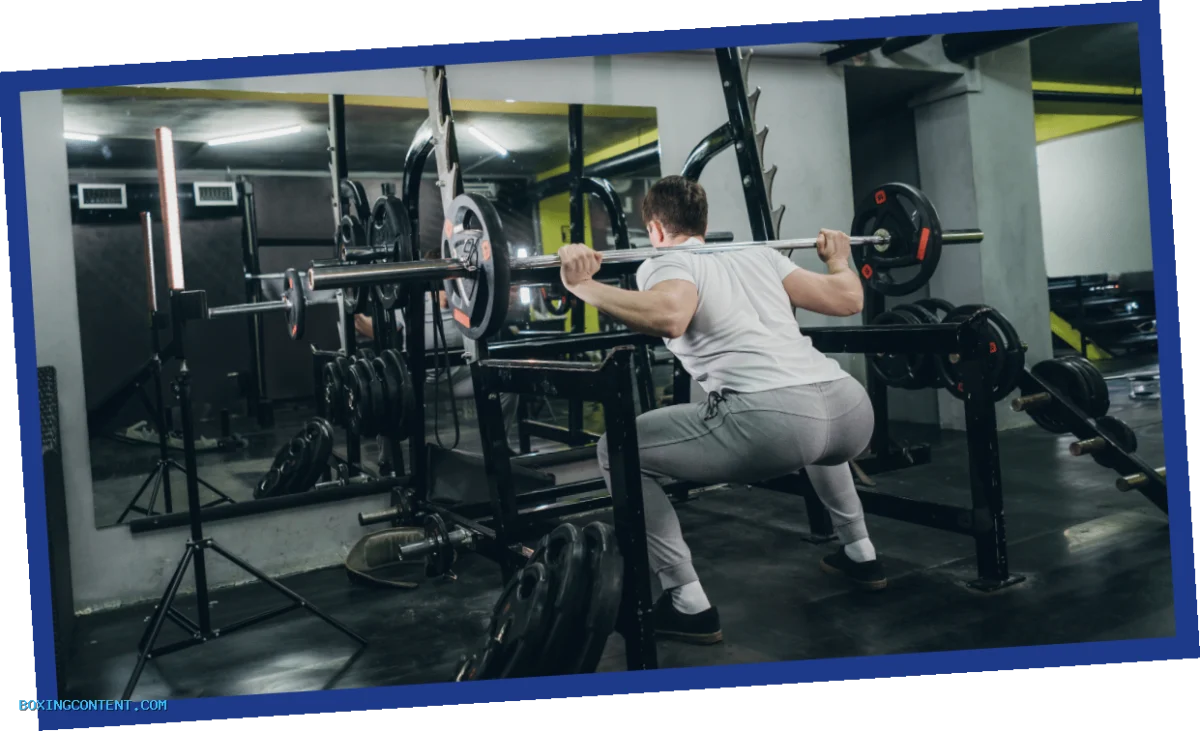
In the study by Yue et al., researchers sought to test the effects of varying degrees of this specific loading scheme. Participants were assigned to perform four sets of six repetitions on the barbell squat. One group of subjects performed traditional squats with uniform weight throughout the movement. A second group utilized weight releasers on two out of the six repetitions per set, while a third group used weight releasers on all six repetitions.
When the participants used the weight releasers, the eccentric phase of the squat was loaded at a punishing 120 percent of their one-rep max, whereas the concentric phase was loaded at a more moderate 75 percent of their one-rep max. This unique study design enabled the researchers to directly compare varying doses of eccentric overload against standard lifting protocols.
Interestingly, the researchers chose to measure the cross-sectional area of the rectus femoris—a choice that sports science critics note may not have been ideal, given the biarticular nature of the muscle crossing both the hip and the knee. Despite this unusual site selection for ultrasound measurements, the eccentric overload training protocols ultimately led to greater localized growth in that specific muscle group.
Yet, when looking at the broader landscape of sports science literature, previous research has painted a much less convincing picture for eccentric overload as a magic bullet for overall muscle hypertrophy. Two of the strongest longitudinal studies conducted prior to this latest trial tell a more nuanced story. In a landmark study led by Douglas and colleagues, trained rugby players completed a rigorous 12-week squat training program. One group performed accentuated eccentrics using a Smith machine, with the lowering phase set to roughly 20 percent heavier than the concentric load.
The results of the Douglas study showed that while the accentuated eccentric group experienced early, tangible gains in raw strength and sprint speed, their overall quadriceps muscle thickness did not increase by an amount significantly different from the control group. Other longitudinal research investigating the topic has consistently echoed this pattern, revealing similar levels of muscle hypertrophy between traditional training and accentuated eccentric loading when compared on a set-by-set basis.

From a physiological perspective, this lack of dramatic hypertrophic superiority makes sense once researchers look beyond the isolated eccentric phase of a lift. Increasing the load during the eccentric portion of an exercise places a much higher cumulative fatigue burden on the central nervous system and local muscle tissue. This elevated fatigue naturally reduces the number of repetitions a lifter can successfully perform later in the set, or across the entire training session. As a broad physiological heuristic, the total mechanical tension accumulated across an entire set may end up being comparable enough between traditional and overloaded methods that the ultimate hypertrophic outcomes remain remarkably similar.
Even if accentuated eccentrics did provide a minor, statistically detectable edge for muscle growth, a significant practical barrier remains for everyday lifters: implementation. Performing accentuated eccentric loading safely for free-weight movements requires specialized hardware. As noted, weight releasers require detachable hooks, extra weight plates, and ideally one or two attentive spotters to catch and reattach the hooks between every single repetition. While manageable in a specialized powerlifting or strength sports facility, that workflow is entirely impractical in a crowded commercial gym environment.
While newer technological solutions, such as motorized resistance devices like the Voltra, are beginning to make eccentric overload more accessible by dynamically adjusting resistance via software control, these tools remain niche, expensive, and far from widespread adoption. Until such technology becomes standard equipment in commercial fitness spaces, true accentuated eccentrics will remain exceptionally difficult for the average gym-goer to execute on free-weight exercises.
Consequently, from a purely hypertrophy-focused perspective, accentuated eccentric loading often resembles a solution in search of a problem. The existing body of research suggests that standard, traditional resistance training already exposes skeletal muscle to a more than sufficient eccentric stimulus to maximize growth, provided the sets are taken close to muscular failure with an adequate range of motion.
For athletes who remain determined to experiment with accentuated eccentric loading despite these hurdles, several practical alternatives exist. Devices that automatically increase resistance on the negative phase offer a high-tech solution, but lifters can also mimic the stimulus using low-tech methods. For instance, individuals can use a controlled amount of body assistance to help lift the weight during the concentric phase—such as using one arm or leg to assist the other—followed by a slow, deliberate, unassisted lowering phase. Similar eccentric-focused strategies can be applied to various machine-based movements by performing the lowering phase unilaterally and utilizing both limbs for the concentric push or pull, bypassing the need for clumsy weight releasers and extra spotters.
Ultimately, this ongoing line of research serves as a valuable reminder of the potential dangers inherent in embracing a compelling theoretical rationale without rigorously testing it against actual empirical evidence. The intuitive concept that greater eccentric force production must inherently yield greater muscle growth sounds undeniably persuasive in isolation, but when put to the test under controlled conditions, the hypothesis frequently falls short. It stands as a clear illustration that in the realm of exercise science, clean logic does not always equal proven data.
For those looking to stay informed on the intersection of lifting science and practical application, the Stronger By Science weekly newsletter provides ongoing summaries of the latest research alongside actionable training insights for athletes and coaches.