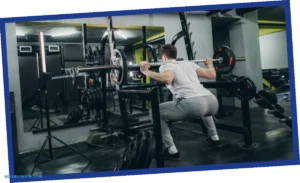



When movement coach Vanja Moves stepped into the gym for Episode 2 of her YouTube series Out of Breath, she likely expected a challenging workout. However, enduring a leg session with Gal Yates—wife of six-time Mr. Olympia legend Dorian Yates—proved to be an entirely different tier of physical exertion. Midway through the grueling lower-body circuit, the host was left panting and confessed, “I actually can’t walk.”
The session offered viewers an intimate look into the training philosophy of a woman who turned pro bodybuilder in her thirties and won her first competitive year. Behind Gal Yates’ approach to fitness lies a controversial and uncompromising philosophy: that true muscle growth stems from absolute intensity rather than endless volume, and that lower-body training requires a level of effort that makes frequent sessions unnecessary and solo lifting genuinely unsafe.
Intensity Over Volume: Gal’s Leg Day Rule
When Vanja posed the question of how often the lower body truly deserves a dedicated training session, Gal offered a blunt and definitive answer. According to the veteran athlete, the legs only need to be worked once a week if the effort is exceptionally high, or twice a week at the absolute maximum.
"You don’t need volume to grow muscle. You need intensity," Gal explained during the session.
While modern exercise science presents a more nuanced view—suggesting that both total weekly training sets and proximity to failure influence muscle growth, with individual responses varying widely across the population—Gal stands firmly by her method. She acknowledged that individual differences dictate success in the gym, noting that while her approach is the most effective path for her own physique, everyone must ultimately discover what works best for their unique physiology.
This unwavering confidence is rooted in her extensive athletic history. Long before she met Dorian Yates, Gal was already training alongside men and adopting the rigorous, high-intensity methods that would later define her competitive career.
Inside the Session and the Cue That Defined Every Rep
The workout itself was a punishing circuit designed to utterly exhaust the quads, glutes, and hamstrings using specialized equipment. But rather than focusing solely on the weight lifted or the speed of the repetitions, Gal anchored the entire session around a single, demanding mental and physical cue.
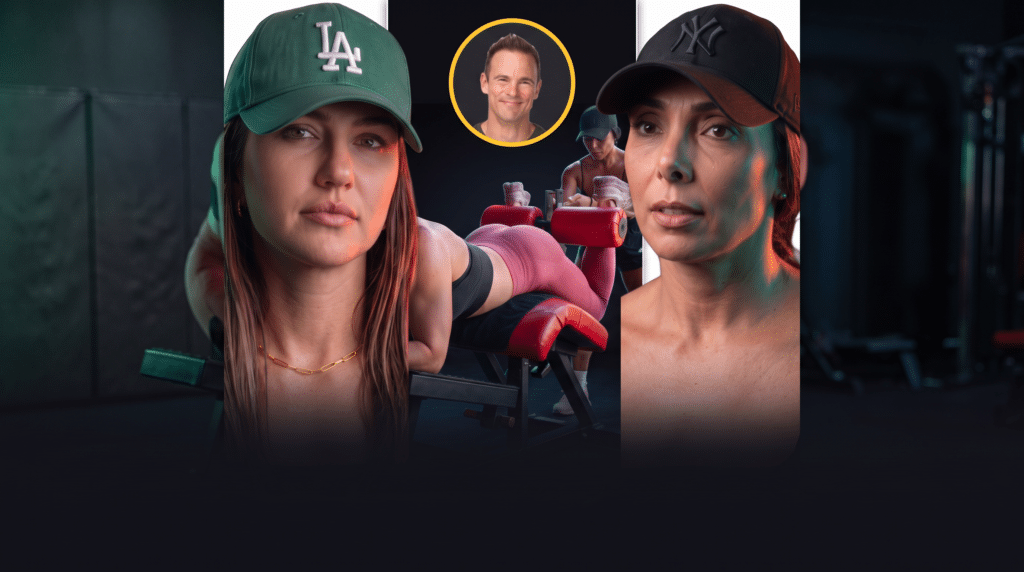
"Holding on the way down. It’s the most important phase of the movement," Gal emphasized. "It’s not going up. It’s going down."
Throughout the circuit, Gal continuously reminded Vanja to control the eccentric, or lowering, phase of every exercise. By urging her partner to make every repetition harder rather than seeking shortcuts or utilizing momentum, Gal reinforced a foundational tenet of high-intensity training. This constant coaching underscored her belief that muscle fiber recruitment and mechanical tension are maximized during the descent, turning standard movements into grueling tests of endurance.
Such extreme levels of exertion, however, come with strict operational boundaries. When Vanja questioned whether this caliber of intensity could ever be achieved while training alone, Gal was quick to shut the idea down, particularly when it comes to the lower body.
"Especially for the last reps, you’re going to need to be spotted," Gal stated, emphasizing that reaching true muscular failure without a trusted training partner introduces unnecessary risks to safety. Her uncompromising view extends to the general atmosphere of training spaces as well; she maintains that genuine, hard work naturally produces gym noise, and she openly criticizes modern commercial facilities that enforce strict rules against dropping weights or expressing physical strain.
Old-School Machines and Functional Philosophy
For this intense leg day, the duo trained at M13, a hardcore Marbella gym renowned for its collection of vintage, heavy-duty equipment. Gal holds these old-school machines in high regard, asserting as a professional that vintage manufacturing often yields superior mechanics compared to modern fitness technology. While debates persist regarding machine design quality across different eras and brands—with biomechanical experts noting that smooth resistance profiles and paths tailored to individual anthropometry matter most—Gal remains convinced of the superiority of her preferred training environment. She is quick to add, however, that these hardcore spaces remain welcoming to beginners willing to embrace the work.
Beyond bodybuilding, Gal’s athletic identity is deeply shaped by her diverse childhood background, which included gymnastics, ballet, and later boxing. When pressed on who holds the athletic edge at home between her and her legendary husband, Gal playfully claimed the advantage in overall functional skills, drawing from her multifaceted background.
That eclectic physical foundation also informs her critique of contemporary bodybuilding culture. Gal observed that many specialized bodybuilders struggle to perform basic, everyday movements outside of the gym environment, noting that athletes can sometimes become so specialized that they can barely manage a natural run.
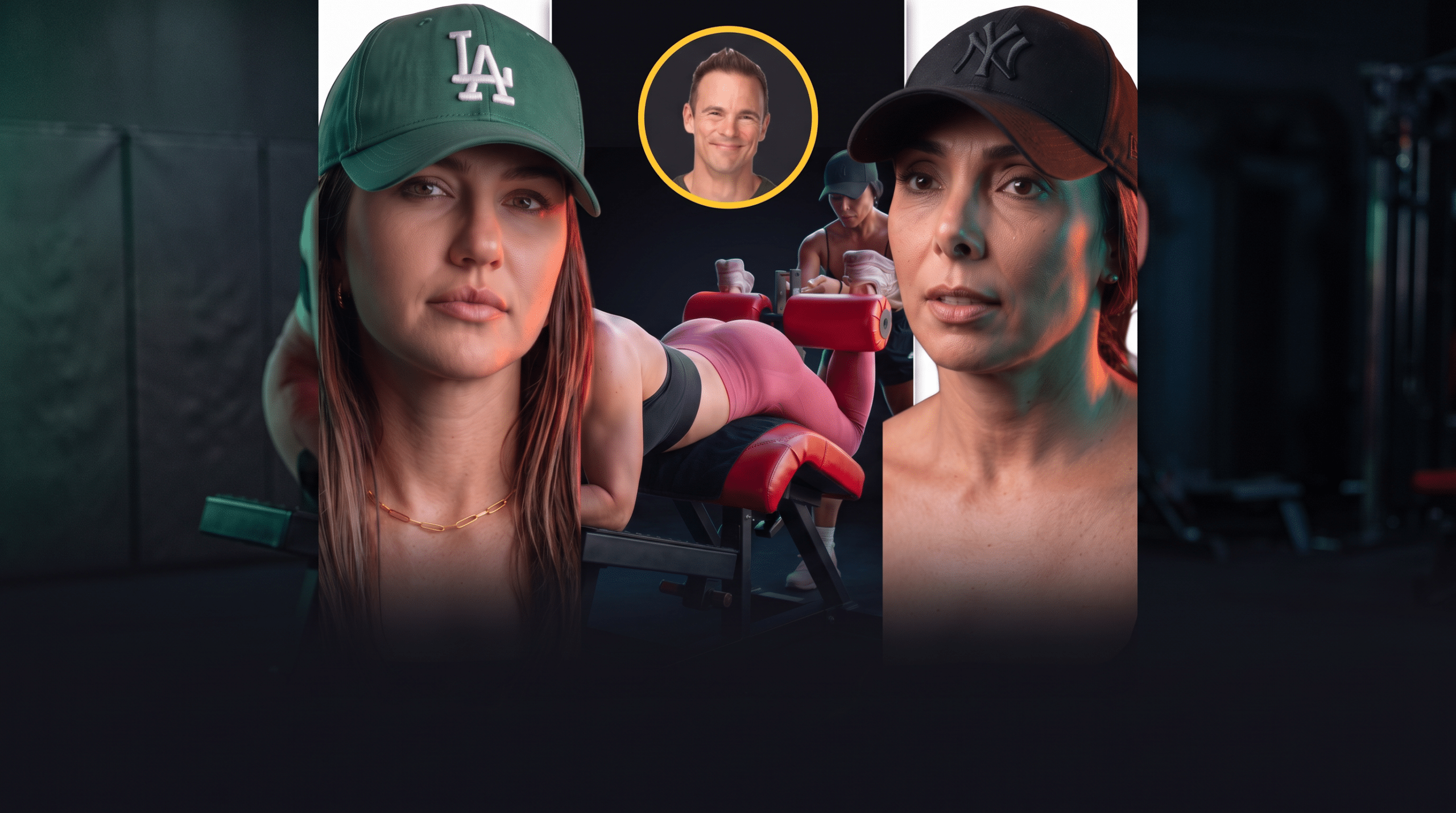
Her current overarching objective is longevity. "I want to move forward and I want to stay healthy," she explained, emphasizing that her present training is deeply tied to long-term wellness. When asked directly if she considers bodybuilding to be a healthy pursuit, her response captured the dichotomy of the sport: "Yes and no," pointing to an industry that outwardly promotes vitality while occasionally fostering practices that achieve the exact opposite.
The Mindset Behind the Muscle and Looking Ahead
Gal’s entry into competitive bodybuilding did not happen in her youth; she discovered the sport in her thirties and remarkably turned professional within her very first year of competing. Driven by an intense competitive hunger, her motivation was straightforward from the start. "I want to go to win. I don’t want to get second place."
Despite her success on stage, she admits that the most difficult aspect of the sport was never the physical exertion in the weight room, but rather the rigorous discipline of dieting. Navigating nutritional restrictions, she explained, challenges an athlete on a psychological level, requiring constant mental fortitude to overcome daily impulses. In her view, the resilience forged through such athletic discipline invariably transfers over to business and everyday life, where goals, setbacks, and fears are ever-present.
Now at 52 years of age, Gal shows no signs of slowing down or stepping away from an active lifestyle, with swimming standing out as her next intended physical pursuit. Looking decades into the future, she envisions a life where movement remains central until her final days.
"The only day I’m going to stop is when I die," she asserted. While she acknowledges that aging will eventually require physical adjustments as time catches up, she maintains that her internal perception of self will remain unchanged. "Age is not a number. It’s about how you see yourself and how you feel. It’s a mindset."