

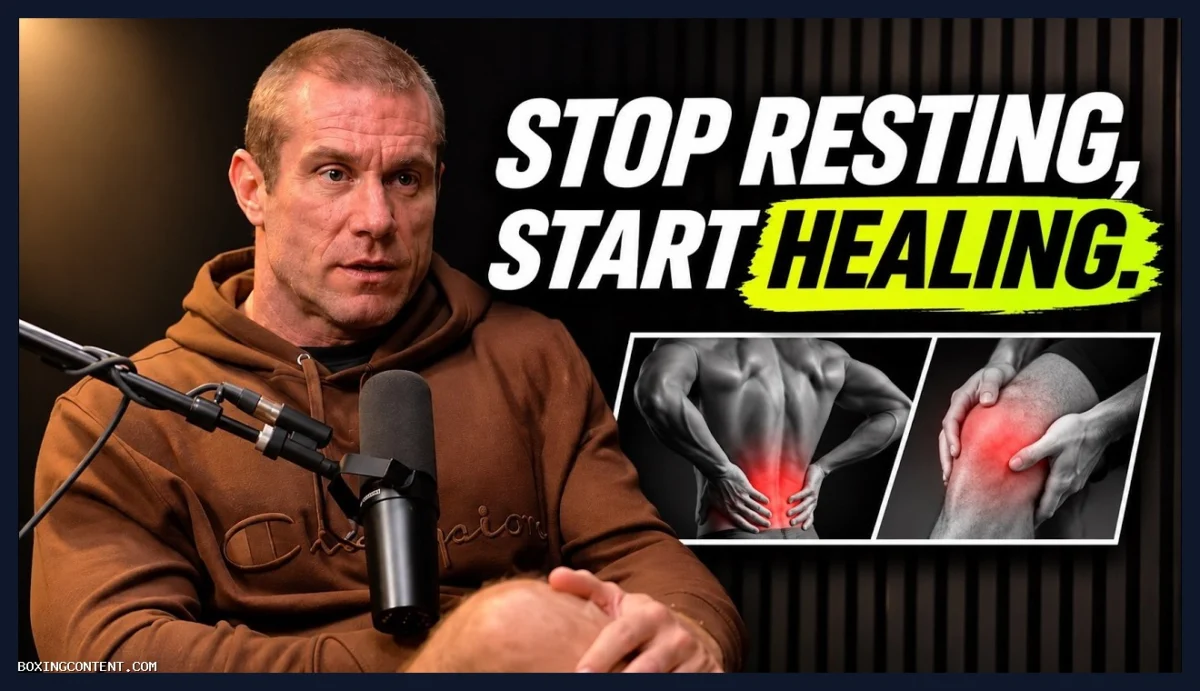
Pain does not automatically have to bench you. That is the central message fitness coach Judd Lienhard delivered during a recent podcast episode addressing how athletes and everyday gym-goers can continue training effectively around shoulder, back, hip, knee, elbow, and ankle problems.
Lienhard’s overarching philosophy challenges the conventional instinct to completely halt physical activity at the first sign of discomfort. Instead, he focuses on how the body interacts with stress, arguing that physical stress is not inherently good or bad. Rather, the impact of stress depends entirely on how the body handles it. Joint stress that an individual can successfully recover from and adapt to ultimately builds physiological capacity. Conversely, stress that damages tissue—even in minor ways—can snowball into chronic deterioration if it is not managed correctly.
While offering these insights as general educational tools rather than medical prescriptions, Lienhard emphasizes that suspected tears, significant acute injuries, and lingering pain always warrant a professional evaluation by a qualified physical therapist. For those navigating manageable aches and persistent joint irritations, however, a series of strategic adjustments can keep training momentum alive without sacrificing long-term recovery.
One Question Decides Every Exercise Swap
The framework for modifying any workout around an injury boils down to a fundamental evaluation of stress and tissue tolerance. Lienhard explains that lifters and athletes must constantly assess whether a specific movement promotes productive adaptation or cumulative damage. When an exercise causes sharp pain or inflammatory flare-ups, it serves as a signal that the targeted tissue cannot currently handle that specific type of load.
Rather than abandoning fitness routines altogether, Lienhard advocates for intelligent exercise swaps. By identifying alternative movements that bypass compromised areas while still engaging the surrounding musculature, individuals can maintain their strength and conditioning. This philosophy forms the backbone of his specific advice for navigating injuries from the upper body down to the lower extremities.
Shoulder Pain and Rotator Cuff Irritation
Rotator cuff injuries are exceptionally common in strength training and recreational sports, and many individuals develop minor tears over time without even realizing it as they age. Lienhard notes that because the rotator cuff is comprised of four distinct muscles—the supraspinatus, infraspinatus, teres minor, and subscapularis—what an individual should avoid depends heavily on the precise location and nature of the irritation.
When addressing shoulder discomfort, certain overhead or unstable free-weight pressing movements often need to be paused to give the joint time to recover. As a smarter substitute, Lienhard highlights landmine presses as an exceptionally well-tolerated option for people dealing with rotator cuff issues. Furthermore, he offers a somewhat unconventional perspective on equipment selection: he suggests considering machines over free weights during rehabilitation phases. While free-weight presses force compromised stabilizers to independently manage unstable loads, machine-based alternatives allow larger, primary muscle groups to shoulder the work while giving the delicate rotator cuff necessary breathing room.
Why Squats Make Your Low Back Hurt
Lower back discomfort during lower-body training is frequently blamed on the squat movement itself, but Lienhard points out that the root cause often lies in improper bracing technique. The classic coaching cues of keeping the chest high, eyes fixed toward the ceiling, and taking a massive breath into the upper chest actually tend to hyperextend the lumbar spine, placing undue stress on the back of the vertebral discs.
To protect the spine, Lienhard prefers a different approach to internal pressure. He advises drawing the ribs and sternum down, then breathing out into a comprehensive, belt-like brace encompassing the entire torso. This technique distributes intra-abdominal pressure evenly across the vertebral discs rather than concentrating force on the lower back.
Beyond bracing mechanics, training frequency plays a critical role in managing spinal health. Rather than relying on a single, all-out weekly squat session that overloads the lower back, Lienhard recommends distributing the volume across more frequent, smaller stresses. For instance, squatting three times a week while keeping two of those sessions light, focused on pauses, and dedicated strictly to technique work gives the back ample time to recover and build resilience.
Hip Flexor Pain Without Losing Mobility
Hip flexor irritation frequently plagues runners and lifters alike, requiring subtle adjustments to movement patterns to preserve joint health without sacrificing overall mobility. For runners, Lienhard suggests leaning forward slightly, keeping the chest lower to help level the pelvis, and taking shorter, quicker strides to reduce excessive tension on the hip flexors.
Lunges also demand caution, particularly dynamic variations like walking lunges, which can often be swapped out for controlled step-ups. When performing a Bulgarian split squat, Lienhard emphasizes the importance of a proper setup. A true Bulgarian split squat sits lower, with the ball of the rear foot planted securely. This specific configuration generates distinct glute tension that alleviates hip flexor strain, distinguishing it from many of the quad-dominant, rear-foot-elevated variations commonly seen in commercial gyms.
To address mobility without exacerbating irritation, Lienhard steers clients away from passive stretching in favor of structured movement sequences. Incorporating methodologies such as Proprioceptive Neuromuscular Facilitation (PNF) stretching and modern joint-conditioning protocols can yield better results. Crucially, he stresses the importance of squeezing the glutes during these movements to anchor the pelvis in place, ensuring that the active range of motion originates from the hip joint rather than forcing unwanted extension through the lower back.
Knee-Friendly Squatting
Experiencing knee discomfort does not mean lower-body training must come to a complete halt. Modified variations of traditional movements can still effectively target the glutes, adductors, core, and lumbar region without placing excessive shear stress on the knee joint.
When traditional heavy loading becomes counterproductive, exploring concentric-focused movements offers a viable pathway for maintaining muscle mass. Drawing on coaching principles and broader exercise science observations, Lienhard notes that when overall training volume is equated, concentric-only movements can build muscle just as effectively as traditional weight training. For athletes seeking knee-friendly options, his preferred concentric exercises include sled pushes, seated high-resistance stationary biking, and backward sled pulls.
Golfer’s Elbow: Keep Training Smartly
Elbow tendinopathy, often referred to as golfer’s elbow, is notoriously stubborn. Lienhard speaks from personal experience, having battled a severe case following a demanding stretch of coaching children in speed work, throwing footballs, and practicing high-volume muscle-ups.
For severe flare-ups, taking a brief hiatus of around a week can sometimes be justified to calm acute inflammation. However, for ongoing management, patience is paramount. Because tendon tissue heals slowly due to limited blood supply, individuals must moderate their expectations and commit to long-term, progressive loading strategies rather than expecting an overnight fix.
Ankle Sprains Need More Than Waiting
Ankle sprains are frequently dismissed as minor inconveniences that simply require a bit of time on the couch. Lienhard pushes back strongly against this notion, viewing a sprained ankle as a legitimate ligament tissue injury whose severity varies widely. Consequently, he remains skeptical of extended passive rest, excessive icing, and prolonged immobilization in boots or rigid braces, though he acknowledges that short-term ice application can be useful for acute pain management.
While this perspective reflects his coaching philosophy rather than universal medical consensus—and individuals should always consult their clinicians before discarding prescribed medical devices—Lienhard emphasizes that recovery requires active progression. His approach relies on a ladder of gradual loading and stability work designed to restore full function. Even after an ankle begins to feel better, he warns that specialized, deliberate strengthening is essential to prevent the cycle of chronic, repeated sprains that so often plague athletes who rush back to full activity too quickly.
The overarching takeaway from Lienhard’s training philosophy is clear: when faced with pain or injury, the goal should be modification rather than cessation. By carefully matching exercises to what compromised tissue can successfully tolerate, progressively rebuilding physical capacity, and consulting qualified medical professionals when pain persists, athletes can navigate setbacks and continue training safely.