



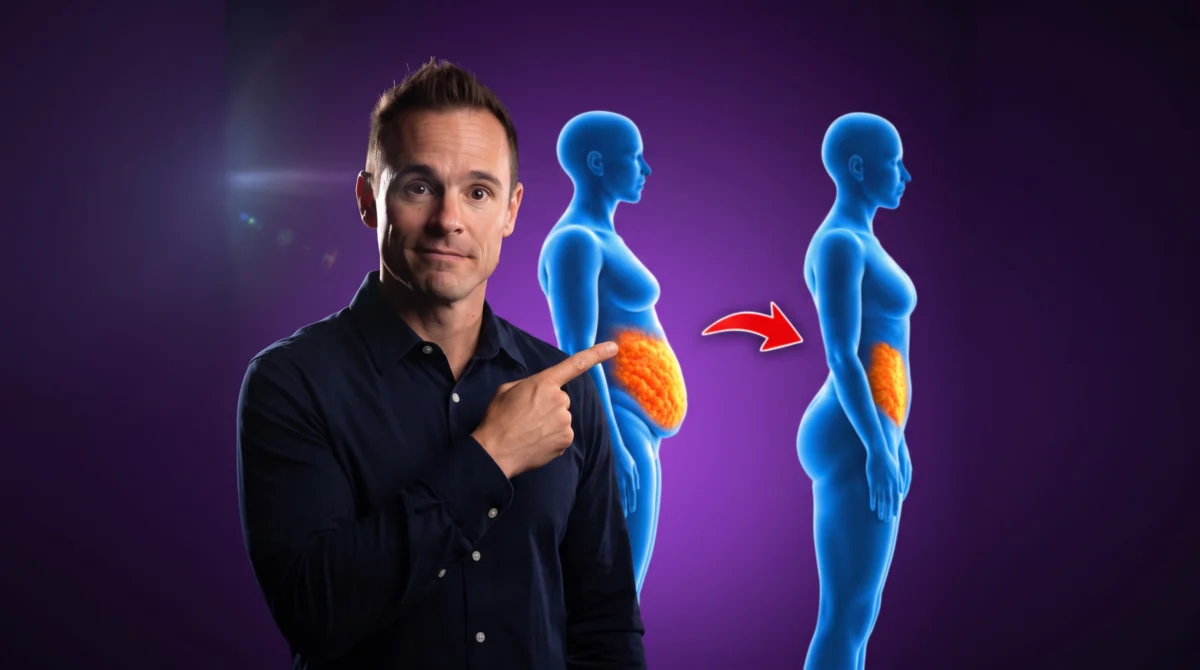
For millions of individuals striving to improve their physical health, belly fat has long held a frustrating reputation for being remarkably stubborn. Even when individuals maintain rigorous workout schedules and meticulously dial in their daily caloric intake, midsection fat often clings on stubbornly. However, recent insights into human physiology and evolutionary biology suggest there is a distinct, biological reason for this phenomenon. Understanding the complex science behind fat storage, and specifically how different cellular receptors control fat release, is beginning to unlock new strategies for individuals attempting to overcome these physiological hurdles and finally lose those final few pounds.
Emerging perspectives in metabolic health indicate that combining targeted, high-intensity exercise formats with strategic periods of fasting may offer the missing piece of the puzzle that many people need to overcome their bodies’ natural defense mechanisms. To fully grasp why traditional approaches frequently fall short, researchers emphasize the necessity of examining the evolutionary pressures that shaped human biology over thousands of years.
Why Belly Fat Is So Hard to Lose
From an evolutionary standpoint, the human body developed sophisticated mechanisms to retain fat specifically within the midsection as a primary survival strategy against potential starvation and environmental stress. Abdominal fat cells are not uniform in their behavior; instead, they contain two distinct types of cellular receptors that govern the release of stored energy. Beta receptors function essentially as metabolic accelerators, signaling the cell to release fat, while alpha-2 receptors operate much like brake pads, preventing fat mobilization.
In the lower abdomen specifically, the ratio of these accelerators to brakes is starkly unbalanced, registering at roughly one beta receptor to every nine alpha-2 receptors. This means that within this specific region, there are nine times as many cellular structures working actively to lock up and preserve fat as there are structures working to release it. Far from being a design flaw, this disproportionate ratio is an inherent feature built into human physiology during eras when food scarcity and environmental volatility were constant threats to survival. Maintaining reliable energy reserves in the central region of the body historically gave early ancestors the biological buffer required to survive unpredictable and harsh conditions.
The Role of Adrenaline and Insulin
Overcoming these deeply embedded biological brakes requires a significant physiological trigger. Specifically, the body needs a robust surge of adrenaline to activate the sluggish beta receptors and transmit a clear signal to fat cells to liberate stored energy. Yet, a critical physiological catch governs this process: circulating levels of insulin must remain low in order for adrenaline to execute its function effectively.
When insulin levels are chronically elevated—a state frequently induced by frequent snacking, grazing throughout the day, or consuming high-carbohydrate meals—the metabolic environment shifts dramatically. In this elevated state, the body tends to generate a higher density of alpha-2 receptors while simultaneously downregulating the existing beta receptors. Consequently, this metabolic environment makes substantial fat loss exceptionally difficult, rendering long hours of traditional exercise largely ineffective if underlying hormonal signals are working in opposition.
Historically, various pharmaceutical endeavors attempted to exploit this exact biochemical pathway by developing compounds designed to artificially elevate adrenaline or block alpha-2 receptors to force the dissolution of abdominal fat. Unfortunately, many of these pharmaceutical interventions proved dangerous, with public health records documenting over 155 fatalities linked to specific chemical formulations. Similarly, natural alternatives such as ephedra raised severe safety concerns due to dangerous cardiovascular side effects, ultimately leading to regulatory bans and the removal of these substances from the commercial market. Other compounds, like yohimbine extracted from African tree bark, have seen exploration for their potential effects on weight management and vitality, but they continue to carry considerable health risks and are generally not recommended for routine use.
High-Intensity Interval Training: The Natural Adrenaline Spike
Given the limitations and dangers associated with pharmacological interventions, researchers have turned their attention toward natural mechanisms for stimulating adrenaline without compromising safety. Light or moderate forms of cardiovascular exercise, such as steady-state jogging or cycling, generally fail to generate a sufficient surge of adrenaline to successfully override the body’s persistent fat-storing mechanisms.
In contrast, high-intensity interval training has been shown to elevate circulating adrenaline levels to a magnitude ten to thirty times higher than baseline concentrations. This profound biochemical response positions intense intervals as one of the most potent natural methods for triggering the release of stubborn fat stores. The fundamental distinction lies in the structure of the training: HIIT relies on short, explosive bursts of maximum physical effort followed by adequate recovery intervals, contrasting sharply with prolonged, moderate-intensity exertion.
This approach involves alternating between brief phases of intense output, such as sprinting for thirty seconds, and active recovery periods, such as walking for a minute, repeated across several cycles. Such a protocol closely mirrors the sporadic, high-effort movement patterns characteristic of early human behavior, which involved bursts of hunting, evading environmental dangers, or engaging in intense physical labor interspersed with periods of rest. The unique metabolic environment generated by these brief, explosive training sessions assists the body in overriding alpha-2 receptor dominance and unlocking stubborn lipid reserves.
The Power of Extended Fasting
Complementing physical exertion with strategic nutritional timing provides another layer of influence over hormonal signaling. Extending the fasting window to eighteen or twenty hours allows circulating insulin levels to drop back down to baseline measurements, thereby establishing an optimal internal hormonal environment for fat mobilization. For many individuals, this pattern translates to consuming two primary meals—one in the early afternoon and another in the early evening—followed by a prolonged fast extending overnight and well into the subsequent day.
When systemic insulin is minimized while adrenaline remains elevated, particularly when high-intensity exercise is performed in a fasted state, the body is naturally compelled to tap directly into deep fat reserves to satisfy its energy requirements. Furthermore, extended fasting appears to exert a pronounced effect on visceral fat, which is the deep adipose tissue that wraps securely around internal organs and contributes to a protruding midsection appearance. Visceral fat demonstrates a high degree of responsiveness to reductions in circulating insulin, making intermittent nutritional restriction a powerful instrument for shrinking waistlines.
Combining Fasting and HIIT: A Three-Pronged Approach
The most efficacious framework for addressing stubborn midsection fat involves layering multiple physiological interventions to foster a synergistic response. By aligning low systemic insulin through intermittent fasting with the adrenaline-spiking properties of high-intensity exercise, individuals can recreate the ancestral metabolic conditions that naturally kept body fat percentages within optimal ranges.
Notably, the required time commitment for this physical component is surprisingly modest, often demanding merely eight to fifteen minutes of intense physical exertion performed two to three times per week. This efficient time investment contrasts sharply with the hours many people spend on traditional cardio equipment without registering measurable changes in abdominal composition.
Why Diet Still Matters—Even With HIIT
Despite the metabolic advantages conferred by targeted exercise and fasting protocols, one of the most common pitfalls individuals encounter involves inadvertently undermining their physical efforts through poor dietary choices. Frequent snacking throughout the day, the continuous intake of carbohydrates, or consuming meals late into the evening all provoke pronounced spikes in insulin. These dietary habits actively suppress the body’s physiological capacity to respond effectively to adrenaline surges.
Even relatively small quantities of carbohydrates consumed at inappropriate times can effectively halt metabolic progress. This underlying reality underscores why dietary consistency often supersedes sheer exercise intensity when pursuing sustainable body composition changes. Avoiding food consumption for at least three hours before retiring for the evening helps ensure that nocturnal insulin levels remain suppressed, allowing natural growth hormone pulses—which typically reach their daily peak during deep stages of sleep—to facilitate efficient metabolic repair and fat utilization.
Cortisol and Belly Fat: The Stress Connection
Beyond insulin and adrenaline, hormonal influences driven by chronic psychological and physiological stress play a critical role in abdominal fat regulation. Research indicates that abdominal fat cells possess a concentration of cortisol receptors up to four times greater than fat cells located in other regions of the human body. Consequently, chronic stress directly accelerates the accumulation and retention of belly fat.
Achieving restorative, high-quality sleep on a consistent basis remains non-negotiable for anyone pursuing effective fat loss. Sleep represents the biological window during which the human body operates its most efficient restorative and metabolic processes, aligning with the nocturnal surge of growth hormone. Without adequate rest, even the most meticulously planned exercise and fasting regimens will ultimately fall short of their intended outcomes. Additionally, regular exposure to natural sunlight has been shown to assist in modulating cortisol levels, offering a straightforward, accessible therapeutic habit for supporting overall metabolic health and stress management.
The Importance of Fat Quality
Dietary fat composition also demands careful attention, as not all lipids exert the same physiological effects, particularly regarding midsection fat storage. Palmitate, a specific type of saturated fat found in various processed foods and synthesized internally by the body, maintains a particularly problematic interaction with cortisol, where each substance tends to amplify the negative metabolic impacts of the other.
Conversely, health experts emphasize prioritizing oleic acid, a monounsaturated fatty acid abundantly found in olive oil, traditional lard, and tallow. Scientific observations suggest that oleic acid can counteract some of the adverse metabolic consequences typically linked to palmitate and elevated cortisol. Individuals who adopt strict low-carbohydrate frameworks, such as ketogenic diets, frequently encounter setbacks by focusing exclusively on carbohydrate restriction while neglecting the overall quality of the dietary fats they consume. Ensuring the selection of high-quality fats remains essential for achieving lasting, sustainable improvements.
Putting It All Together
Successfully addressing stubborn belly fat ultimately requires coordinating multiple intricate biological systems simultaneously, balancing insulin, adrenaline, cortisol, and dietary lipid profiles. Rather than demanding exhaustive hours spent within commercial gym facilities or adherence to unsustainable, overly restrictive dietary plans, modern insights suggest working cooperatively with human evolutionary biology rather than against it. By utilizing brief periods of high-intensity exertion alongside strategic eating schedules and robust stress management, individuals can effectively navigate the complex physiological mechanisms that historically preserved energy reserves, leading toward more sustainable health outcomes over time.