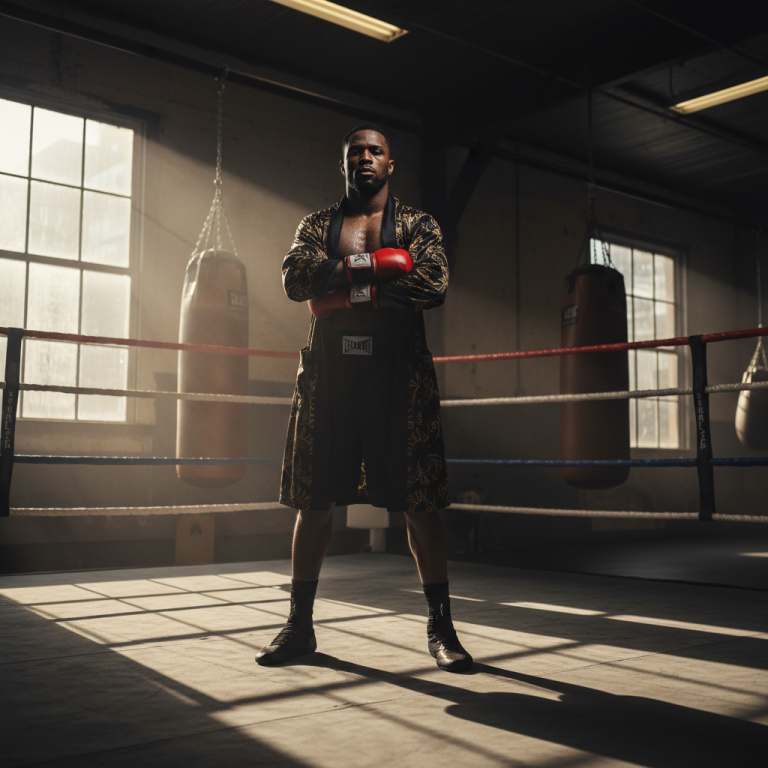



Lennox Claudius Lewis is widely regarded as one of the greatest heavyweights in the history of boxing. Standing at 6 feet 5 inches with an imposing 84-inch reach, Lewis combined physical dominance with a cerebral approach to the sweet science. As the last undisputed heavyweight champion of the world, a title he held until his retirement, his legacy is cemented by a resume that includes victories over every major contender of his era. His journey from a humble beginning in London to global superstardom is a testament to discipline, strategic brilliance, and resilience.
Early Life and Roots
Born on September 2, 1965, in West Ham, London, to Jamaican parents, Lewis spent his early childhood in England. However, his life took a significant turn when he moved to Kitchener, Ontario, Canada, at the age of 12. This dual nationality would later define his career, often leading to a complex relationship with fans in both the United Kingdom and Canada. In high school, Lewis excelled in various sports, including basketball and football, but it was in the boxing ring where he found his true calling, utilizing his height and reach to dominate opponents even at a young age.
Amateur Glory and Olympic Gold
Lewis’s amateur career was nothing short of spectacular. He represented Canada at the 1984 Summer Olympics in Los Angeles, reaching the quarter-finals. However, he was determined to achieve the ultimate prize. Four years later, at the 1988 Seoul Olympics, Lewis achieved amateur immortality. In the super-heavyweight final, he stopped the future American heavyweight champion Riddick Bowe in the second round to capture the Gold Medal. This victory signaled his readiness for the professional ranks and set the stage for a legendary rivalry.
Turning Professional and Early Struggles
Lewis turned professional in 1989, returning to his native England to pursue his career. Early on, critics labeled him as merely a ‘European champion’ with a questionable chin. Despite capturing the British, Commonwealth, and European titles, he struggled to win over the hardcore American boxing public. His path to the world title was unconventional; in 1992, after winning a title eliminator against Donovan ‘Razor’ Ruddock, he was declared the WBC Heavyweight Champion by default when Riddick Bowe famously threw the belt into a trash can rather than face him.
The Oliver McCall Setback
Every great champion faces adversity, and for Lewis, it came in September 1994. Defending his WBC title against Oliver McCall at Wembley Arena, Lewis was shocked by a massive right hand in the second round. The referee waved the fight off, handing Lewis his first professional loss. This defeat was a pivotal moment. Rather than crumbling, Lewis recognized the need for change. He sought out the legendary trainer Emanuel Steward, a partnership that would transform Lewis from a talented boxer into a complete fighting machine.
The Emanuel Steward Effect
Under the tutelage of Emanuel Steward at the Kronk Gym, Lewis refined his style. Steward instilled in him the importance of utilizing his jab, maintaining balance, and protecting his chin. The new Lewis was more cautious yet significantly more dangerous. He embarked on a road to redemption, defeating contenders like Tommy Morrison and Ray Mercer. In 1997, in an emotional rematch, Lewis faced Oliver McCall again. In a bizarre fight where McCall refused to engage and began crying in the ring, Lewis regained the WBC title via TKO, proving he had mentally moved past his earlier failure.
Unification: The Holyfield Rivalry
By the late 1990s, the heavyweight division needed a singular king. This led to a unification showdown between Lennox Lewis (WBC) and Evander Holyfield (WBA and IBF) in March 1999. The fight, held at Madison Square Garden, is remembered for all the wrong reasons. Despite Lewis appearing to dominate the action with his jab and superior size, the judges declared the bout a controversial draw. The outcry was immediate and immense, with many citing it as one of the worst decisions in boxing history.
Justice was served eight months later in November 1999. In the rematch, the two legends met again in Las Vegas. This time, there was no dispute. Lewis fought a disciplined, tactical fight, earning a unanimous decision victory to become the Undisputed Heavyweight Champion of the World. This achievement placed him in the pantheon of greats, uniting the belts for the first time since the Riddick Bowe era.
The Thunder in Africa
Complacency is often a champion’s greatest enemy. In April 2001, Lewis traveled to South Africa to defend his titles against the underdog Hasim Rahman. Acclimatization issues and a lack of focus proved fatal. In the fifth round, Rahman landed a thunderous right hand that knocked Lewis out cold. It was the ‘Upset of the Year’ and arguably the biggest shock since Tyson vs. Douglas. Once again, critics questioned Lewis’s chin and desire.
Immediate Revenge
True to his character, Lewis invoked his rematch clause immediately. Seven months later, in November 2001, they met in Las Vegas. A focused and determined Lewis wasted no time. In the fourth round, he delivered a textbook one-two combination—a stiff left jab followed by a crushing right cross—that flattened Rahman. With that knockout, Lewis regained his titles and joined an elite club of boxers who have avenged their defeats to regain the heavyweight crown.
Lewis vs. Tyson: The Super Fight
The world had been waiting for Lennox Lewis vs. Mike Tyson for over a decade. In June 2002, the fight finally materialized in Memphis, Tennessee. The build-up was chaotic, featuring a press conference brawl where Tyson famously bit Lewis’s leg. However, inside the ring, it was a masterclass in boxing. Lewis used his size, strength, and jab to systematically dismantle a fading Tyson. In the eighth round, a heavy right hand ended the fight. This victory was the capstone of Lewis’s career, proving his dominance over the most feared puncher of his generation.
The Final Battle: Vitali Klitschko
In June 2003, Lewis accepted a fight on short notice against Vitali Klitschko, a giant Ukrainian who matched Lewis in size. The bout, known as the ‘Battle of the Giants,’ was a brutal war. Lewis looked sluggish early on and took heavy shots, but he rallied to inflict a horrific cut over Klitschko’s eye. The fight was stopped by the doctor after the sixth round, granting Lewis a TKO victory. Although Klitschko was ahead on the scorecards at the time of the stoppage, Lewis’s power had caused the damage that ended the fight.
Retirement and Legacy
Following the Klitschko fight, there was immense pressure for a rematch. However, in February 2004, Lennox Lewis announced his retirement from professional boxing. He famously stated, ‘It is better to leave a little early than a little too late.’ He retired with a record of 41 wins, 2 losses, and 1 draw, with 32 wins by knockout. Uniquely, he defeated every man he ever faced in the professional ring, having avenged his only two losses.
Style and Intelligence
Lennox Lewis was often referred to as a ‘pugilist specialist.’ He was a thinker in the ring, often compared to a chess grandmaster—a game he plays avidly in real life. His style was built around a destructive jab, which he used to control distance, and a straight right hand that carried immense power. Unlike brawlers, Lewis would dissect his opponents, adapting his strategy mid-fight under the guidance of Emanuel Steward. His ability to fight tall and neutralize shorter, aggressive fighters was his hallmark.
Life After Boxing
Since hanging up his gloves, Lewis has remained a prominent figure in the sports world. He has worked as a boxing analyst for HBO and various UK networks, offering articulate insights into the heavyweight division. He is also involved in various charitable endeavors and business ventures. Lewis was inducted into the International Boxing Hall of Fame in 2009, cementing his status as an all-time great.
Conclusion: The Last of a Dying Breed
Lennox Lewis represents the end of an era. For many years, he stood as the last undisputed heavyweight champion until the modern four-belt era eventually consolidated again. His career was defined by his ability to overcome setbacks, his tactical evolution, and his victories over fellow legends like Holyfield, Tyson, and Klitschko. Intelligent, articulate, and devastatingly powerful, Lennox Lewis remains the standard by which modern heavyweights are measured.