
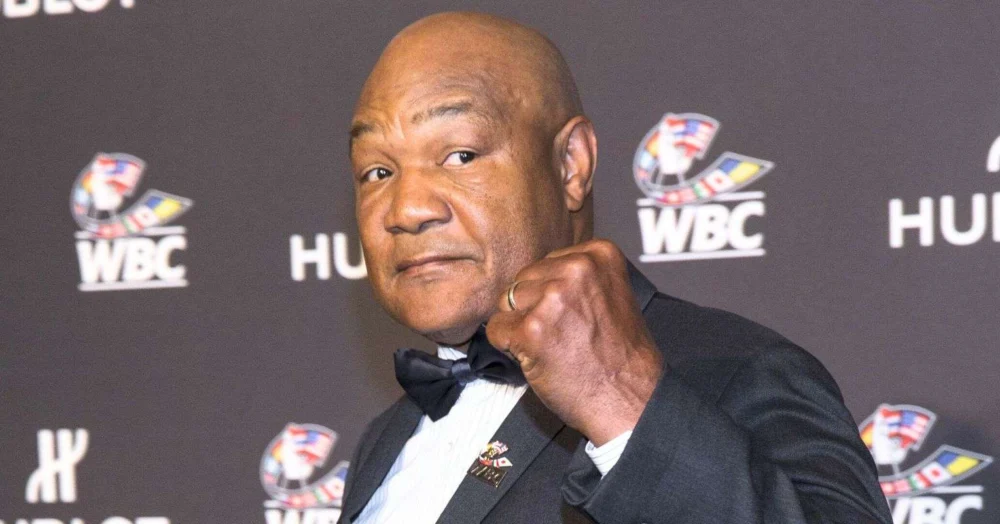
In the annals of sports history, few tales resonate with the sheer improbability and inspiring power of George Foreman’s incredible heavyweight championship comeback. On November 5, 1994, in the glittering arena of the MGM Grand Garden Arena in Las Vegas, a 45-year-old preacher, seemingly past his prime, defied every expectation, every odd, and every critic to reclaim the unified WBA and IBF heavyweight titles. It was a victory not merely of brute force, but of patience, unwavering belief, and an indomitable spirit that etched his name deeper into legend.
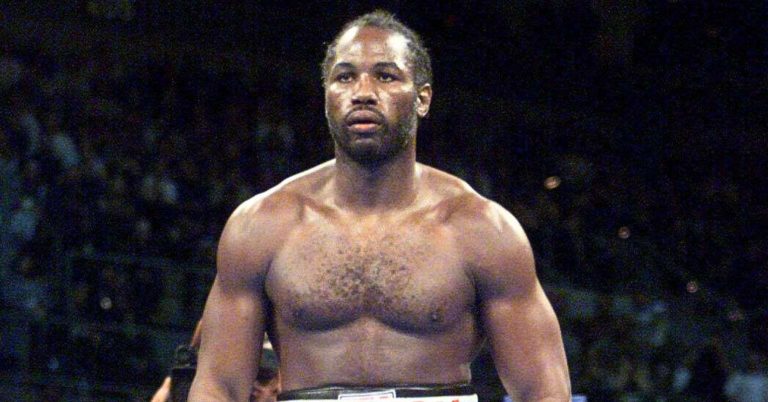
George Foreman’s journey to this extraordinary moment was itself a saga of two distinct lives. His first reign as heavyweight champion was marked by an almost terrifying dominance. A monstrously powerful puncher, Foreman tore through the division in the early 1970s, culminating in his brutal two-round demolition of then-undefeated champion Joe Frazier in 1973. "Big George" was an intimidating force of nature, a stoic, unsmiling destroyer whose power was so fearsome it struck fear into the hearts of opponents and spectators alike. His initial career culminated in the legendary "Rumble in the Jungle" against Muhammad Ali in 1974, a fight in which Foreman, then undefeated and widely favored, was famously outmaneuvered and knocked out by Ali’s "rope-a-dope" strategy. This stunning loss, the first of his professional career, profoundly affected him.
Following another defeat to Jimmy Young in 1977, Foreman underwent a profound spiritual awakening. In the locker room after the Young fight, he experienced what he described as a near-death experience, a divine encounter that led him to renounce boxing entirely. For the next decade, the man who had once terrorized the heavyweight division dedicated his life to God, becoming an ordained minister and establishing a youth center in Houston. He shed his fearsome boxing persona, embracing a jovial, approachable image, a stark contrast to the menacing figure he once was. The idea of George Foreman, the gentle preacher, ever stepping back into the brutal world of professional boxing seemed utterly preposterous.
Yet, in 1987, at the age of 38, Foreman announced his unthinkable return to the ring. His motivations were multi-faceted: a desire to fund his youth center, but also a deeper urge to prove that age was just a number and that a man could reinvent himself. Many scoffed, viewing it as a sad attempt by a faded legend to recapture past glories or merely make a quick buck. He was heavier, slower, and his movements were less fluid, but the thunderous power in his punches remained undeniable. Foreman’s comeback was a slow, deliberate process, fighting lesser-known opponents, shedding pounds, and gradually building a new fan base drawn to his folksy charm and improbable quest. He wasn’t the menacing champion of old, but a smiling, self-deprecating figure who often brought a hot dog to the press conferences. His journey back to contention was remarkable, proving doubters wrong with each knockout.
By 1994, Foreman, now 45, had defied expectations simply by making it to another heavyweight title shot. His opponent was the formidable Michael Moorer, a southpaw who was 19 years Foreman’s junior at 26 years old. Moorer was undefeated with a record of 35-0, fast, aggressive, and had recently captured the WBA and IBF belts by outpointing the legendary Evander Holyfield. The boxing world largely dismissed Foreman’s chances. Critics painted the fight as a dangerous mismatch, a potential humiliation for the aging warrior. Foreman was deemed too old, too slow, too heavy, and too predictable to contend with Moorer’s youthful vigor and technical prowess. Betting odds reflected this sentiment, with Moorer a significant favorite.
From the opening bell, the fight largely played out as predicted. Moorer, true to his style, controlled the early rounds, darting in and out, landing quick combinations, and utilizing his superior footwork to evade Foreman’s slower, more deliberate advances. Foreman, for his part, plodded forward, absorbing punches, seemingly outclassed in speed and agility. His corner, his fans, and indeed, much of the viewing public watched with a growing sense of despair as Moorer accumulated rounds, clearly ahead on all scorecards. Foreman took punches to the head and body, but his composure never wavered. He understood the strategic patience required for his particular brand of boxing in his advanced age: he wasn’t trying to win on points; he was waiting for one moment, one opening.
As the fight progressed into the championship rounds, the narrative seemed set: Moorer was on his way to a comfortable decision victory, solidifying his status as the new king of the heavyweight division, while Foreman would be remembered for a valiant but ultimately futile effort. But George Foreman possessed a different plan, one he had meticulously crafted and believed in with unwavering conviction.
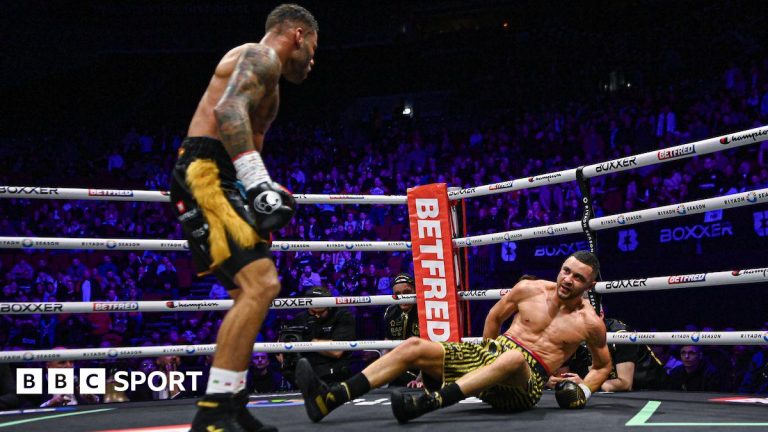
Then, in Round 10, the impossible unfolded. Moorer, perhaps growing confident in his lead, allowed himself to be backed towards the ropes. Foreman, who had been patiently stalking, looking for just such an opportunity, saw his opening. He feinted, then unleashed a perfectly timed, textbook one-two combination. The first punch, a jab, momentarily stunned Moorer. The second, a devastating right cross, landed flush on Moorer’s chin. The impact was immediate and catastrophic. Michael Moorer’s eyes rolled back, and he crumpled to the canvas, utterly unconscious. He tried to rise, but his body betrayed him, his legs rubbery, his mind unable to command his limbs. Referee Joe Cortez counted him out.
The MGM Grand Garden Arena erupted in a cacophony of cheers, disbelief, and pure elation. George Foreman, the smiling, middle-aged preacher, stood in the center of the ring, arms raised in triumph, a look of profound satisfaction on his face. He had done it. He had achieved the unthinkable. At 45 years and 299 days old, he became the oldest heavyweight champion in history, shattering the previous record held by Joe Louis. More significantly, he became the only man to win the heavyweight championship on two occasions nearly two decades apart, a feat that underscored the sheer longevity and power of his career.
The victory was not just a testament to Foreman’s enduring power, but to his strategic brilliance and unwavering self-belief. Reflecting on the defining moment, Foreman later stated, "Nobody had any idea I was setting it up all night. I dreamed that I knocked out Michael Moorer before the fight." This wasn’t a lucky punch; it was the culmination of a ten-round strategy, a patient execution of a vision he held even before stepping into the ring. He knew he couldn’t outbox Moorer over 12 rounds, but he believed he could land that one punch.
George Foreman’s knockout of Michael Moorer was more than just a boxing match; it was a legendary comeback story that transcended sports. It was a triumph of resilience over doubt, of experience over youth, and of faith over cynicism. His journey from an intimidating force to a spiritual leader, and then back to the pinnacle of a brutal sport, captured the imagination of the world. It inspired countless individuals, proving that it’s never too late to pursue a dream, to reinvent oneself, or to achieve greatness, regardless of age or past setbacks.
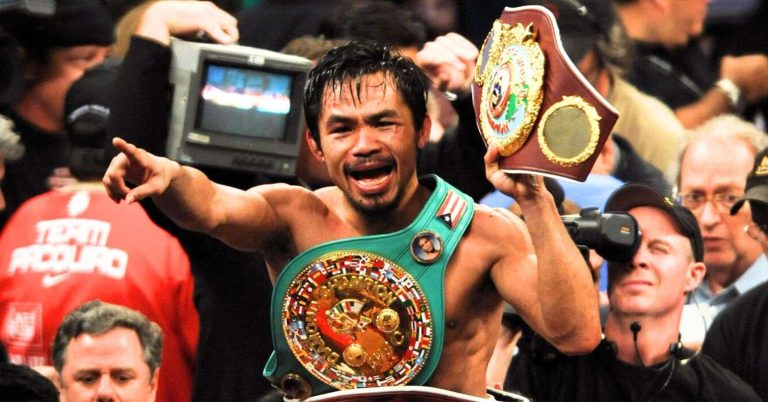
The image of Foreman, beaming with joy and clutching his newly won belts, became iconic. His legacy was cemented not just as a powerful puncher, but as one of boxing’s most beloved and inspiring figures. The fight solidified his place among the pantheon of all-time greats and remains a powerful reminder that in the realm of human endeavor, with enough heart and belief, even the most impossible dreams can become reality. On that incredible night in Las Vegas, George Foreman didn’t just win a fight; he completed an extraordinary circle, delivering one of the most miraculous and unforgettable moments in sports history.