
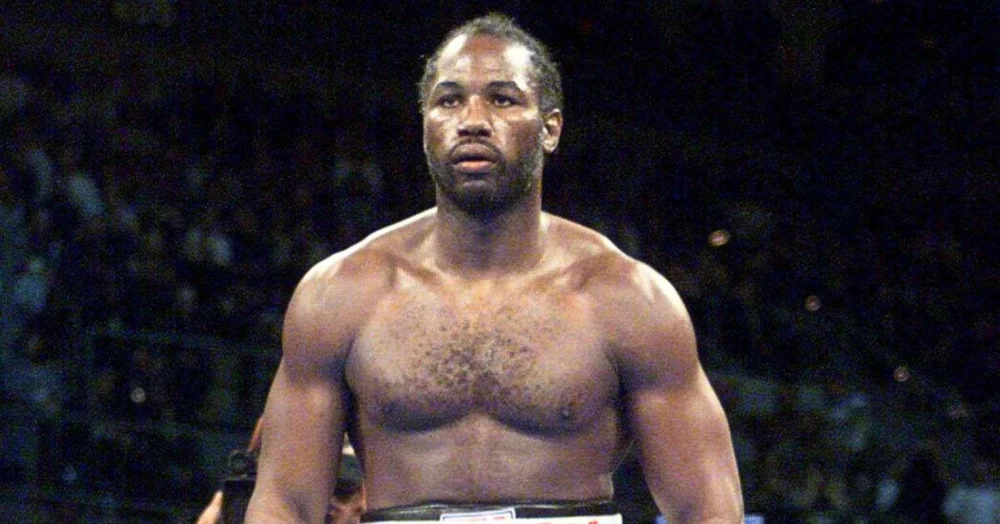
Lennox Lewis stood as an undisputed titan of the modern heavyweight era, a figure whose presence in the ring commanded respect and often instilled fear. With a towering physique, an Olympic gold medal glistening in his past, and a ring IQ that was second to none, Lewis had meticulously crafted a legacy of dominance. His powerful jab, precise right hand, and strategic movement made him a formidable opponent, leading him to unify all major heavyweight titles and dispatch nearly every top contender of his generation, including luminaries like Evander Holyfield, Mike Tyson, and Vitali Klitschko. Yet, even the most seemingly invincible champions are susceptible to the human frailties of complacency and underestimation, particularly when the stakes are seemingly low and a bigger prize looms on the horizon. This vulnerability was dramatically exposed in one of boxing’s most stunning upsets, a moment that etched Hasim Rahman’s name into the annals of heavyweight lore and forever marked a pivotal chapter in Lewis’s storied career.
The year was 2001, and the boxing world buzzed with anticipation for what was widely considered the biggest heavyweight showdown of the new millennium: Lennox Lewis versus the enigmatic and often controversial "Iron" Mike Tyson. The financial figures being bandied about were astronomical, promising a historic pay-per-view spectacle that would captivate millions worldwide. Before this mega-fight could materialize, however, Lewis had a mandatory title defense scheduled against a relatively unknown challenger named Hasim Rahman. The bout was set for April 22, 2001, at the Carnival City Casino in Brakpan, South Africa, a venue chosen primarily for its lucrative site fee. Most observers, from seasoned pundits to casual fans, viewed Rahman as nothing more than a tune-up, a stepping stone on Lewis’s inevitable march towards Tyson.
Hasim "The Rock" Rahman, while a solid, durable fighter with a respectable record, possessed neither the star power nor the championship pedigree to suggest he posed a serious threat to Lewis. He had never competed for a world title, and his professional career, while marked by resilience, lacked the defining victories that would elevate him to elite status. Consequently, he entered the ring as a staggering 15-to-1 underdog, a reflection of the boxing community’s collective certainty that Lewis would prevail, likely with ease. The narrative was clear: Lewis would swiftly dispatch Rahman, solidify his claim as the premier heavyweight, and then turn his attention to the lucrative clash with Tyson.
However, the champion’s preparation for this seemingly inconsequential defense was far from ideal. Lewis, known for his meticulous training camps, allowed distractions to seep into his routine. He had spent a significant portion of his pre-fight schedule filming a cameo appearance for the blockbuster movie "Ocean’s Eleven" in Las Vegas, a commitment that undoubtedly pulled his focus away from the gruelling demands of a championship boxing camp. Compounding this error, Lewis arrived in Johannesburg late, failing to adequately acclimatize to the high altitude of Brakpan, which sits approximately 5,000 feet above sea level. Fighting at such an elevation can severely impact an athlete’s stamina and conditioning, making even routine movements feel like an immense effort. Lewis, famously dubbed "The Lion," appeared ill-prepared, perhaps a victim of his own reputation and the widespread belief that Rahman presented little danger.
In stark contrast, Hasim Rahman approached the fight with a singular, unwavering focus. He had arrived in South Africa weeks in advance, dedicating himself to a rigorous training regimen designed to combat the effects of altitude and maximize his physical conditioning. Rahman was not merely acclimatized; he was hungry, determined, and acutely aware that this was his one shot at glory, his opportunity to defy all expectations and etch his name into history. He had nothing to lose and everything to gain, a psychological advantage that would prove crucial.
As the fight unfolded on that fateful night, the early rounds painted a picture that was increasingly concerning for Lewis’s supporters. The champion, usually fluid and powerful, looked sluggish, flat-footed, and strangely hesitant. His signature jab, often a piston of destruction, lacked its usual snap and authority. Rahman, emboldened by Lewis’s uncharacteristic lethargy, began to press the action, showing surprising aggression and resilience. He absorbed Lewis’s best shots, which themselves seemed to lack their customary concussive power, and continued to move forward, jabbing and occasionally landing his own hooks and crosses. The crowd, initially subdued, sensed a growing tension, a flicker of possibility that had seemed unthinkable just moments before.
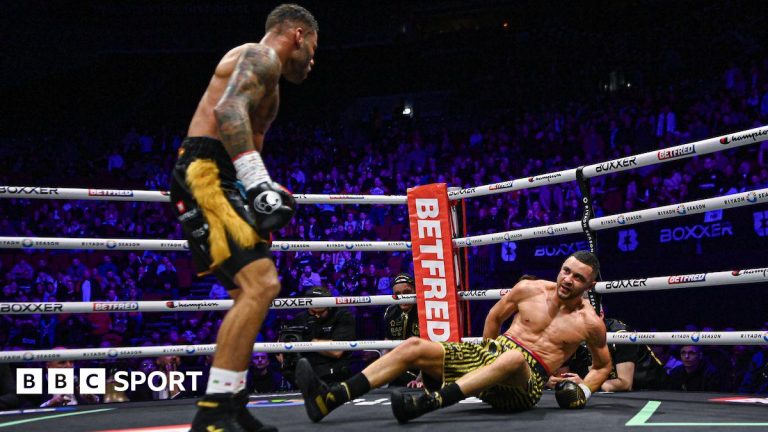
Then came Round 5. Lewis, still struggling to find his rhythm, seemed to be attempting to assert his dominance, perhaps hoping to land a single, decisive blow that would end the charade. But Rahman, ever vigilant, saw an opening. As Lewis moved in, Rahman unleashed a clean, perfectly timed overhand right hand. It was a punch born of desperation, precision, and sheer will. The blow landed flush on Lewis’s jaw, a thunderous impact that reverberated through the arena. The champion’s eyes rolled back, his legs buckled beneath him, and he crashed to the canvas, utterly unconscious. Referee Earl Morton immediately began the count, but it was clear Lewis was out cold. His body lay sprawled, a picture of vulnerability, as the count reached ten.
The Carnival City Casino erupted in a cacophony of shock and disbelief. The impossible had happened. The undisputed heavyweight champion, the seemingly untouchable Lennox Lewis, had been knocked out cold by a 15-to-1 underdog with zero title fight experience. Hasim Rahman, tears streaming down his face, was mobbed by his corner, his dream realized in the most spectacular fashion imaginable. The boxing world reeled, the upset instantly recognized as one of the biggest and most sensational in heavyweight history, comparable to Buster Douglas’s shocking defeat of Mike Tyson a decade prior. Rahman was crowned the new WBC and IBF heavyweight champion, his name forever linked to one of the sport’s most iconic moments of defiance.
The aftermath was a whirlwind of media frenzy and public speculation. Lewis, once hailed as invincible, was suddenly questioned. Pundits openly wondered if his time at the top was over, if the Rahman knockout signified the irreversible decline of a great champion. Yet, Lewis, a man of immense pride and competitive fire, was not one to accept defeat lightly, especially one born of his own perceived complacency. The contractual clause for a rematch was swiftly activated, but not without its own set of dramatic twists. Rahman, now a champion, suddenly found himself embroiled in legal battles, primarily with promoter Don King, who sought to leverage Rahman’s newfound status into a fight with Mike Tyson, thus attempting to derail Lewis’s chance at redemption. A dramatic legal injunction, famously decided in a U.S. court, ultimately forced Rahman to honor his rematch clause with Lewis, setting the stage for one of boxing’s most anticipated rematches.
Lewis’s preparation for the second encounter was a stark contrast to his previous camp. He was intensely focused, driven by a profound sense of humiliation and a burning desire for vindication. Rahman’s post-fight taunts and disrespect, including comments about Lewis’s mother, only fueled the champion’s resolve, transforming his professional quest into a deeply personal mission. "I took it personal, he talked about my mom, my life, and I couldn’t let that stand," Lewis later reflected. His training regimen was brutal, his dedication absolute. He arrived in Las Vegas for the rematch on November 17, 2001, at the Mandalay Bay Events Center, a man reborn, leaner, sharper, and radiating an intensity that had been noticeably absent seven months prior.
The rematch was not merely about reclaiming titles; it was about reclaiming pride, reputation, and the narrative of his legacy. From the opening bell, a different Lennox Lewis was evident. He was disciplined, patient, and precise. His jab returned with its customary authority, snapping Rahman’s head back and controlling the distance. Rahman, perhaps burdened by the weight of his brief reign and the expectation to repeat his miracle, seemed tentative, unable to find the openings he had exploited in the first fight. Lewis systematically broke him down, landing powerful combinations and moving with an agility that belied his size.
In Round 4, Lewis delivered his retribution. He stunned Rahman with a powerful right hand, sending him stumbling. Following up with ruthless efficiency, Lewis unleashed a devastating left hook that connected perfectly. Rahman collapsed to the canvas, unconscious before he hit the mat, his body sprawling in a chilling echo of Lewis’s own fall just months earlier. The referee waved off the fight without a count, and Lewis stood over his fallen opponent, his arms raised in triumph, a roar of vindication escaping his lips. He had not just won back his titles; he had emphatically reasserted his dominance and proven his resilience.
"When I knocked him out in the fourth round, it wasn’t just about the belt, it was about showing the world I could come back from a loss and still be the best. That’s what boxing is: you fall, you rise," Lewis articulated, perfectly encapsulating the essence of his journey. The two-fight saga with Hasim Rahman remains a potent cautionary tale in the annals of boxing history, a vivid reminder that complacency can fell even the mightiest champion, and that in the unpredictable world of the squared circle, one punch can indeed change everything. Lewis’s ability to rebound from such a devastating defeat, to analyze his errors, and to return with an even greater focus and ferocity, only solidified his standing as one of the greatest heavyweights of all time, demonstrating not just his physical prowess but also the unyielding mental fortitude that defined his championship reign. He fell, he rose, and in doing so, he cemented his legend.