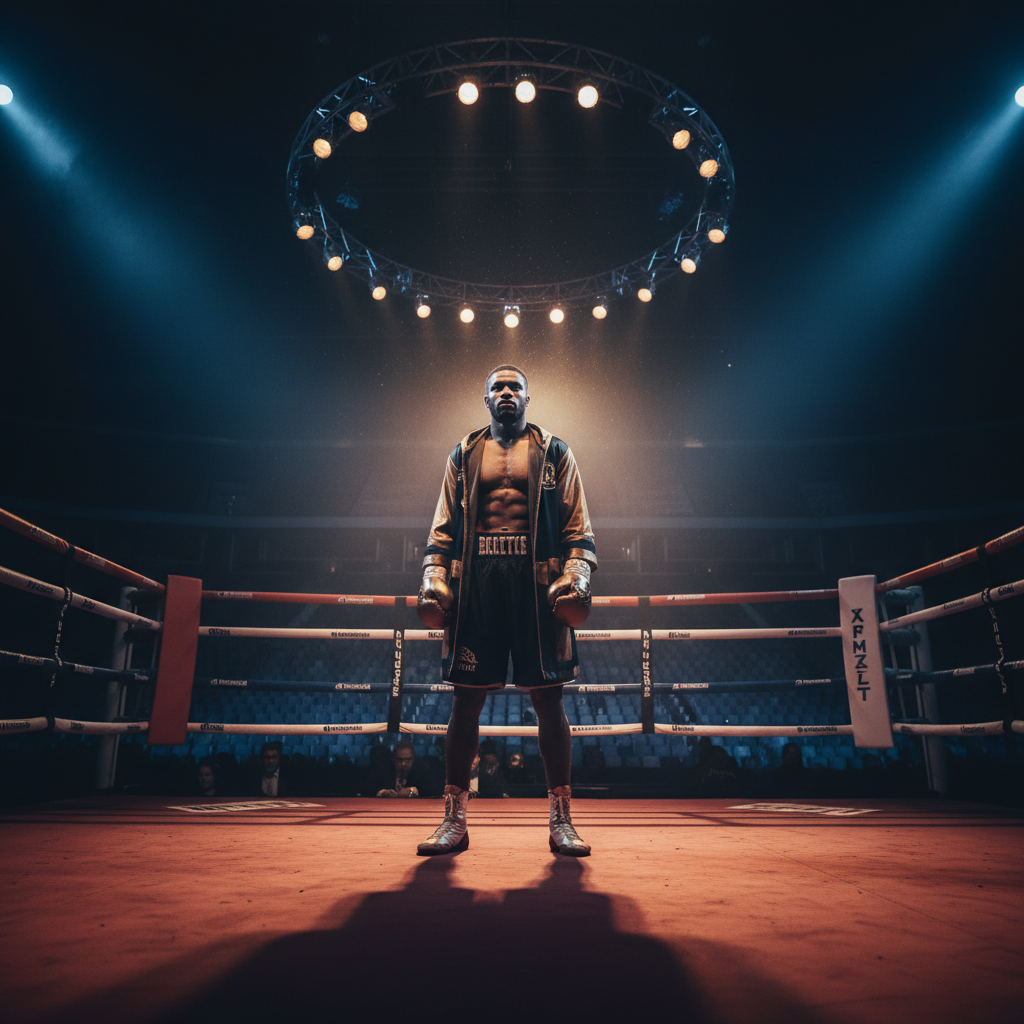

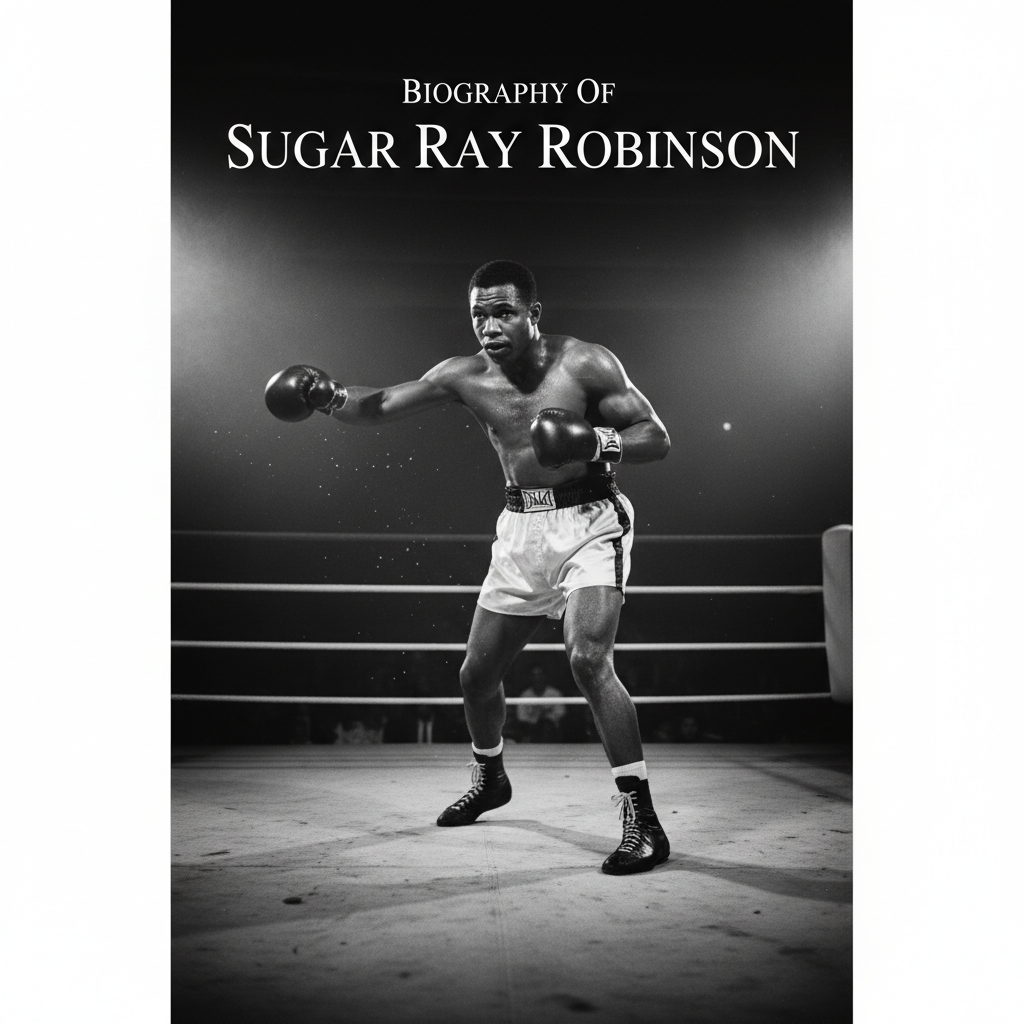
When boxing historians debate the greatest fighter of all time, one name consistently rises to the top: Sugar Ray Robinson. Born Walker Smith Jr., Robinson was not just a boxer; he was the archetype of the modern prizefighter, combining blinding speed, crushing power, and unparalleled footwork. He was so dominant that sportswriters invented the term ‘pound-for-pound’ specifically to compare him against heavyweights, acknowledging that his skill set transcended weight classes. His career spanned three decades, leaving an indelible mark on the sport and influencing generations of champions, including Muhammad Ali and Sugar Ray Leonard.
Early Life and the Birth of ‘Sugar’
Walker Smith Jr. was born on May 3, 1921, in Ailey, Georgia, to a family of sharecroppers. Seeking a better life, his mother moved the family to New York City’s Harlem neighborhood when he was a teenager. It was in the vibrant, tough streets of Harlem that young Walker discovered his passion for boxing. He initially aspired to be a dancer, a rhythmic foundation that would later define his fluid movement in the ring, but the allure of the Salem Crescent Gym proved too strong.
The transformation from Walker Smith Jr. to Sugar Ray Robinson is a piece of boxing lore. Underage and eager to fight in his first amateur tournament, he borrowed the Amateur Athletic Union (AAU) card of a friend named Ray Robinson. The name stuck. Later, a frantic lady at ringside told his manager, George Gainford, that the young fighter was ‘sweet as sugar.’ Gainford replied, ‘Sugar Ray Robinson.’ Thus, the most iconic moniker in boxing history was born.
A Flawless Amateur Career
Robinson’s amateur career was nothing short of perfection. He reportedly compiled a record of 85-0, with 69 of those victories coming by way of knockout, and 40 of those in the first round. He won the Golden Gloves featherweight championship in 1939 and the lightweight championship in 1940. This dominance on the amateur circuit generated immense hype as he prepared to turn professional, setting the stage for a legendary run.
Turning Professional and The Welterweight Reign
Sugar Ray Robinson turned professional in October 1940. He quickly tore through the ranks, going undefeated in his first 40 fights. However, he faced a significant obstacle in the form of the ‘Mob,’ which controlled much of boxing at the time. Robinson refused to bow to mafia influence, which delayed his title shot. Despite this, he defeated top contenders, including future Hall of Famers like Sammy Angott and Marty Servo, proving he was the uncrowned king of the division.
Finally, on December 20, 1946, Robinson got his chance. He faced Tommy Bell for the vacant World Welterweight title. In a grueling 15-round battle, Robinson showcased his heart and resilience, winning a unanimous decision to become the champion. He would hold the welterweight title for five years, defending it five times and cementing his legacy as perhaps the greatest welterweight in history. During this period, his record was an astounding 128–1–2.
The Jake LaMotta Rivalry
No biography of Sugar Ray Robinson is complete without mentioning Jake LaMotta. The two men fought six times in one of the sport’s most brutal rivalries. LaMotta handed Robinson his first professional loss in their second fight in 1943, knocking Robinson through the ropes. However, Robinson won the other five encounters. Their final bout, known as the ‘St. Valentine’s Day Massacre’ in 1951, saw Robinson batter LaMotta to a technical knockout to win the World Middleweight title, displaying a terrifying mix of precision and savagery.
Conquering Europe and the Middleweight Division
Robinson was not just a U.S. phenomenon; he was a global superstar. He embarked on European tours, particularly in France, where he was treated like royalty. He famously traveled with a massive entourage, including a barber, a masseur, a voice coach, and his signature pink Cadillac. This flamboyant lifestyle set the template for the modern superstar athlete. Inside the ring, he continued to dominate, although he briefly lost the middleweight title to Randy Turpin in London in 1951, only to regain it in a rematch in New York just two months later.
The Joey Maxim Fight: Battling the Heat
In 1952, Robinson attempted to capture the Light Heavyweight championship against Joey Maxim. The fight took place at Yankee Stadium in sweltering heat, with temperatures at ringside reportedly exceeding 103 degrees Fahrenheit (39°C). The heat was so intense that the referee, Ruby Goldstein, collapsed and had to be replaced. Robinson was leading on all scorecards but succumbed to heat exhaustion and failed to answer the bell for the 14th round. It was the only time in his 200-fight career that he was stopped, and it was by the weather, not the opponent.
Retirement and Return
Following the Maxim fight, Robinson retired to pursue a career in show business as a tap dancer and singer. However, the stage did not pay as well as the ring, and after two and a half years, he returned to boxing in 1955. Many critics believed he was washed up, but Robinson was determined to prove them wrong. His comeback trail led to a showdown with Carl ‘Bobo’ Olson, whom he knocked out to regain the middleweight title, becoming the first boxer to win a world divisional championship three times.
The Gene Fullmer and Carmen Basilio Wars
In the late 1950s, an aging Robinson engaged in classic wars with younger, stronger lions like Gene Fullmer and Carmen Basilio. He lost the title to Fullmer in 1957 but regained it in their rematch with what is often cited as the perfect left hook. The punch caught Fullmer flush, knocking him unconscious instantly. It remains one of the greatest knockouts in boxing history. Robinson later lost the title to Basilio in a ‘Fight of the Year’ candidate, only to win it back six months later, becoming a five-time middleweight champion.
Decline and Final Retirement
By the 1960s, Robinson was fighting well past his prime, largely due to financial necessity. He fought often, sometimes against lesser opposition, and his record began to accumulate losses. Despite his diminished reflexes, he still displayed flashes of his former genius. He finally retired for good in 1965 at the age of 44. His final professional record stood at an incredible 173 wins, 19 losses, and 6 draws, with 108 knockouts.
Legacy and Impact
Sugar Ray Robinson’s legacy extends far beyond his statistics. He revolutionized the sport with his style. Before Robinson, boxers were often categorized as either sluggers or boxers. Robinson was both. He could box off the back foot with elegance or stand in the pocket and trade power punches. His combination punching was fluid and lethal, often delivering four or five punches before his opponent could throw one.
Muhammad Ali, who often proclaimed himself ‘The Greatest,’ idolized Robinson and called him ‘the king, the master, my idol.’ Sugar Ray Leonard, another boxing legend, adopted his nickname in homage to Robinson. The Associated Press, ESPN, and The Ring magazine have all named him the greatest fighter of the 20th century. His influence is seen in every fighter who prioritizes speed, rhythm, and showmanship alongside raw aggression.
Conclusion
The biography of Sugar Ray Robinson is the story of a man who mastered the Sweet Science completely. From the poverty of Georgia to the bright lights of Madison Square Garden, he fought with a grace and fury that has never been replicated. While modern boxers fight once or twice a year, Robinson fought constantly, facing the best of his era and defeating them. He remains the yardstick by which all other champions are measured, the eternal definition of pound-for-pound greatness.