
The Crucible of the Squared Circle
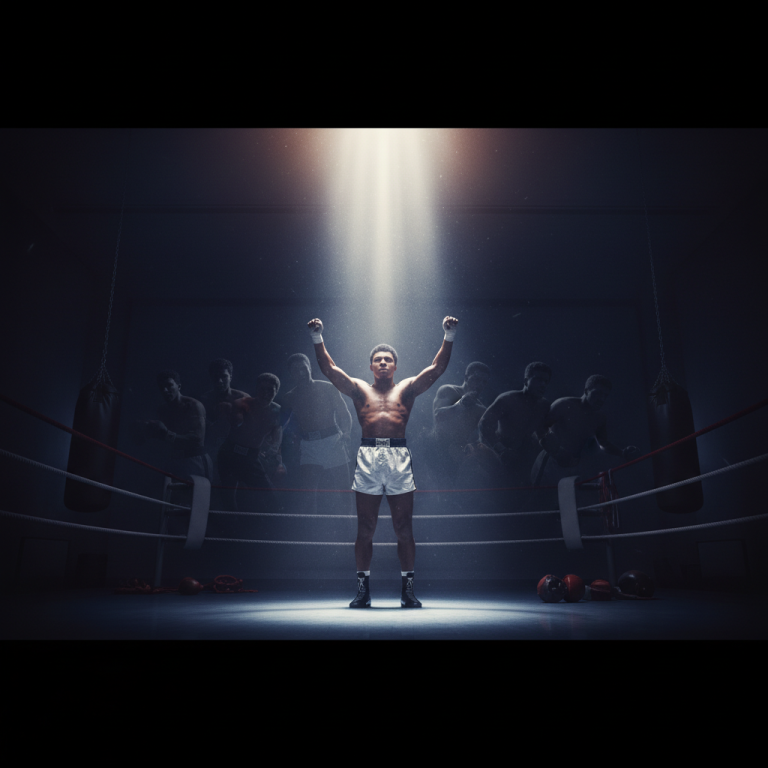
In the high-stakes world of professional boxing, pressure is an ever-present companion. It is not merely the physical threat of an opponent’s punches, but the crushing weight of expectation, the fear of public failure, and the internal struggle to maintain composure when the body screams to quit. Some fighters crumble under this intensity, while a rare few find a way to harness it, turning the heat of the moment into the fuel for legendary performances.
Muhammad Ali: The King of Psychological Resilience
Perhaps no fighter in history faced more pressure than Muhammad Ali. Before the famous Rumble in the Jungle in 1974, Ali was widely expected to lose to the younger, more powerful George Foreman. The pressure was not just sporting; it was political and cultural. Ali used his ‘Rope-a-Dope’ strategy, a high-risk gamble that required him to absorb immense punishment while leaning against the ropes, waiting for Foreman to tire. His ability to remain calm amidst the storm remains the gold standard for mental toughness in sports.
Sugar Ray Leonard and the Art of the Big Moment
Sugar Ray Leonard was a master of rising to the occasion when the world was watching. His 1987 fight against Marvelous Marvin Hagler is a prime example. Having been out of the ring for nearly three years, Leonard stepped up to face one of the most feared middleweights in history. Despite the overwhelming odds and the pressure of a potential career-ending defeat, Leonard’s tactical brilliance and charismatic flurries earned him a split-decision victory that solidified his legacy as a pressure-performer.
Joe Louis: Carrying the Weight of a Nation
The pressure faced by Joe Louis during his 1938 rematch against Max Schmeling was unparalleled. With the world on the brink of World War II, Louis was not just fighting for a title; he was fighting as a symbol of democracy against Nazi ideology. The burden of representing millions of people could have paralyzed any athlete, but Louis responded with a first-round knockout, proving that true champions can channel external societal pressure into focused, destructive energy.
Evander Holyfield: The Ultimate Underdog
Evander Holyfield spent much of his career being doubted, particularly when he moved up to the heavyweight division. When he faced Mike Tyson in 1996, many feared for his safety. Holyfield, however, thrived on the lack of respect from critics. He maintained a stoic discipline, neutralizing Tyson’s aggression with physical strength and mental fortitude. By refusing to be intimidated, Holyfield proved that internal belief is the greatest weapon against external pressure.
The Thrilla in Manila: Ali and Frazier’s Final Test
The third fight between Muhammad Ali and Joe Frazier, known as the ‘Thrilla in Manila,’ represents the absolute limit of human endurance under pressure. Both men were pushed past the point of exhaustion in sweltering heat. The pressure here was existential; neither man was willing to yield an inch of ground. It was a testament to how the highest level of competition can force athletes to find reserves of strength they didn’t know they possessed.
Roberto Duran: Redemption and the Pressure of Shame
After the infamous ‘No Mas’ incident against Leonard, Roberto Duran faced a different kind of pressure: the pressure of a tarnished reputation. For years, he was a pariah in his home country of Panama. His journey back to the top, culminating in his brutal victory over Davey Moore and his tactical masterclass against Iran Barkley, showed that the pressure of seeking redemption can be a powerful catalyst for a career resurgence.
Floyd Mayweather Jr.: The Pressure of Perfection
For Floyd Mayweather Jr., pressure came in the form of the number zero. Maintaining an undefeated record over 50 professional fights creates a unique psychological burden. Every opponent was a potential spoiler of his perfect legacy. Mayweather’s ability to remain defensively sound and tactically disciplined, even when trailing in rounds or facing heavy hitters like Canelo Alvarez, demonstrated a cold, calculated approach to pressure management.
Manny Pacquiao: From Poverty to Global Icon
Manny Pacquiao carried the hopes of an entire nation every time he stepped into the ring. In the Philippines, the streets would literally go silent during his fights. This level of adoration brings a heavy responsibility. Pacquiao’s aggressive, high-volume style was a reflection of his ability to turn that national expectation into a relentless offensive engine, winning titles in eight different weight classes.
The Mental Mechanics of Performance
What separates these legends from others is their cognitive appraisal of stress. Instead of viewing pressure as a threat, they viewed it as a challenge. Key attributes include:
- Focus: The ability to narrow attention to the task at hand while ignoring distractions.
- Adaptability: Changing tactics mid-fight when the original plan fails.
- Emotional Control: Suppressing fear and anger to maintain technical precision.
Julio Cesar Chavez: The Warrior of Culiacan
Julio Cesar Chavez held an incredible 89-0-1 record before his first loss. The pressure of maintaining such a long winning streak in front of his fanatical Mexican fanbase was immense. His 1990 fight against Meldrick Taylor is the stuff of legend; trailing on the cards and facing defeat, Chavez applied relentless pressure in the final round to secure a TKO with only seconds remaining, showcasing the ‘never say die’ attitude of a true pressure fighter.
Bernard Hopkins: The Executioner’s Longevity
Bernard Hopkins thrived under the pressure of time. As an older fighter, he was constantly told he was too old to compete. He used this skepticism to fuel a career that saw him become a world champion at age 49. Hopkins utilized a cerebral approach, using the pressure of his opponents’ youth against them by baiting them into mistakes and controlling the pace of the fight with veteran savvy.
Mike Tyson: The Burden of Intimidation
While Mike Tyson was often the one applying pressure, he also had to deal with the pressure of his own persona. In his early years, the expectation was that he would destroy everyone in the first round. When fights went longer, like against James ‘Quick’ Tillis, Tyson had to learn to manage the frustration of not getting the early knockout. His ability to stay focused in those early tests helped build the foundation of his undisputed championship run.
The Role of the Corner in Pressure Management
No boxer survives extreme pressure alone. The relationship between a fighter and their trainer is crucial. Legendary trainers like Angelo Dundee or Eddie Futch acted as psychological anchors. By providing calm, clear instructions during the chaotic minute between rounds, they helped their fighters reset their mental state and navigate the most high-pressure moments of a bout.
Legacy and the Lessons of the Ring
Ultimately, the legends who thrived under extreme pressure remind us that greatness is not achieved in comfort. It is forged in the moments where the risk is highest and the margin for error is thinnest. Whether it is Ali’s defiance, Mayweather’s precision, or Holyfield’s heart, these athletes provide a blueprint for how to handle the inevitable pressures of life: with preparation, poise, and an unshakable will to win.