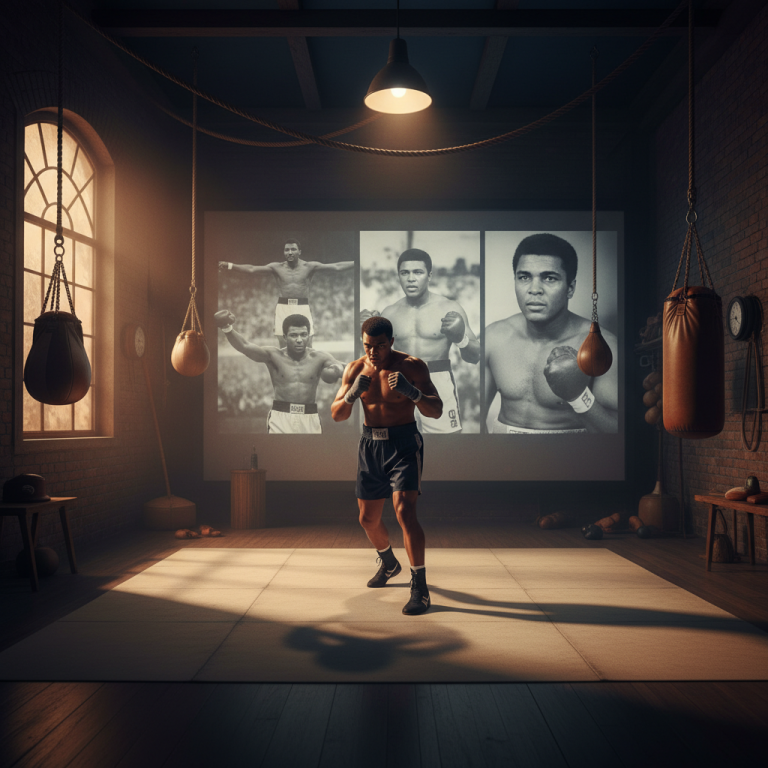



Mike Tyson’s emergence in the mid-1980s was not a fluke of nature but the result of a meticulously crafted training system that defied the boxing norms of the era. While other heavyweights relied on size and traditional slugging, Tyson was being molded into a compact, explosive machine under the tutelage of Cus D’Amato. This training was unique because it prioritized psychological dominance and unorthodox defensive movements over raw, unrefined power, creating a fighter that the world had never seen before.
The Philosophy of Cus D’Amato
At the heart of Tyson’s early training was the philosophy of Cus D’Amato, a man who believed that boxing was 90 percent mental. Unlike other trainers who focused solely on physical conditioning, Cus spent hours talking to a young Tyson about the nature of fear. He taught Tyson that fear was like a fire: if controlled, it could warm you, but if uncontrolled, it would consume you. This mental conditioning allowed Tyson to enter the ring with a level of confidence that paralyzed his opponents before the first bell even rang.
The Revolutionary Peek-a-Boo Style
The most distinctive technical aspect of Tyson’s training was the Peek-a-Boo style. This defensive-offensive hybrid required the fighter to hold their gloves close to their cheeks, providing maximum protection while allowing for rapid head movement. Most heavyweights of the time stood tall and used a traditional jab-heavy approach, but Tyson was trained to be a moving target, constantly bobbing and weaving to create angles that his opponents simply could not anticipate.
The Peek-a-Boo style emphasized the slip bag, a small weighted bag that Tyson would move his head around thousands of times a day. This drilled the habit of never staying on the center line. Because Tyson was often shorter than his opponents, this constant movement was essential for closing the distance safely. It turned his defense into a springboard for his offense, allowing him to counter-punch with devastating force the moment an opponent missed.
Psychological Mastery and Affirmations
Tyson’s training included a heavy dose of psychological programming. D’Amato used affirmations and even forms of hypnosis to instill a sense of invincibility in Tyson. He was told repeatedly that he was the best in the world, that no man could stand before him, and that his speed was unmatched. This wasn’t just ego-boosting; it was a calculated effort to erase the insecurities of a bullied child from Brownsville and replace them with the persona of Iron Mike.
A Physical Regimen Built for Explosiveness
Tyson’s physical routine was grueling and focused on functional strength rather than bodybuilding. His daily schedule often looked like this:
- 4:00 AM: 3 to 5-mile run followed by walking.
- 10:00 AM: 10 rounds of sparring.
- 2:00 PM: Calisthenics including 2,000 squats, 500 pushups, and 500 shrugs with a 30kg barbell.
- 4:00 PM: Heavy bag and technical drills.
- 7:00 PM: More calisthenics and shadowboxing.
This high-volume bodyweight training built a core that was incredibly dense, providing the torque necessary for his signature hooks.
The Absence of Heavy Weightlifting
Interestingly, Tyson’s early training avoided traditional heavy weightlifting. Cus D’Amato believed that lifting heavy weights would make a fighter slow and muscle-bound. Instead, Tyson’s strength came from calisthenics and plyometrics. This focus ensured that his muscles remained supple and explosive, allowing him to throw punches with the speed of a lightweight but the power of a heavyweight, a combination that was virtually unheard of in the division.
The Number System for Punches
To streamline communication during a fight, D’Amato and Kevin Rooney used a number system for Tyson’s punches. Instead of shouting ‘left hook’ or ‘right cross,’ they would call out sequences of numbers. This allowed Tyson to throw complex combinations instantly without having to process verbal descriptions. It made his offense rhythmic and predictable only to his corner, leaving his opponents unable to decode his patterns in real-time.
Studying the Legends of the Past
Tyson was a student of boxing history, a requirement of D’Amato’s training. They spent thousands of hours watching old films of legends like Jack Dempsey, Henry Armstrong, and Joe Louis. Tyson didn’t just watch these fights; he analyzed them to understand the mechanics of the ‘drop step’ and the ‘corkscrew punch.’ By internalizing the techniques of the past, Tyson was able to revive effective methods that modern fighters had long forgotten.
The Willie Bag: A Specialized Tool
One of the unique tools used in Tyson’s training was the Willie Bag. This was a heavy bag with numbered zones marked on it. A trainer would call out a series of numbers, and Tyson would have to hit those specific spots with maximum power and speed. This drill improved his accuracy and ensured that he wasn’t just hitting the bag, but aiming for specific ‘kill zones’ on an opponent’s body and head.
Sparring with Purpose
Sparring in the Catskill gym was not about survival; it was about mastery. Tyson often sparred with professional fighters much older and more experienced than him while he was still a teenager. These sessions were full-contact and often ended in knockouts. The goal was to make the actual fight feel easier than the training sessions. This high-pressure environment forged the diamond-hard resilience that Tyson displayed in his early career.
The Isolation of Catskill
The location of the training was also a factor in its success. Based in Catskill, New York, Tyson was removed from the distractions of the city. There were no entourages, no clubs, and no media circuses in the early days. This isolation allowed for a total immersion in the craft of boxing. The gym and the house were the only worlds Tyson knew, creating a singular focus that is rarely seen in modern sports.
Diet and Discipline
Tyson’s diet was as disciplined as his physical training. He consumed high-protein meals consisting of steak, pasta, and fruit juices, avoiding processed sugars and junk food. This ‘clean fuel’ approach ensured that his body could recover from the immense physical toll of his three-a-day workout sessions. Discipline was enforced not through punishment, but through the shared goal of becoming the youngest heavyweight champion in history.
The Importance of Neck Strength
A notable feature of Tyson’s physique was his 18-inch neck. His training included specific exercises like wrestler’s bridges to build incredible neck strength. This was a defensive tactic; a thick neck acts as a shock absorber for the brain, reducing the likelihood of being knocked out by a clean shot. This preparation made Tyson nearly impossible to stop, even when he did take a rare direct hit.
Conclusion: A Legacy of Unconventionality
The early training of Mike Tyson remains a masterclass in sports science and psychology. By combining the old-school wisdom of Cus D’Amato with a relentless work ethic and an unorthodox technical style, Tyson became a phenomenon. His training was unlike anyone else’s because it was designed specifically for him—to maximize his attributes and minimize his flaws—proving that greatness is often found in the departure from tradition.