


Mike Tyson remains one of the most polarizing figures in the history of sports, embodying a rare mixture of unprecedented athletic genius and catastrophic personal destruction. His rise to the pinnacle of boxing was not just a display of power, but a masterclass in psychological warfare and technical precision that changed the heavyweight division forever.
The Architect of a Beast: Cus D’Amato
The foundation of Tyson’s genius was laid by his mentor, Cus D’Amato. Under D’Amato’s guidance, Tyson developed the peek-a-boo style, a defensive stance that utilized constant head movement and explosive counter-punching. This wasn’t mere brawling; it was high-level tactical combat designed to neutralize taller opponents with surgical efficiency.
D’Amato recognized that Tyson’s greatest weapon was his mind. He instilled a philosophy that combined fear with focus, teaching Tyson that fear is like fire: if you control it, it warms you, but if it controls you, it burns you and everything around you. This mental conditioning was the secret behind Tyson’s early dominance.
The Youngest King of the Heavyweights
In 1986, at the age of 20, Tyson became the youngest heavyweight champion in history by defeating Trevor Berbick. This victory showcased his fearsome speed and accuracy, proving that his genius was far more than just raw strength. He moved with a fluidity and rhythm that the heavyweight division had never seen before.
His dominance in the late 1980s was absolute. Opponents were often defeated before the first bell rang, paralyzed by the intimidating aura Tyson projected. This psychological edge was a core component of his boxing genius, allowing him to dismantle world-class athletes in mere seconds through sheer presence and tactical aggression.
The Cracks in the Armor
However, the line between genius and destruction began to blur as Tyson’s personal life spiraled out of control. The death of D’Amato left a void that was filled by opportunists and enablers, leading to a breakdown in the discipline that had made him a champion. The structure that once protected his talent began to crumble.
The distractions of fame, immense wealth, and a turbulent marriage to Robin Givens began to erode his focus. The technical discipline that defined his early career started to fade, replaced by a reliance on one-punch knockouts rather than the intricate setups and head movement he was taught in his youth.
The Fall from Grace: Tokyo and Beyond
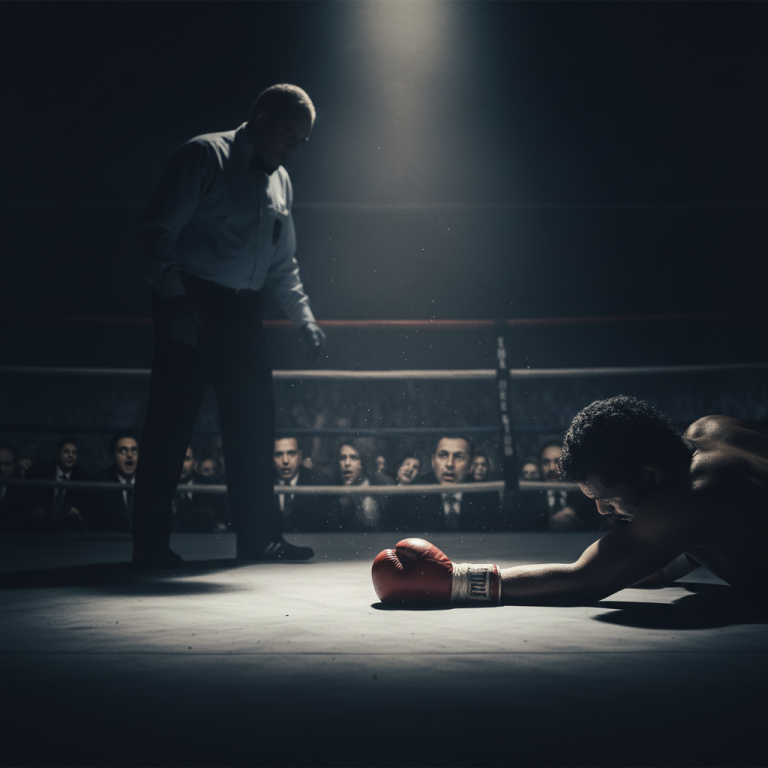
The 1990 loss to James ‘Buster’ Douglas remains one of the greatest upsets in sports history. It was the moment the world saw that the invincible monster was human. This defeat signaled the beginning of a long period of self-destruction that would see Tyson incarcerated and stripped of his titles, marking a tragic turn in his narrative.
Tyson’s life outside the ring became a series of headlines involving legal battles and financial ruin. The very intensity and aggression that fueled his success in the ring became a liability in civil society, leading to a cycle of violence and regret that threatened to overshadow his athletic achievements entirely.
The Infamous Holyfield Rematch
Perhaps the most vivid example of destruction eclipsing genius was the 1997 rematch against Evander Holyfield. The ‘Bite Fight’ shocked the world and resulted in Tyson’s disqualification. It was a manifestation of a man who had lost control of the fire D’Amato had warned him about, reacting to frustration with animalistic instinct.
During this period, the boxing world saw a shadow of the former champion. While the power remained, the strategic brilliance was gone. Tyson was fighting a war on two fronts: one against his opponents in the ring and a much more difficult one against his own inner demons and deteriorating mental state.
Redemption and Self-Reflection
In the years following his retirement, Tyson underwent a remarkable transformation. He began to speak openly about his struggles with mental health, addiction, and the burden of his own reputation. This vulnerability revealed a different kind of genius—the ability to evolve, learn from failure, and find inner peace.
His transition into entertainment and the cannabis industry showed a man who had finally learned to navigate the complexities of his own ego. Tyson transitioned from being ‘The Baddest Man on the Planet’ to a philosopher of his own life experiences, sharing lessons on the dangers of unchecked power.
- Technical Mastery: The peek-a-boo style and defensive brilliance that made him untouchable.
- Psychological Warfare: Using intimidation as a tactical advantage to break opponents mentally.
- Personal Turmoil: The impact of loss, fame, and lack of guidance on a young athlete’s psyche.
- Legacy: A cautionary tale of how talent requires discipline to avoid total destruction.
The Duality of a Legend
The story of Mike Tyson is a profound study of the human condition. It reminds us that genius is often fragile and requires a stable foundation to survive. Without the discipline of his early years, Tyson’s genius was nearly consumed by the very flames that powered his meteoric rise to fame.
Ultimately, Mike Tyson’s legacy is defined by both his terrifying dominance and his eventual path toward self-awareness. He remains a symbol of how thin the line is between being a master of one’s craft and a victim of one’s own nature, leaving an indelible mark on the history of combat sports.