


In the brutal theater of the squared circle, the debate between nature and nurture takes on a physical, often violent form. Boxing history is littered with the names of fighters who possessed god-given speed and power but lacked the fortitude to sustain a career at the highest level. Conversely, the Hall of Fame enshrines warriors who, while perhaps less naturally gifted, forged their legacies through an ironclad will and obsessive discipline. The Legacy Gap refers to this distinct divergence in career trajectories, proving that while talent may win championships, discipline secures immortality.
To understand this gap, one must first define the currency of the ring. Raw talent is the unteachable ability: the reflex speed of Roy Jones Jr., the devastating kinetic power of Deontay Wilder, or the fluid movement of Prince Naseem Hamed. It is the spark that captures the public’s imagination instantly. However, talent is often finite; it relies on youth and athleticism, attributes that depreciate rapidly without maintenance. When a fighter relies solely on these gifts, their prime is often spectacular but short-lived.
On the other side of the spectrum lies discipline. This is the unseen grind: the 4:00 AM roadwork, the strict nutritional adherence, and the refusal to balloon in weight between fights. It is the attribute that allowed Bernard Hopkins to win world titles at nearly 50 years old and Floyd Mayweather Jr. to remain undefeated over two decades. Discipline acts as a preservative for talent, allowing a fighter to adapt when their physical speed begins to wane. The gap in legacy is essentially the difference between burning out and fading away versus cementing a place in history.
The Tyson Paradox: When Talent Overwhelms Structure
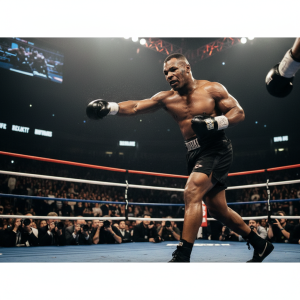
Perhaps no figure illustrates the volatile mix of talent and discipline better than Mike Tyson. In his early years, under the strict tutelage of Cus D’Amato, Tyson was a disciplined machine. His raw power was channeled through the ‘Peek-a-Boo’ style, requiring intense physical conditioning and mental focus. During this period, his talent and discipline were aligned, making him arguably the greatest heavyweight force in history.
However, as the discipline eroded following D’Amato’s passing, the legacy gap began to widen. While Tyson’s power remained, his head movement, combinations, and stamina suffered. The loss to Buster Douglas was not a failure of talent—Tyson was vastly more gifted—but a catastrophic failure of discipline. This serves as a cautionary tale: talent can compensate for a lack of preparation against mediocre opposition, but against a disciplined underdog, it is often insufficient.
The Mayweather Blueprint: Hard Work and Dedication
In stark contrast stands Floyd Mayweather Jr., a fighter born into a boxing dynasty with immense natural gifts. However, Mayweather’s legacy is defined not just by his hand speed, but by his mantra: “Hard Work, Dedication.” Unlike many contemporaries who relied on their chins or power, Mayweather maintained supreme physical condition year-round. He treated boxing as a business and his body as an asset, never allowing lifestyle vices to erode his skills.
This discipline allowed Mayweather to evolve. When his legs slowed down later in his career, his defensive IQ and conditioning allowed him to remain untouchable. He bridged the gap between being a flashy prospect and an all-time great by ensuring his discipline matched his talent level. His unblemished record is the statistical representation of closing the legacy gap completely.
The Tale of Two Mexican Icons: Chávez Jr. vs. Canelo
A modern examination of this phenomenon can be seen in the divergent paths of Julio César Chávez Jr. and Saúl ‘Canelo’ Álvarez. Chávez Jr. inherited the legendary name and a granite chin, possessing natural size and strength that could have dominated the middleweight divisions. Yet, his career was plagued by missed weight cuts, skipped training sessions, and a lack of focus. His legacy remains one of ‘what could have been.’
Canelo Álvarez, conversely, adopted a Spartan-like approach to his career. While talented, his rise to becoming the face of boxing was fueled by a constant desire to learn and improve. He evolved from a flat-footed counter-puncher into a complete fighter with exceptional head movement and ring generalship. The legacy gap here is massive: one is remembered as a disappointment, the other as a pound-for-pound king.
The Role of Lifestyle Outside the Ring
The legacy gap is often widened outside the gym. The nightlife, entourage, and distractions that come with fame act as filters, separating the disciplined from the merely talented. We can observe the following impacts of lifestyle on performance:
- Weight Management: Undisciplined fighters drain their bodies making weight, leaving them vulnerable to knockouts.
- Recovery: Alcohol and lack of sleep hinder the body’s ability to repair after sparring.
- Mental Sharpness: A chaotic lifestyle leads to a chaotic mind, resulting in poor in-ring decision-making.
Fighters like Ricky Hatton, while beloved, famously ballooned in weight between fights, forcing them to undergo grueling training camps just to shed pounds rather than improve skills. This cycle shortens careers and limits the fighter’s ability to reach their absolute peak potential, creating a ceiling on their legacy.
Longevity as the Ultimate Metric
Ultimately, longevity is the truest metric of the talent-discipline ratio. Fighters who rely solely on reflexes, like Roy Jones Jr., often suffer steep declines once those reflexes fade, sometimes damaging their legacy by fighting too long. In contrast, disciplined technicians like Archie Moore or Bernard Hopkins crafted styles and lifestyles that defied the aging process.
In conclusion, while talent provides the entry ticket to the world stage, discipline determines how long a fighter stays there. The history of boxing is a testament to the fact that hard work beats talent when talent doesn’t work hard. The legends who occupy the highest pantheon of the sport are those who respected their gifts enough to nurture them with unwavering discipline.