

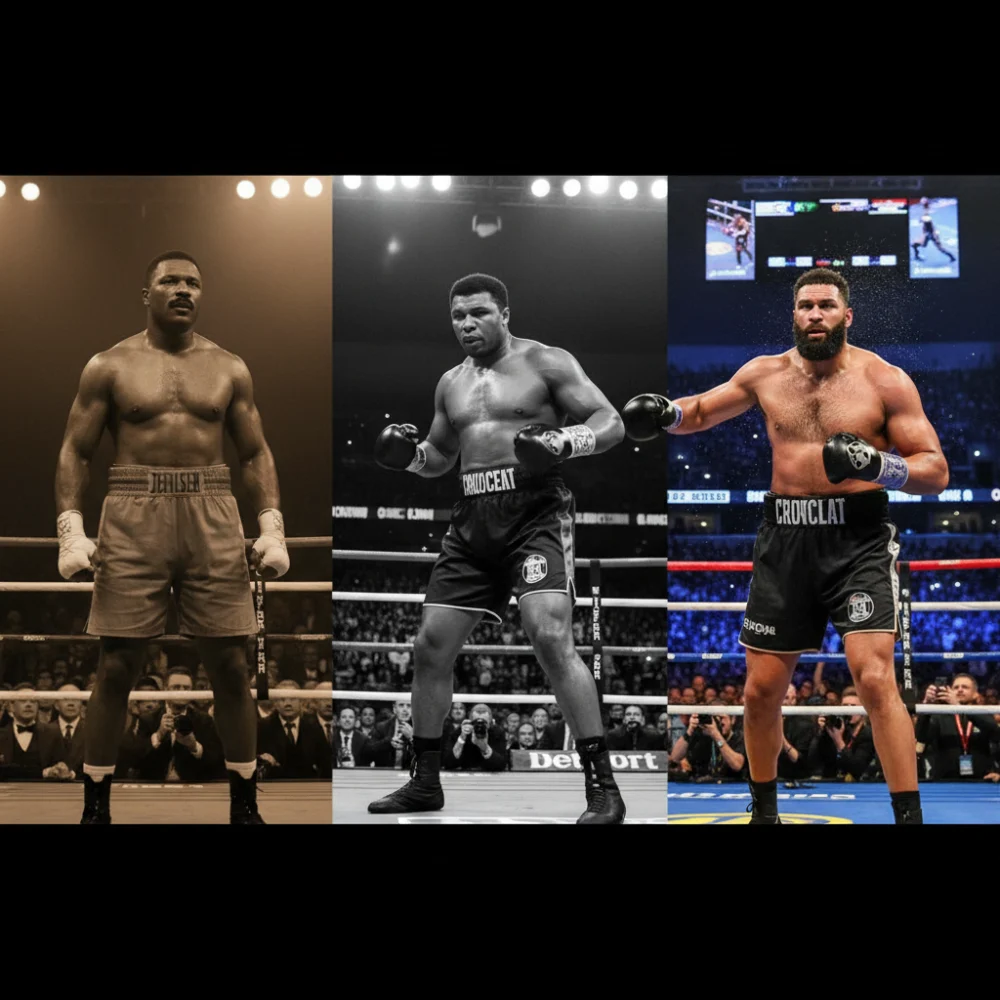
The Dawn of the Heavyweight Era
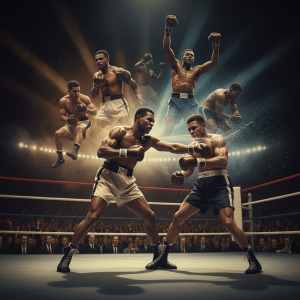
The heavyweight division has always been the crown jewel of combat sports, representing the pinnacle of human strength and resilience. From the early days of organized boxing to the multi-million dollar spectacles of today, the evolution of heavyweight legends reflects changes in training, technique, and global culture. In the late 19th and early 20th centuries, legends like John L. Sullivan transitioned the sport from bare-knuckle brawling to the Marquess of Queensberry era. These pioneers relied on raw stamina and grit, often fighting for dozens of rounds under brutal conditions that would be unthinkable by modern standards.
The Rise of the Manassa Mauler
The 1920s saw the emergence of Jack Dempsey, known as the Manassa Mauler. Dempsey revolutionized the sport with his aggressive, bob-and-weave style and explosive power. He was one of the first true global sports superstars, bringing boxing into the mainstream consciousness and setting the stage for the massive live gates and media coverage that define the sport today. His ability to finish fights early with devastating hooks changed the tactical approach of heavyweights who followed him.
The Technical Mastery of Joe Louis
Following Dempsey, Joe Louis, the Brown Bomber, brought a level of technical proficiency and clinical punching that the division had never seen. His reign lasted over a decade, during which he defended his title a record 25 times. Louis served as a symbol of hope during the Great Depression and World War II, demonstrating that boxing was not just about brute force, but also about precision, timing, and psychological fortitude.
The Golden Age of Heavyweights
The 1960s and 70s are often cited as the Golden Age of the heavyweight division. During this period, Muhammad Ali redefined what it meant to be a heavyweight. He combined unprecedented speed and footwork with a charismatic persona that transcended the sport itself. Ali proved that a heavyweight could dance and move like a lightweight, famously declaring that he would float like a butterfly and sting like a bee.
Defining Rivalries and Resilience
Ali era was defined by his legendary rivalries with Joe Frazier and George Foreman. Frazier relentless pressure and Foreman terrifying knockout power forced Ali to evolve from a fast-moving butterfly to a resilient tactician. The Rumble in the Jungle and the Thrilla in Manila remain the most iconic moments in sports history, showcasing how different styles and personalities can create an unforgettable narrative for the fans.
The Underrated Dominance of Larry Holmes
Following the retirement of Muhammad Ali, Larry Holmes dominated the late 70s and early 80s. Often underrated because he followed in the footsteps of a legend, Holmes possessed one of the greatest left jabs in boxing history. He bridged the gap between the classic era and the high-power era that followed, maintaining a high level of technical skill while facing a new generation of larger, stronger contenders.
The Mike Tyson Phenomenon
The mid-80s introduced Mike Tyson, the youngest heavyweight champion in history. Tyson Peek-a-Boo style and sheer intimidation factor brought a new level of violence and excitement to the division. He was a cultural icon whose speed and power made him a global phenomenon, proving that a shorter heavyweight could dominate much larger opponents through sheer aggression and explosive movement.
The Strategic Depth of the 90s
The 1990s saw a resurgence of depth with Evander Holyfield and Lennox Lewis. Holyfield was the ultimate warrior, moving up from cruiserweight to conquer giants through heart and conditioning. Meanwhile, Lennox Lewis brought a sophisticated, tall-man style that combined a stiff jab with a devastating right hand, eventually becoming the undisputed champion and one of the most complete fighters the division has ever seen.
The Klitschko Era of Discipline
The 2000s and early 2010s were dominated by the Klitschko brothers, Vitali and Wladimir. Their era was characterized by a safety-first but highly effective European style, utilizing their massive height and reach to systematically dismantle opponents. While some critics found their style less exciting than the brawlers of the past, their dominance for over a decade proved the effectiveness of discipline and physical advantages in the modern ring.
The Modern Heavyweight Renaissance
Today, we are witnessing a modern heavyweight renaissance. Fighters like Tyson Fury, Oleksandr Usyk, and Anthony Joshua have brought back the prestige and excitement of the division. These athletes are larger than their predecessors but maintain incredible agility and technical skills, often performing feats that seem impossible for men of their size.
The Unique Skillset of Tyson Fury
Tyson Fury, the Gypsy King, represents a unique evolution in the sport. Standing at 6 feet 9 inches, he possesses the movement and reflexes of a much smaller fighter. His elite boxing IQ and ability to adapt mid-fight have allowed him to overcome diverse challenges, ranging from the power of Deontay Wilder to the technical mastery of Wladimir Klitschko.
Challenging the Size Narrative
Oleksandr Usyk has recently challenged the bigger is better narrative. As a former undisputed cruiserweight champion, his victories over much larger heavyweights highlight the enduring importance of footwork, conditioning, and ring intelligence. Usyk success proves that technical brilliance can still overcome a significant size disadvantage in the modern era.
The Impact of Modern Sports Science
The evolution of these legends is also a story of scientific advancement. Modern heavyweights benefit from:
- Advanced nutritional plans tailored to their metabolic needs.
- Sports psychology to handle the immense pressure of global stardom.
- Data-driven strength and conditioning programs.
- Sophisticated recovery techniques such as cryotherapy and hyperbaric chambers.
Global Reach and Commercial Growth
The commercial landscape of the heavyweight division has also evolved. What started as local bouts in small arenas has grown into a multi-billion dollar industry with events held in stadiums across Las Vegas, London, and Saudi Arabia. This global reach has allowed modern legends to build brands that extend far beyond the boxing ring, influencing fashion, entertainment, and social issues.
The Future of the Heavyweight Crown
As the division continues to evolve, the legacy of the past remains the essential foundation for the future. Every generation produces a champion who pushes the boundaries of what is possible, ensuring that the heavyweight crown remains the most prestigious title in all of sports. Whether through raw power or technical innovation, the legends of the heavyweight division will continue to inspire and captivate audiences for generations to come.