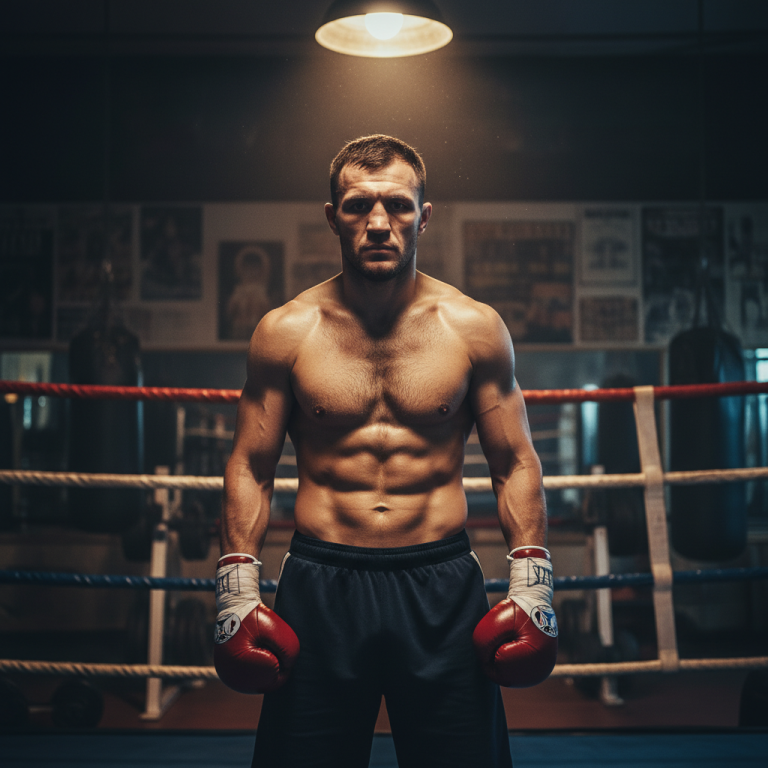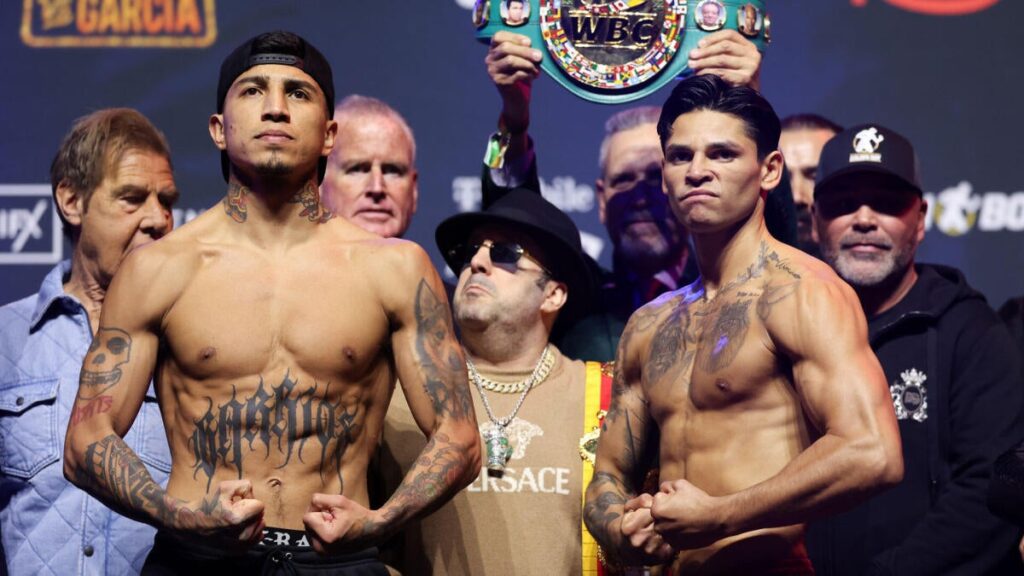

In the high-stakes world of professional boxing, the concept of a prime is often treated as a fleeting window of peak physical performance. Generally, experts suggest that a fighter reaches their zenith in their mid-to-late twenties, after which the inevitable decline of speed, reflexes, and stamina begins. However, history has shown us a rare breed of pugilists who refused to adhere to these biological constraints. These legends didn’t just survive past their prime; they thrived, capturing world titles and defeating much younger opponents through superior ring intelligence, discipline, and tactical evolution.
The Resurrection of Big George Foreman
Perhaps no story in sports history is as captivating as the return of George Foreman. After a ten-year hiatus from the ring, Foreman returned in 1987 as a jovial, burger-loving figure who seemed far removed from the terrifying Big George of the 1970s. While many viewed his comeback as a marketing gimmick, Foreman proved the doubters wrong by utilizing a cross-arm defense and a heavy, thudding jab that ignored the passage of time. In 1994, at the age of 45, he knocked out Michael Moorer to become the oldest heavyweight champion in history, a record that stood for nearly two decades.
Foreman’s success was not built on the explosive athleticism of his youth, but rather on a profound understanding of leverage and psychological warfare. He accepted that he was slower and instead focused on cutting off the ring and landing singular, devastating blows. His second career lasted longer than his first, and it solidified his status as one of the greatest heavyweights to ever lace up the gloves, proving that power is the last thing to leave a fighter.
Bernard Hopkins: The Executioner of Time
If Foreman was the king of power in old age, Bernard Hopkins was the king of craft. Hopkins, known as The Alien later in his career, defied the aging process through a monastic lifestyle and a scientific approach to boxing. He broke Foreman’s record by winning a world light heavyweight title at age 46, and then remarkably broke his own record again at age 48 and 49. Hopkins did not rely on volume punching; instead, he used a sophisticated defensive shell and counter-punching timing that neutralized younger, faster athletes.
The key to Hopkins’ longevity was his ability to minimize damage. He rarely took clean shots, often clinching at the right moment or using subtle head movements to make opponents miss by inches. His victory over Jean Pascal and Tavoris Cloud in his late 40s remains a masterclass in veteran savvy. Hopkins showed the world that a disciplined mind could compensate for a slowing body, extending a championship-level career into a fifth decade of life.
The Old Mongoose: Archie Moore
Long before the modern era, Archie Moore set the blueprint for the aging warrior. Known as The Old Mongoose, Moore’s actual birth date was often a subject of debate, but he was widely believed to be competing at the highest level well into his late 40s. He held the world light heavyweight title for nearly a decade, finally losing it when he was approximately 48 years old. Moore was a tactical genius who developed the cross-arm defense that George Foreman would later adopt.
Moore’s career is a testament to the power of adaptation. With over 200 professional fights, he holds the record for the most knockouts in boxing history. He wasn’t just a survivor; he was a finisher. His ability to study his opponents and set traps allowed him to remain a dangerous threat to anyone in the light heavyweight or heavyweight divisions, including a young Muhammad Ali and a prime Rocky Marciano, whom he famously dropped.
Manny Pacquiao: The Four-Decade Champion
In the modern era, Manny Pacquiao achieved a feat that may never be replicated. By winning the WBA welterweight title against Keith Thurman in 2019 at the age of 40, Pacquiao became the only boxer in history to hold world championships across four different decades (the 1990s, 2000s, 2010s, and 2020s). Unlike many older fighters who slow down, Pacquiao maintained a surprising amount of his legendary hand speed and footwork well into his late 30s.
Pacquiao’s success outside his physical prime was fueled by his relentless work ethic and his ability to transition from a raw slugger to a multi-dimensional technical boxer under the guidance of Freddie Roach. His win over Thurman was particularly impressive because he defeated a prime, undefeated champion who was ten years his junior. Pacquiao’s longevity is a result of his explosive calf muscles and a high-volume punching style that he managed to sustain through rigorous conditioning.
Floyd Mayweather Jr.: Defensive Mastery
While Floyd Mayweather Jr. retired undefeated, his career can be split into two distinct phases: the explosive Pretty Boy Floyd of the lower weight classes and the tactical Money Mayweather of the welterweight division. As he aged and his hands became more brittle, Mayweather shifted his style to become almost entirely defensive. He mastered the shoulder roll, a defensive posture that allowed him to deflect punches and counter with pinpoint accuracy.
Mayweather’s ability to thrive past 35 was seen in his masterclasses against younger stars like Saul Canelo Alvarez and Manny Pacquiao. He didn’t need to out-athlete them; he simply out-thought them. By controlling the distance and tempo of every fight, Mayweather ensured that his declining physical attributes were never exposed. He retired at 40 years old, having rarely been hurt or even visibly tired in a professional bout.
Roberto Duran: Manos de Piedra Across Eras
Roberto Duran is often remembered for his lightweight dominance in the 1970s, but his ability to win major fights in the 80s and 90s is what truly defines his legend. After the infamous No Mas incident, many thought Duran was finished. Instead, he moved up in weight and captured titles in three more divisions. His victory over Iran Barkley in 1989 at age 37 for the WBC middleweight title is considered one of the greatest underdog performances in boxing history.
Duran’s longevity was rooted in his incredible inside-fighting skills. Even as his foot speed slowed, his head movement and ability to fight in the pocket remained elite. He continued to fight professionally until the age of 50, showcasing a durability and love for the sport that transcended the typical career arc of a pressure fighter. Duran proved that a true fighter’s spirit and technical fundamentals do not have an expiration date.
Vitali Klitschko: The Iron Fist
Vitali Klitschko provides a unique example of a legend who thrived after a long period of inactivity. After retiring in 2004 due to injuries, Vitali returned to the ring nearly four years later at the age of 37. He immediately challenged Samuel Peter for the WBC heavyweight title and dominated him, reclaiming his belt. He then defended that title nine times, remaining undefeated in his second stint until his final retirement at age 41.
Vitali’s success in his late 30s was due to his unorthodox style and incredible chin. Standing 6 feet 7 inches, he used his reach and an awkward, low-handed stance to frustrate opponents. He never officially lost a fight in his second career, eventually retiring as champion to pursue a career in politics. His comeback is a rare example of a fighter leaving the sport in their prime and returning years later without losing a step.
Conclusion: The Secret to Longevity
The common thread among these legends is not just physical gifts, but a combination of mental fortitude and technical adaptability. To thrive outside of one’s prime, a boxer must be willing to reinvent themselves. Whether it is George Foreman’s shift to a power-punching statue, Floyd Mayweather’s defensive evolution, or Bernard Hopkins’ scientific discipline, these athletes proved that the mind can often lead where the body can no longer follow. They remind us that greatness is not reserved for the young, but for those who possess the wisdom to outmaneuver the march of time.