


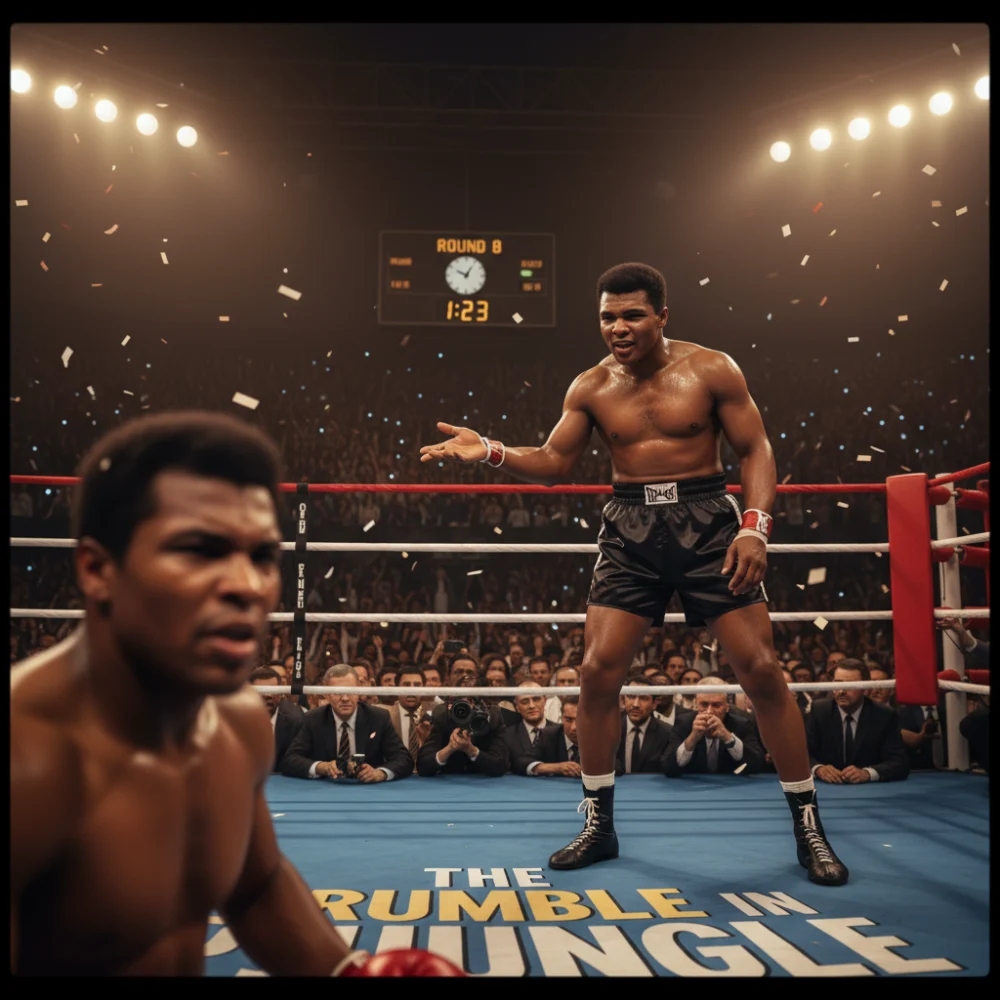
Muhammad Ali is universally recognized not only for his supreme boxing skills but also for his unparalleled charisma and verbal dexterity. Often referred to as the ‘Louisville Lip,’ Ali transformed the landscape of professional sports by introducing a level of showmanship that had never been seen before. However, to view his trash talk merely as arrogance or marketing fluff is to misunderstand a core component of his fighting style. Ali’s verbal assaults were calculated, strategic, and an essential part of his arsenal inside the ring.
At its core, Ali’s trash talk was a form of advanced psychological warfare. In a sport as physically demanding as boxing, the mental state of a fighter is often the deciding factor between victory and defeat. Ali understood that if he could break an opponent’s concentration or instill doubt before the match began, he had already won half the battle. His words were designed to disrupt the emotional equilibrium of his rivals, forcing them to fight his fight rather than their own.
The Strategy of Provocation
One of the primary tactical purposes of Ali’s insults was to induce anger. A calm fighter is a dangerous fighter; they stick to their game plan, conserve energy, and look for openings. An angry fighter, however, is prone to making mistakes. By relentlessly mocking his opponents, Ali forced them to abandon their strategies in favor of trying to take his head off. This made them swing wild, miss often, and tire quickly, playing perfectly into Ali’s counter-punching style.
This tactic was perhaps most evident in his fights against Joe Frazier. Ali knew that Frazier was a relentless pressure fighter who relied on rhythm and intimidation. By attacking Frazier personally—calling him a ‘gorilla’ and an ‘Uncle Tom’—Ali drove Frazier into a blind rage. While this made the fights brutally difficult, it also meant Frazier was often fighting with pure emotion rather than tactical precision, allowing Ali to land crisp combinations while Frazier loaded up on single, power shots.
Dismantling the Monster: Sonny Liston
Before Ali (then Cassius Clay) fought Sonny Liston in 1964, Liston was viewed as an invincible monster. Most opponents were defeated by fear before they even entered the ring. Ali flipped the script by acting erratic, loud, and fearless. He labeled Liston a ‘big ugly bear’ and staged chaotic public appearances. This behavior confused Liston, who was used to opponents cowering in his presence. Ali’s ‘crazy’ persona made Liston question whether this young challenger was delusional or dangerous, disrupting the champion’s focus.
Ali’s behavior at the weigh-in for the first Liston fight is legendary. His pulse rate skyrocketed, and he screamed incessantly, leading observers to believe he was terrified. In reality, it was a calculated performance to make Liston underestimate him. When the bell rang, Liston found a sharp, elusive, and disciplined boxer, not the manic kid he saw at the weigh-in. The cognitive dissonance contributed to Liston’s mental collapse.
The Rumble in the Jungle: Controlling George Foreman
In 1974, facing the terrifying puncher George Foreman in Zaire, Ali utilized a different verbal tactic. Foreman was accustomed to knocking men out quickly and instilling terror. During the fight, specifically while utilizing the Rope-a-Dope strategy, Ali taunted Foreman in the clinches. He whispered into Foreman’s ear, asking, ‘Is that all you got, George?’ and telling him, ‘They told me you could punch.’
This trash talk served a dual purpose: it demoralized Foreman, who was exhausting himself throwing heavy punches that weren’t finishing Ali, and it asserted dominance. By speaking to Foreman during the heat of combat, Ali signaled that he was not hurt, not tired, and completely in control. This drained Foreman’s spirit as much as his stamina, leading to one of the greatest upsets in sporting history.
The Prophetic Rhymes
Ali often predicted the round in which he would knock out his opponent. This was not merely for the press; it was a method of planting a suggestion in his opponent’s mind. If Ali said he would win in round eight, and the fight reached round seven with Ali increasing the pressure, the opponent would subconsciously begin to believe the prediction was coming true. This created a self-fulfilling prophecy where the opponent’s belief in their own survival diminished as the predicted round approached.
His poetic delivery—’Float like a butterfly, sting like a bee’—made his threats memorable and catchy, but it also served as a mantra. It reinforced his own identity as a speed-based fighter. By constantly verbalizing his attributes, he reinforced his own confidence while simultaneously belittling the slower, plodding styles of his heavy-hitting adversaries.
Marketing as a Psychological Weapon
While the tactical advantage in the ring was paramount, Ali’s trash talk also served a massive economic purpose which, in turn, fed his psychological edge. By becoming the villain or the hero (depending on the demographic), Ali ensured the whole world was watching. The immense pressure of the spotlight affected his opponents differently than it did him. Ali thrived on the big stage; he fed off the energy of the crowd. Many of his opponents, however, crumbled under the weight of the global attention Ali generated.
He turned boxing matches into global events. The sheer magnitude of the spectacle—created largely by his mouth—added a layer of pressure that many fighters were ill-equipped to handle. Ali was comfortable in the chaos he created; his opponents were often just visitors in his world.
Legacy of the Lip
Muhammad Ali’s approach to trash talk paved the way for modern athletes like Conor McGregor and Floyd Mayweather. However, few have matched the strategic depth Ali employed. He didn’t just talk to sell tickets; he talked to win. Every insult, every rhyme, and every prediction was a calculated move on a chess board, designed to checkmate the opponent’s mind before his fists checkmated their bodies.
Ultimately, Ali’s trash talk was a testament to his intelligence. He understood human psychology better than any trainer or manager. He knew that fear, anger, and doubt were heavier burdens to carry in a ring than physical fatigue. By burdening his opponents with these emotions, he made them slower, weaker, and more predictable.
In conclusion, to dismiss Ali’s verbal tirades as mere ego is to ignore the genius of his craft. His tongue was as sharp as his jab, and his mind was his strongest muscle. The tactical purpose of his trash talk was total domination—stripping his opponents of their dignity and confidence until all that remained was a man ready to fall.