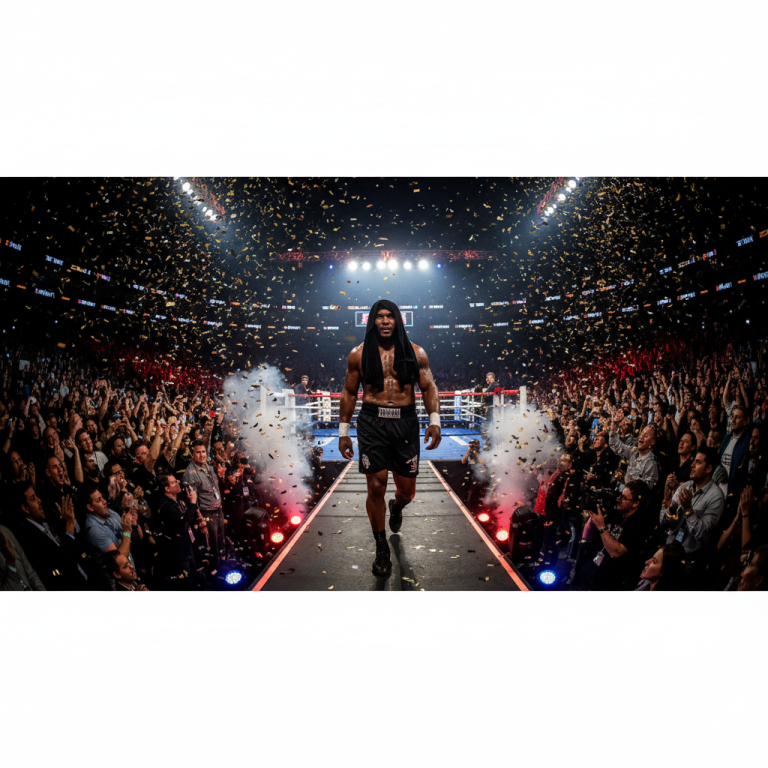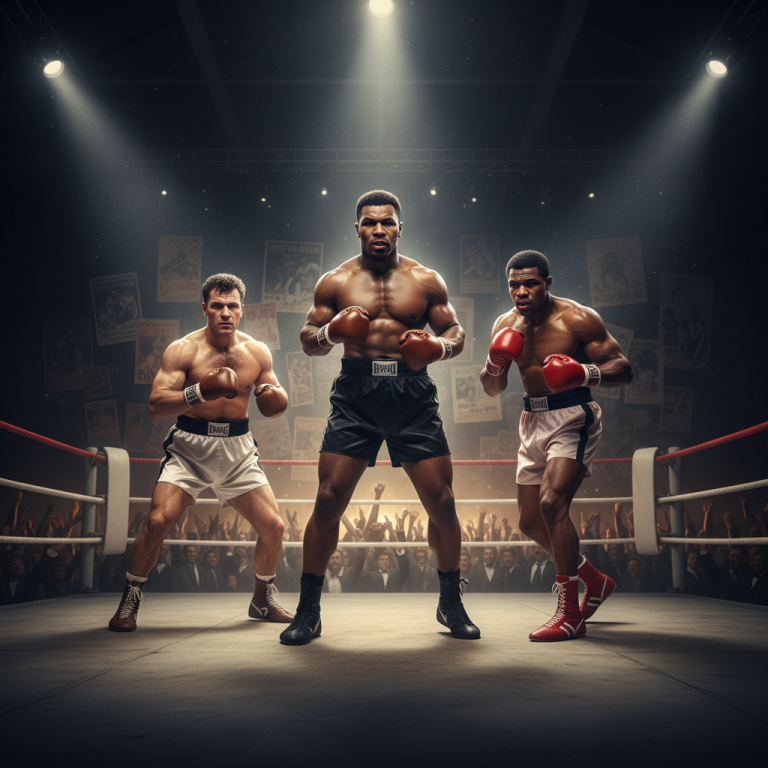

In the annals of sports history, few figures command the reverence and historical significance of Joe Louis. Known affectionately as the "Brown Bomber," Louis was more than just a pugilist; he was a cultural phenomenon who emerged during one of the most racially divided and politically charged eras in American history. As the World Heavyweight Champion from 1937 to 1949, Louis held the title for a record-breaking 140 consecutive months, but his impact extended far beyond the ropes of the boxing ring. He is widely regarded as the first African American to achieve the status of a national hero in the United States, embraced by both black and white Americans alike.
To understand the magnitude of Joe Louis’s rise, one must first understand the climate of the 1930s. It was the height of the Jim Crow era, where segregation was the law of the land in the South and a de facto reality in the North. African Americans were systematically marginalized, and in the world of sports, opportunities were scarce. The shadow of Jack Johnson, the first black heavyweight champion whose controversial lifestyle had alienated white America decades earlier, still loomed large. Louis had to navigate a minefield of racial prejudice, carrying the hopes of an entire race on his shoulders every time he stepped into the ring.
From Alabama to the Motor City
Born Joe Louis Barrow on May 13, 1914, in rural Alabama, he was the son of sharecroppers and the grandson of enslaved people. His early life was marked by poverty and hardship. In 1926, his family joined the Great Migration, moving north to Detroit, Michigan. It was in the bustling industrial landscape of Detroit that Louis discovered boxing. Legend has it that he used the money his mother gave him for violin lessons to pay for a locker at the local recreation center, trading the bow for boxing gloves.
His amateur career was nothing short of meteoric. Louis won the Detroit Golden Gloves and the National AAU tournament, showcasing a punching power and technical precision that would become his trademark. By the time he turned professional in 1934, the buzz surrounding the young fighter was palpable. Under the guidance of managers John Roxborough and Julian Black, and trainer Jack Blackburn, Louis was carefully groomed not just as a fighter, but as a public figure who could challenge the racial stereotypes of the time.
The Rise of a Contender
Louis tore through the heavyweight division with terrifying efficiency. In his first year as a professional, he fought 12 times and won all 12, 10 by knockout. His style was economical and devastating; he wasted no movement, stalking opponents with a shuffling gait before unleashing combinations of blinding speed and power. By 1935, he had defeated former heavyweight champions Primo Carnera and Max Baer, solidifying his status as the top contender for the crown. The fight against Baer, in particular, was a showcase of his dominance, as he dismantled the powerful puncher in four rounds.
However, the road to immortality hit a significant speed bump in 1936. Louis was matched against the German former champion, Max Schmeling. Overconfident and under-trained, Louis was systematically dissected by Schmeling, who had identified a flaw in Louis’s technique: a tendency to drop his left hand after a jab. Schmeling knocked Louis out in the 12th round, delivering a shocking defeat that devastated the African American community. This loss, however, set the stage for one of the most significant sporting events in history.
The Fight of the Century: Louis vs. Schmeling II
Before he could avenge his loss to Schmeling, Louis had to win the championship. He accomplished this on June 22, 1937, by knocking out James J. Braddock, the "Cinderella Man," in Chicago. At 23 years old, Joe Louis became the first African American heavyweight champion since Jack Johnson. Yet, Louis declared that he would not feel like the true champion until he defeated Schmeling. The stage was set for their rematch on June 22, 1938, at Yankee Stadium.
The 1938 rematch was far more than a boxing match; it was a proxy battle between democracy and fascism. With the clouds of World War II gathering, Adolf Hitler and the Nazi propaganda machine heralded Schmeling as a symbol of Aryan supremacy. Conversely, Joe Louis was embraced by President Franklin D. Roosevelt and the American public as the defender of American ideals. For the first time, white Americans openly cheered for a black man to defeat a white opponent. The pressure on Louis was unimaginable.
When the bell rang, Louis unleashed a fury that has rarely been seen in the sport. He attacked Schmeling with a savage precision, landing a series of crushing blows that broke Schmeling’s ribs and vertebrae. The fight lasted only 124 seconds. Louis’s first-round knockout was a resounding rejection of Nazi racial theory and a moment of unparalleled national unity. In that two-minute span, Joe Louis transcended race to become an American icon.
The Bum of the Month Club and WWII
Following the Schmeling victory, Louis was an active champion. He defended his title with such frequency that his opponents were collectively dubbed the "Bum of the Month Club." Despite the derogatory nickname, many of these challengers were top-ranked fighters; they simply looked mediocre against the brilliance of Louis. He defended his title 25 times, a record for any weight class that still stands today, cementing his legacy as one of the greatest heavyweights of all time.
When the United States entered World War II, Joe Louis once again stepped up for his country. He famously enlisted in the Army, declaring, "We will win because we are on God’s side." Unlike many other athletes who took cushy roles, Louis served in the segregated unit but used his influence to improve conditions for black soldiers. He traveled more than 20,000 miles and fought 96 exhibition matches to boost troop morale, often risking his title and his health without financial compensation.
Louis’s philanthropy during the war was remarkable. He donated the purses from two of his title fights to the Navy Relief Society and the Army Relief Fund, totaling nearly $100,000—a massive sum at the time. This act of patriotism endeared him further to the American public, helping to erode some of the racial barriers of the era. He was a black man funding the war effort of a country that still denied him basic civil rights, a complexity that highlighted his character and dedication.
The Twilight Years and Struggles
After the war, Louis’s skills began to diminish. He retired in 1949 as champion but was forced to return to the ring due to severe financial troubles, primarily caused by tax debts. The IRS pursued Louis relentlessly for unpaid taxes on the very purses he had donated to the war effort, a cruel irony that plagued him for the rest of his life. His comeback attempts resulted in painful losses to Ezzard Charles and, most famously, Rocky Marciano in 1951. The image of an aging Louis being knocked through the ropes by Marciano remains a poignant symbol of the cruelty of the sport.
Despite his financial and professional decline, Louis’s dignity remained intact. He eventually found work as a greeter at Caesars Palace in Las Vegas, where he was still revered by fans who remembered his glory days. He struggled with drug addiction and mental health issues later in life, battles that were fought away from the public eye. Yet, the respect from his peers never wavered; notably, Max Schmeling became a close friend and even helped pay for Louis’s funeral expenses when the Brown Bomber passed away in 1981.
A Lasting Legacy
Joe Louis’s legacy is foundational to modern American sports. He paved the way for future icons like Jackie Robinson and Muhammad Ali. While Robinson broke the color barrier in baseball, it was Louis who first proved that a black athlete could be the face of American excellence. Ali himself often acknowledged that without Joe Louis, there would be no Muhammad Ali. Louis showed that sports could be a vehicle for social change and that an athlete’s influence could reach the highest levels of political discourse.
Ultimately, Joe Louis was America’s first boxing hero because he was the right man at the right time. He possessed the quiet dignity required to navigate the racism of the 1930s and the explosive talent to command the world’s attention. In a time of global tyranny and domestic segregation, his fists did the talking, delivering a message of strength, resilience, and hope that resonated across all divides. He remains, forever, the champion of the people.