
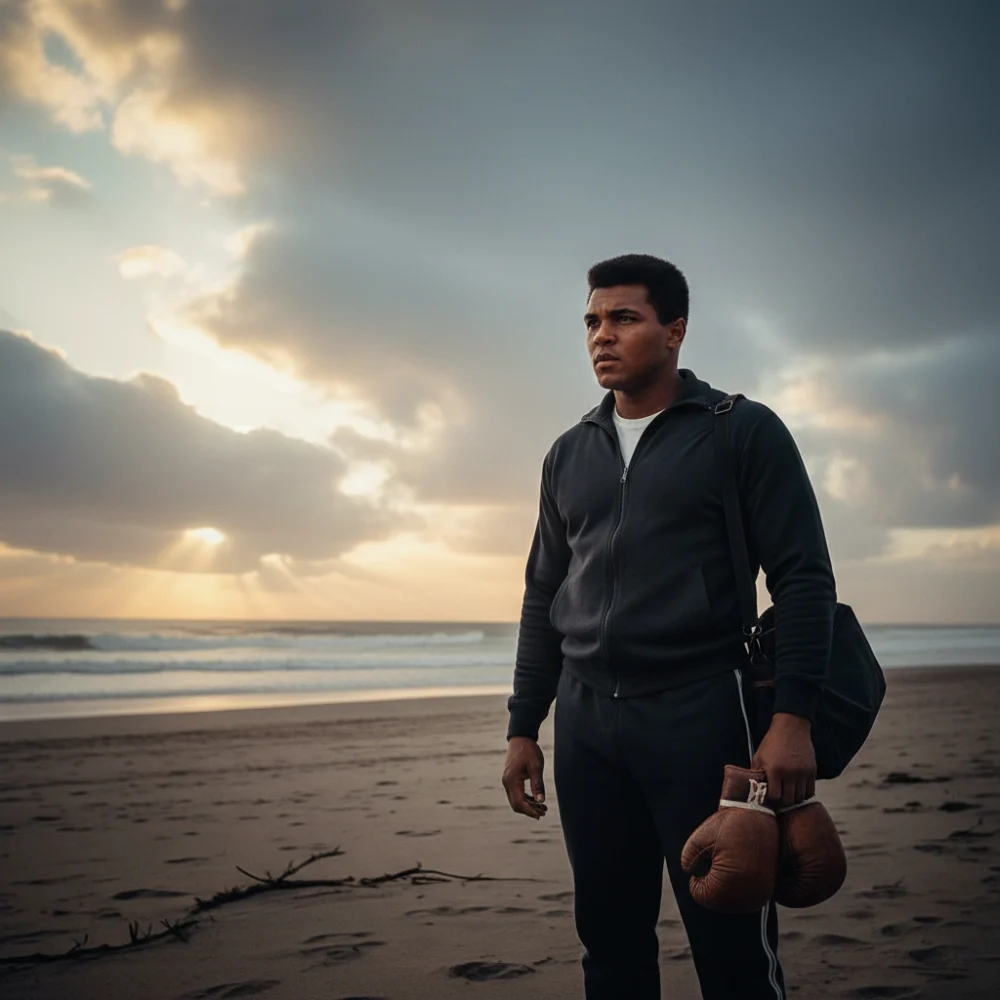
In the annals of sports history, few figures have transcended their athletic discipline to become global icons of conscience and resistance. Muhammad Ali is undoubtedly the most prominent among them. However, his legend was not solely built upon his dazzling footwork or his lightning-fast jabs inside the ring. A significant portion of the Ali mystique was constructed outside the squared circle, during a tumultuous three-and-a-half-year exile that robbed him of his athletic prime but gifted him a platform of moral authority that would resonate for generations.
The story begins in early 1967. Ali, then the undefeated heavyweight champion of the world, was at the peak of his physical powers. He had dismantled Cleveland Williams and Ernie Terrell with a grace and ferocity rarely seen in the heavyweight division. Yet, looming over his sporting dominance was the shadow of the Vietnam War. When Ali was reclassified as 1-A, making him eligible for the draft, he made a decision that would alter the course of his life and American culture forever: he refused to be inducted into the U.S. Army.
The Price of Conscience
On April 28, 1967, at an induction center in Houston, Texas, Ali refused to step forward when his name was called. Citing his religious beliefs as a minister of the Nation of Islam and his opposition to the war, he famously declared, "I ain’t got no quarrel with them Viet Cong." The consequences were immediate and severe. Within hours, the New York State Athletic Commission suspended his boxing license and stripped him of his title. Other commissions followed suit, effectively banning him from the sport worldwide.
Ali was subsequently arrested, tried, and convicted of draft evasion. He was sentenced to five years in prison and fined $10,000. Although he remained free on bail while his lawyers appealed the conviction, the champion was effectively grounded. He was unable to leave the country to fight abroad and unable to earn a living in the only profession he knew. The man who had floated like a butterfly was now pinned down by the full weight of the American legal system.
From Pariah to Prophet
During the early days of his exile, Ali was widely vilified. The mainstream media and a large portion of the American public viewed him as unpatriotic and a traitor. However, as the ban dragged on, the cultural landscape of the United States began to shift. The anti-war movement gained momentum, and the civil rights struggle intensified. In this changing climate, Ali’s steadfast refusal to compromise his principles began to look less like treason and more like heroic defiance.
Deprived of the boxing ring, Ali found a new arena: the college campus. Needing to earn money, he embarked on a speaking tour across the country. He spoke at universities where students, many of whom were facing the draft themselves, began to see him as a kindred spirit. These engagements were crucial in transforming Ali’s public image. He engaged in debates, recited poetry, and articulated a vision of racial pride and religious freedom that captivated a younger generation.
It was during these years in the wilderness that Ali honed his intellect and his voice. No longer just a brash athlete predicting the round of a knockout, he became a symbol of the Black Power movement and a voice for the voiceless. He spoke about systemic racism, religious persecution, and the hypocrisy of sending Black men to kill brown people in poor nations while they were denied basic rights at home. The exile forced the public to listen to Ali the man, rather than just watching Ali the fighter.
The Broadway Interlude and Financial Struggle
The financial strain on Ali during this period was immense. Litigation costs were astronomical, and his primary income stream had been severed. In a surprising turn of events, Ali took to the stage, starring in a Broadway musical titled Buck White. Although the show had a short run, it demonstrated Ali’s charisma and his willingness to explore new avenues to survive. It underscored the reality that the heavyweight champion of the world was struggling to put food on the table because of his convictions.
The exile also had a profound physical cost. From the ages of 25 to 29, typically the prime years for a heavyweight boxer, Ali did not fight a single professional round. Athletes work their entire lives to reach that peak window of physical maturity, speed, and power. Ali sacrificed these years willingly. Historians and boxing analysts often speculate on what Ali could have achieved during this time, but the sacrifice itself added a layer of tragedy and nobility to his legacy that no number of title defenses could match.
The Supreme Court Victory
As public sentiment turned against the Vietnam War, the legal tide also began to turn in Ali’s favor. On June 28, 1971, in the case of Clay v. United States, the Supreme Court unanimously overturned Ali’s conviction. The court ruled that the Department of Justice had improperly misled the draft board by advising them that Ali’s claim as a conscientious objector was not valid. It was a vindication of his long struggle, but by then, the exile had already left its mark.
The Evolution of a Fighter
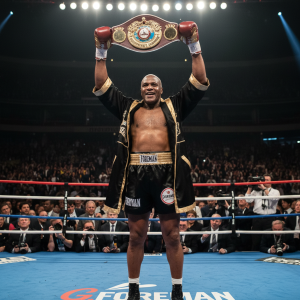
When Ali finally returned to the ring in late 1970 (prior to the Supreme Court ruling, thanks to a loophole in Georgia state laws), he was a different fighter. The exile had eroded his blistering foot speed and reflexes. He could no longer dance for 15 rounds without pause. This physical decline forced him to evolve. He became tougher, more resilient, and more tactical. The exile inadvertently birthed the Ali of the 1970s—the Ali of the Rope-a-Dope, the Ali who could absorb the punishment of George Foreman and Joe Frazier.
This evolution was critical to his legend. Had he never been banned, he might have remained the untouchable speedster until he retired. But the post-exile Ali had to show grit and heart. He had to overcome adversity inside the ring that mirrored the adversity he faced outside of it. The battles with Frazier and Foreman were not just athletic contests; they were viewed as morality plays where Ali represented the counterculture and the oppressed.
A Legacy Defined by Sacrifice
Ultimately, the ban created a legend because it proved that Muhammad Ali was not for sale. In an era where athletes were expected to be seen and not heard, Ali risked everything—his fortune, his title, and his freedom—for what he believed was right. His return to the throne, culminating in the “Rumble in the Jungle” in 1974, was not just a sports comeback; it was a redemption arc that the entire world had followed.
Today, when we speak of Muhammad Ali as "The Greatest," we are referencing the totality of his human experience. The three-year exile is the centerpiece of that experience. It transformed a controversial prizefighter into a global humanitarian and a symbol of courage. The ban did not break Ali; it forged him into a figure of eternal relevance, teaching the world that the greatest fights are often fought outside the ring.