
When discussing the history of boxing, few names evoke as much visceral reaction as Mike Tyson. In his prime, roughly between 1986 and 1989, Tyson was not merely a heavyweight champion; he was a cultural phenomenon and a destructive force of nature. Opponents were often defeated before they even stepped into the ring, paralyzed by the aura of invincibility that surrounded ‘Iron Mike.’ To understand what made him unstoppable, one must look beyond just his punching power and analyze the perfect storm of technique, speed, psychology, and mentorship that created the youngest heavyweight champion in history.
Tyson’s dominance was an anomaly in the heavyweight division. Standing at just 5 feet 10 inches, he was significantly shorter than most of his opponents, who often towered over him with longer reaches. However, Tyson turned what should have been a disadvantage into his greatest asset. His low center of gravity allowed him to generate immense leverage, while his compact frame made him a smaller target. This physical structure was the canvas upon which his legendary trainer, Cus D’Amato, painted a masterpiece of violence.
The Mastery of the Peek-a-Boo Style
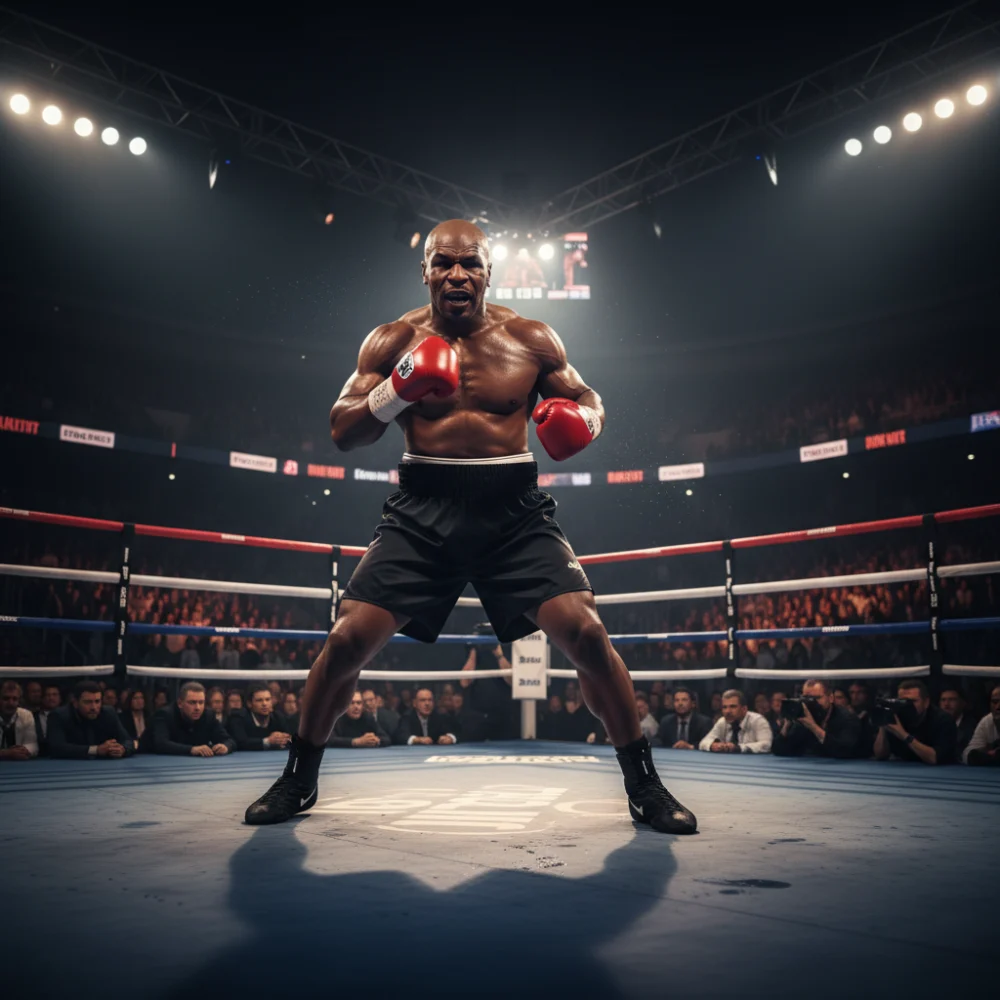
The cornerstone of Tyson’s technical brilliance was the ‘Peek-a-Boo’ style of boxing, perfected by D’Amato. This stance required the boxer to hold their gloves high against the cheeks, offering maximum protection to the chin while keeping the elbows tight to the body. While this sounds defensive, for Tyson, it was the launchpad for his offense. The style demanded constant head movement, a rhythmic bobbing and weaving that made him incredibly difficult to hit cleanly.
By constantly moving his head in a pendulum motion, Tyson forced opponents to punch downward or miss entirely. When they missed, they were often left off-balance and exposed. Tyson was a master of slipping a jab by mere inches and instantly countering with a hook or uppercut. This slip-and-counter mechanism was drilled into him through thousands of hours of repetition until it became a reflex, allowing him to close the distance against taller fighters without taking damage.
Unprecedented Hand Speed for a Heavyweight
While his power grabbed headlines, it was Mike Tyson’s hand speed that truly overwhelmed his adversaries. Heavyweights are generally known for slower, thudding power, but Tyson threw combinations with the velocity of a welterweight. He could detonate a four-punch combination in the blink of an eye. This speed created a ‘shock and awe’ effect; opponents simply could not process the incoming fire quickly enough to react.
This speed was not limited to his hands; his footwork was equally explosive. Tyson was an aggressive pressure fighter who cut off the ring with precision. He didn’t just follow his opponents; he corralled them, using quick, explosive steps to trap them against the ropes or in the corners. Once trapped, his superior hand speed allowed him to land multiple devastating blows before the opponent could reset their guard.
Kinetic Linking and Devastating Power
It is impossible to discuss Tyson without acknowledging his raw power. However, this power was not just brute strength; it was a result of perfect kinetic linking. Tyson threw punches with his entire body, transferring energy from his legs, through his hips, and into his fists. His signature right hook to the body followed by a right uppercut to the chin is a textbook example of this mechanics.
- Leverage: By dipping low, he utilized the upward force of his legs to drive punches through the target.
- Torque: His rapid hip rotation added significant mass to his velocity.
- Accuracy: Tyson hit vital points—the chin, the temple, the liver—maximizing the impact of his force.
This combination of leverage and accuracy meant that Tyson didn’t need to load up on every punch to hurt someone. Even his short, compact punches carried knockout power because the mechanics behind them were flawless. He understood that power comes from the ground up, and he utilized his thick, muscular legs to generate force that few human beings could withstand.
Underrated Defensive Genius
Casual observers often overlook Tyson’s defensive capabilities because his knockouts were so spectacular. However, in his prime, Tyson was an elusive target. His head movement was erratic and unpredictable. He would slip outside a jab, roll under a hook, and weave out of danger seamlessly. This defense was proactive; he used his opponent’s aggression against them.
By making opponents miss, Tyson created openings. A missed punch leaves a fighter vulnerable, and Tyson was the best in the world at capitalizing on those split-second windows. His defense was his offense. The psychological toll of swinging at air and getting hit by a truck in return exhausted his opponents mentally and physically within the first few rounds.
Psychological Warfare and Intimidation
Mike Tyson won many fights before the first bell ever rang. His ring entrance was stripped of the usual glitz and glamour of professional boxing. He wore simple black trunks, low-cut black shoes, and no socks. He entered the ring without a robe, often to a singular, ominous tone or aggressive hip-hop music. This stark presentation sent a clear message: he was there strictly for business, and business was brutal.
The ‘stare’ was another weapon. Tyson would lock eyes with his opponent across the ring, projecting an intensity that withered the confidence of seasoned fighters. He spoke of his intentions with graphic, terrifying clarity in interviews. This psychological warfare induced a panic response in his rivals, causing them to fight stiffly and make mistakes they wouldn’t usually make. Fear is exhausting, and Tyson made sure his opponents were drowning in it.
The Influence of Cus D’Amato and Kevin Rooney
Finally, the structure provided by his team was the glue that held the unstoppable machine together. Cus D’Amato acted as a father figure and a psychological guru, building Tyson’s fragile self-esteem into an armor of arrogance and belief. After D’Amato’s passing, Kevin Rooney took over and maintained the strict discipline and physical conditioning required to execute the Peek-a-Boo style.
During his prime, Tyson was in peak physical condition, boasting a neck that measured over 20 inches, which acted as a shock absorber against punches. His training regimen was ascetic, involving early morning runs, endless calisthenics, and technical sparring. As long as he adhered to the discipline instilled by D’Amato and Rooney, he was virtually unbeatable. It was the perfect alignment of physical gifts, technical mastery, and psychological dominance.