
Oscar De La Hoya is a name synonymous with boxing excellence, but his impact extends far beyond the canvas of the ring. While his accolades as a six-division world champion secured his place in the International Boxing Hall of Fame, it is his transition from a prizefighter to a boxing mogul that truly redefined the landscape of combat sports. De La Hoya did not just participate in the business of boxing; he rewrote the rules of engagement, turning his ‘Golden Boy’ persona into a billion-dollar brand.
The journey began in Barcelona at the 1992 Olympics, where De La Hoya captured the gold medal shortly after promising his dying mother he would bring it home. This narrative created an instant American hero, but uniquely, one with deep Mexican roots. This duality allowed him to bridge the gap between two massive demographics: the general American sports fan and the fiercely loyal Hispanic boxing community. This crossover appeal was the foundation upon which his financial empire was built.
The Blueprint of Pay-Per-View Dominance
Long before the era of Floyd Mayweather and Manny Pacquiao, Oscar De La Hoya was the undisputed king of Pay-Per-View (PPV). Throughout the 1990s and early 2000s, he generated approximately $700 million in PPV income alone. His fights were events, spectacles that transcended the hardcore boxing niche. By consistently fighting the best opposition available—including legends like Julio César Chávez, Felix Trinidad, and Bernard Hopkins—he ensured that his market value remained at an apex regardless of wins or losses.
Strategic Branding: De La Hoya understood early on that his smiling face and clean-cut image were commodities. He leveraged this to secure endorsements that were previously unavailable to boxers. However, his most significant business move came in 2002, while he was still an active champion. Recognizing that promoters often took the lion’s share of the profits, he founded Golden Boy Promotions to take control of his own destiny and the futures of other fighters.
Disrupting the Promoter Hierarchy
The establishment of Golden Boy Promotions was a direct challenge to the duopoly of Bob Arum’s Top Rank and Don King Productions. Historically, boxers were viewed merely as assets to be exploited. De La Hoya’s pitch was revolutionary: a promotion company run by a fighter, for fighters. He promised better transparency and a partnership model rather than a master-servant relationship. This narrative resonated deeply with young talent looking for guidance in a notoriously predatory industry.
Within a few years, Golden Boy Promotions became the first Hispanic-owned boxing promotion company to achieve global dominance. They began co-promoting major events and eventually signing top-tier talent. The company expanded its portfolio to include:
- Televised fight nights on major networks like HBO and Showtime.
- Development of the ‘Golden Boy Classics’ library.
- Investments in other business ventures, including The Ring Magazine.
- Strategic partnerships with venue giants like AEG.
The Canelo Alvarez Era and Beyond
Perhaps the greatest testament to De La Hoya’s promotional acumen was the cultivation of Saul ‘Canelo’ Alvarez. recognizing the potential in the young redhead from Guadalajara, Golden Boy Promotions guided Canelo from a prospect to the face of boxing. Under De La Hoya’s banner, Canelo signed a historic $365 million deal with DAZN, a contract that shattered sports records at the time. This deal highlighted De La Hoya’s ability to navigate the shifting media landscape from traditional cable to digital streaming services.
However, the business of boxing is fraught with conflict. The eventual split between Canelo and De La Hoya served as a stark reminder of the volatile nature of promoter-fighter relationships. Despite the acrimonious end, the blueprint used to build Canelo’s stardom—careful matchmaking, maximizing Hispanic heritage marketing, and strategic media placement—remains the gold standard for developing superstars in the sport.
Adapting to the Digital Age
De La Hoya has remained agile in an industry that is often slow to change. He was one of the first major promoters to embrace the streaming model, moving away from exclusive ties with premium cable networks like HBO as their boxing budgets dwindled. By partnering with platforms like DAZN and later exploring other distribution avenues, he ensured that his stable of fighters maintained global visibility in the smartphone era.
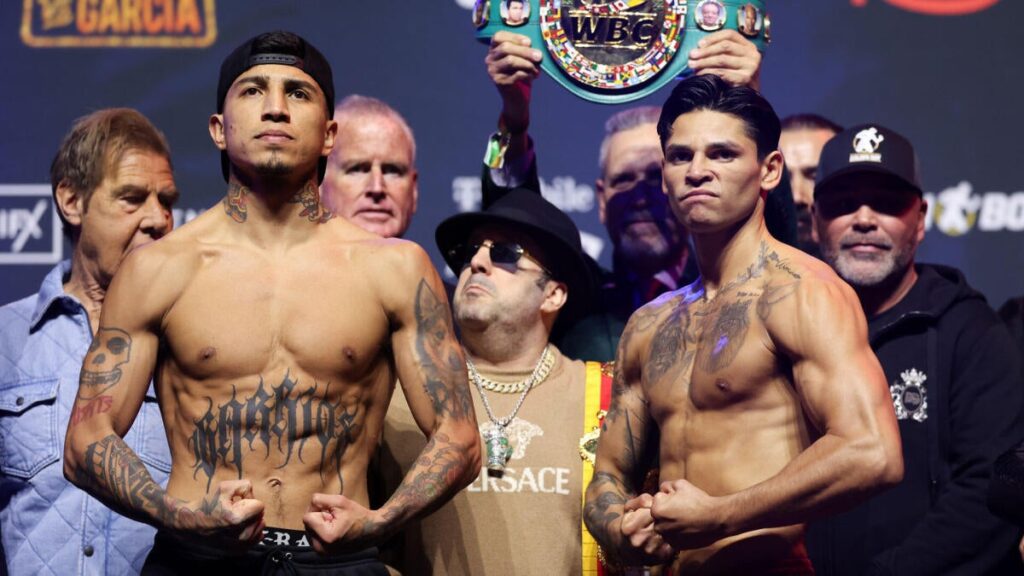
Furthermore, Golden Boy Promotions has effectively utilized social media to build stars like Ryan Garcia. Understanding that modern stardom is quantified by engagement and followers as much as knockout ratios, De La Hoya’s machine helped Garcia convert internet fame into legitimate ticket-selling power. This hybrid approach of old-school boxing fundamentals mixed with new-school digital marketing keeps the company relevant.
The Challenges of Being the Boss
Transitioning from the ring to the boardroom has not been without its personal and professional battles. De La Hoya has had to navigate intense rivalries with other power brokers like Al Haymon of Premier Boxing Champions (PBC) and Eddie Hearn of Matchroom Boxing. These promotional wars often lead to the ‘Cold War’ eras in boxing, where top fighters cannot face each other due to network and promoter allegiances.
Additionally, De La Hoya’s personal struggles have occasionally cast a shadow over his business dealings. Yet, his resilience—a trait honed in the ring—has allowed him to bounce back repeatedly. He remains a vocal, sometimes controversial, figure on Twitter and in press conferences, keeping himself and his brand in the headlines. In the attention economy, De La Hoya understands that silence is the only true enemy.
Legacy and Future Outlook
Today, Golden Boy Promotions remains a powerhouse, consistently delivering high-quality fight cards in Los Angeles, Las Vegas, and beyond. The company has diversified, promoting not just mega-fights but also grassroots boxing series that nurture the next generation of champions. De La Hoya’s influence ensures that the pipeline of talent, particularly from Mexico and the United States, remains robust.
Conclusion: Oscar De La Hoya’s contribution to the business of boxing is as significant as his left hook. He proved that a fighter could transcend their athletic prime to become a captain of industry. By challenging the status quo, empowering fighters, and adapting to modern media, he laid the groundwork for the current era where boxers demand equity, ownership, and control over their careers. The ‘Golden Boy’ didn’t just win the game; he bought the stadium.