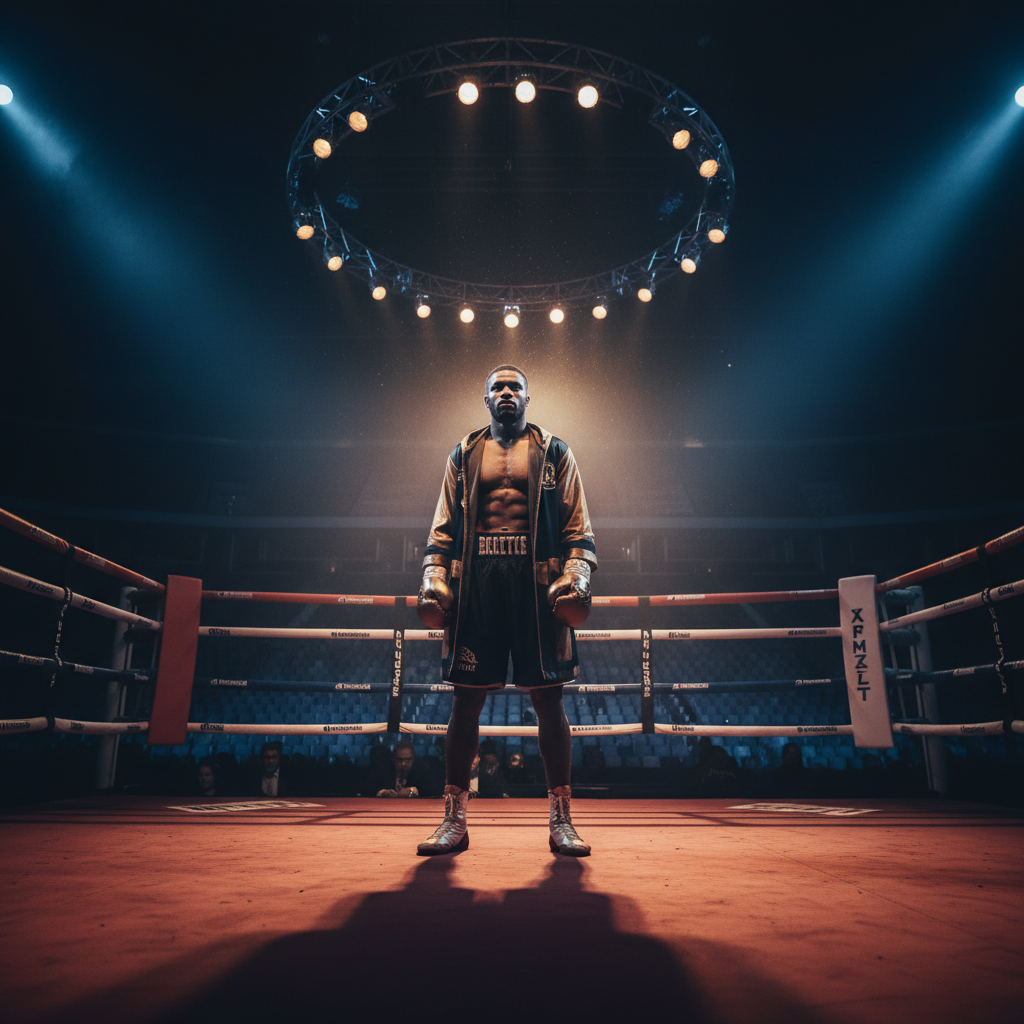


Few stories in the history of sports are as compelling, volatile, or legendary as the rise of Mike Tyson. Long before he was known globally as “The Baddest Man on the Planet,” Tyson was a shy, soft-spoken child navigating the perilous environment of 1970s Brooklyn. His journey from a juvenile detention center to the pinnacle of the boxing world is a testament to raw talent honed by obsessive discipline and a unique mentorship that changed the landscape of the heavyweight division forever.
The Crucible of Brownsville
Born in 1966, Tyson grew up in Brownsville, a neighborhood often cited as one of the most dangerous in New York City during that era. Raised by a single mother after his father abandoned the family, young Mike was initially a target for bullies due to his high-pitched voice and lisp. However, the streets of Brownsville quickly hardened him. What began as self-defense turned into a life of petty crime, and by the age of 13, Tyson had been arrested an astonishing 38 times. This harsh environment forged a deep-seated rage and a survival instinct that would later translate into his ferocious fighting style.
His repeated run-ins with the law eventually led him to the Tryon School for Boys in upstate New York. It was here, within the confines of a reform school, that destiny intervened. Tyson’s immense physical strength caught the attention of Bobby Stewart, a juvenile detention center counselor and former boxer. Stewart agreed to teach Tyson the basics of boxing on the condition that Mike improved his behavior and grades, marking the first time the young man learned the value of discipline.
The Meeting That Changed History
Recognizing that Tyson’s potential far exceeded what he could teach, Stewart introduced the teenager to the legendary boxing trainer Cus D’Amato. D’Amato, who had previously guided Floyd Patterson to the heavyweight title, operated a gym in Catskill, New York. Upon seeing Tyson spar for the first time, D’Amato made a prophetic declaration: “That is the heavyweight champion of the world.” This meeting was the turning point in Tyson’s life.
D’Amato didn’t just become Tyson’s trainer; he became his legal guardian and father figure. He moved Tyson into his Victorian home in Catskill, removing him from the negative influences of Brooklyn. Under D’Amato’s roof, Tyson was immersed in a world of boxing history, watching hours of old fight reels of legends like Jack Dempsey and Harry Greb. D’Amato worked tirelessly on Tyson’s mind, instilling in him a warrior philosophy and the belief that he was destined for greatness.
Mastering the Peek-a-Boo Style
The technical foundation of Tyson’s success was the “Peek-a-Boo” style, a defensive technique perfected by D’Amato. This style required the boxer to hold their gloves high in front of their face, moving their head constantly to slip punches while stepping inside the opponent’s guard. For a shorter heavyweight like Tyson, who stood at roughly 5’10”, this style was essential. It allowed him to utilize his low center of gravity to generate explosive power.
Tyson’s training regimen was grueling and designed to turn him into a machine. His daily routine included:
- Waking up at 4:00 AM for a run.
- Calisthenics including thousands of sit-ups and push-ups.
- Technical sparring focusing on head movement and combinations.
- Visualizing success and studying the psychology of fear.
This repetition created muscle memory that made Tyson’s movement in the ring appear almost instinctual. He wasn’t just throwing punches; he was delivering leverage-based assaults that could end fights in seconds. The combination of speed, power, and elusive defense made him a puzzle that few opponents could solve.
The Amateur Career and Olympic Heartbreak
Tyson’s amateur career was characterized by dominant performances, often ending in first-round knockouts. He won gold medals at the 1981 and 1982 Junior Olympic Games, famously knocking out one opponent in just 8 seconds. However, his amateur journey hit a stumbling block during the trials for the 1984 Olympics, where he lost two controversial decisions to Henry Tillman. While devastating at the time, this setback prompted D’Amato to turn Tyson professional early, a move that would accelerate his path to the title.
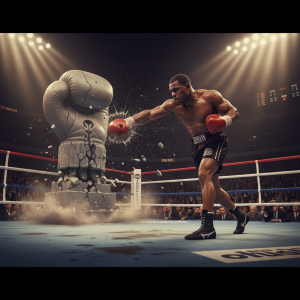
Mike Tyson made his professional debut on March 6, 1985, at the age of 18. He defeated Hector Mercedes via a first-round TKO. This set the tone for what became known as the “Tyson Era.” In his first year as a pro, he fought 15 times, winning all of them by knockout. The frequency of his fights and the brutality of his finishes generated a massive buzz in the boxing world. He wasn’t just winning; he was annihilating opponents.
Tragedy and Triumph
Just as Tyson was on the cusp of title contention, tragedy struck. Cus D’Amato passed away in November 1985. The loss of his mentor left a void in Tyson, but it also fueled a burning desire to fulfill the prophecy D’Amato had spoken years earlier. Kevin Rooney took over the training duties, continuing the strict regimen and technical discipline that Cus had established.
By 1986, Tyson was the number one contender. On November 22, 1986, he stepped into the ring against Trevor Berbick for the WBC Heavyweight Championship. The fight was a showcase of Tyson’s dominance. He overwhelmed Berbick, knocking him down multiple times before the referee stopped the fight in the second round. At 20 years, 4 months, and 22 days old, Mike Tyson became the youngest heavyweight champion in history, a record that still stands today.
Unifying the Division
Winning one belt was not enough. Tyson embarked on a mission to unify the heavyweight division. He defeated James “Bonecrusher” Smith to add the WBA title and later Tony Tucker to capture the IBF title. In doing so, he became the first undisputed heavyweight champion since Leon Spinks. The world watched in awe as “Iron Mike” cleaned out the division, dismantling seasoned veterans with terrifying ease.
Perhaps the peak of Tyson’s prime came on June 27, 1988, when he faced the undefeated lineal champion, Michael Spinks. The fight was hyped as a clash of styles, but it ended in just 91 seconds. Tyson’s aggression was unmatched, and he delivered a knockout that cemented his status as one of the greatest heavyweights of all time. At that moment, he appeared invincible.
The making of Mike Tyson was a convergence of nature and nurture. It was the raw aggression of the Brooklyn streets refined by the philosophical and technical genius of Cus D’Amato. While his later career was marred by controversy and personal struggles, the period of his rise remains a masterclass in athletic development. Tyson didn’t just become a champion; he became a cultural icon whose impact on the sport of boxing is indelible.