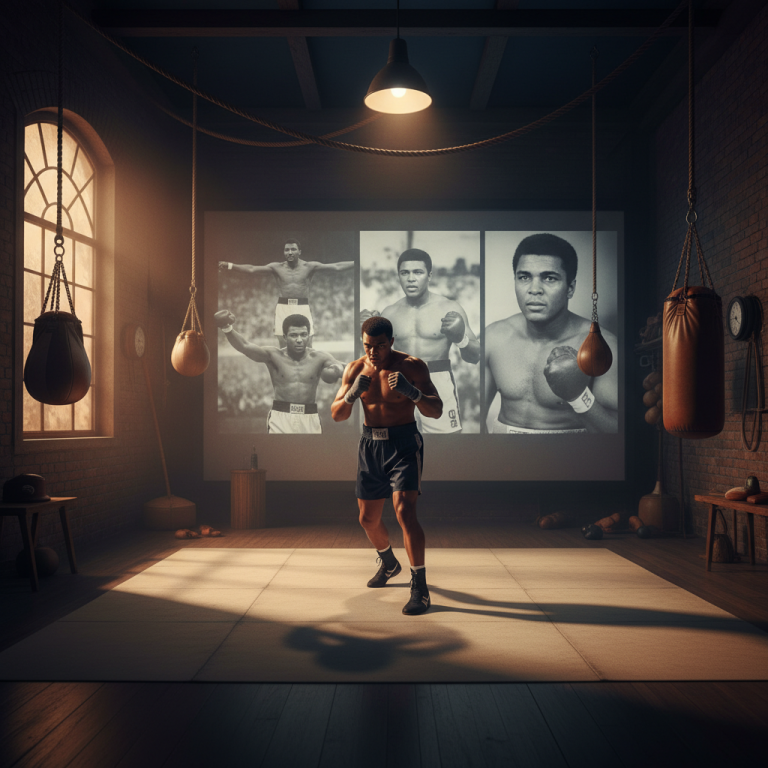

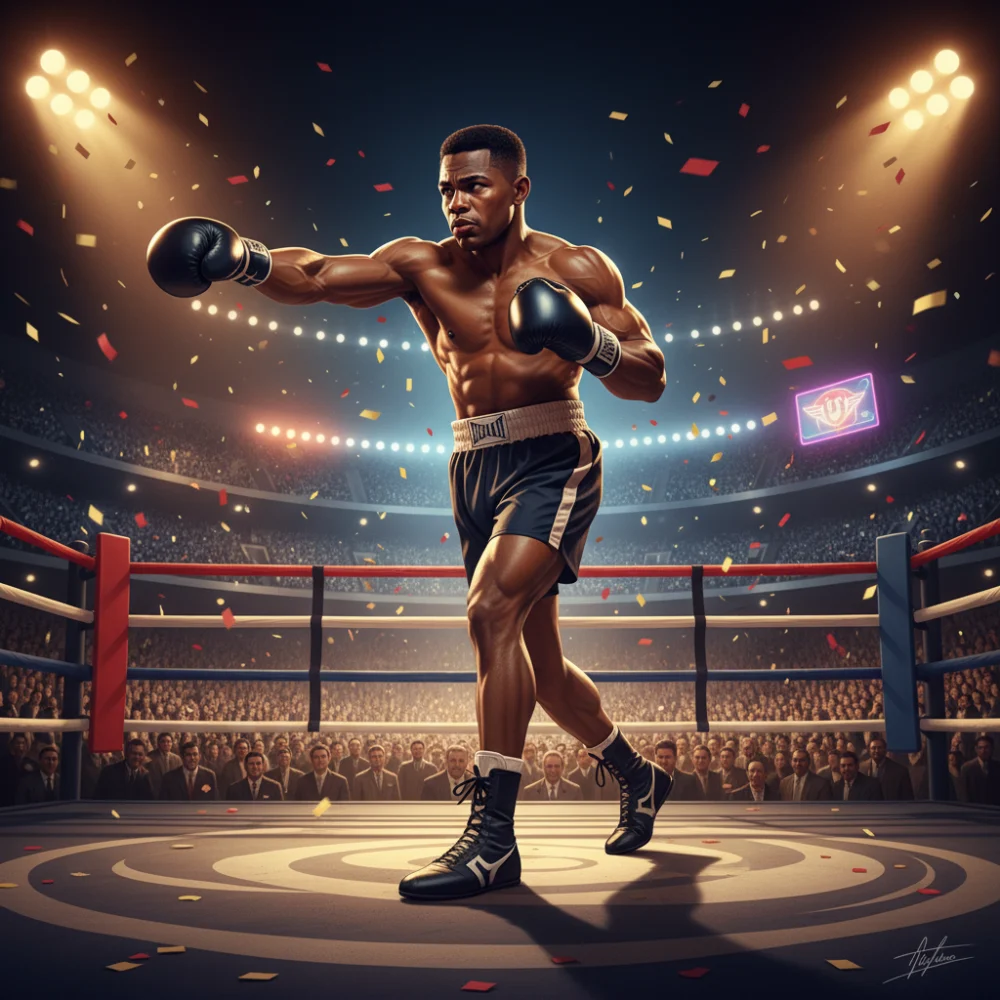
In the endless debates surrounding the history of the sweet science, one name consistently rises above the rest: Sugar Ray Robinson. While fans often compare heavyweights like Muhammad Ali or Mike Tyson, boxing purists and historians point to Robinson as the gold standard of combat. The term ‘pound-for-pound’ was literally invented to describe his dominance, acknowledging that he was superior to everyone else regardless of weight class. But a common question persists: could a fighter from the 1940s and 50s truly compete with the nutrition, sports science, and technique of the modern era? The answer is a resounding yes.
Robinson was not merely a product of his time; he was a physiological and technical anomaly who possessed a skillset that transcends decades. Unlike many vintage fighters who relied on grit and brawling, Robinson introduced a level of fluidity and precision that became the blueprint for modern boxing. His ability to fight moving backwards, his lightning-fast combinations, and his devastating one-punch knockout power are attributes that would terrify champions in the 21st century just as much as they did in the post-war era.
The Perfect Physiological Specimen
To understand why Robinson would dominate today, one must look at his physical gifts. Standing at 5 feet 11 inches with a 72-inch reach, he possessed the ideal frame for a welterweight and middleweight. However, it was his kinetic chain that set him apart. Robinson had the explosive twitch fibers of a sprinter combined with the endurance of a marathon runner. In an era where fighters fought 15 rounds—and often engaged in multiple bouts per month—Robinson’s stamina was legendary. In a modern 12-round fight, he would likely operate at a pace that current fighters could not sustain.
Furthermore, his balance was impeccable. Robinson could generate knockout power from any position, whether he was moving forward, laterally, or retreating. This is a rare trait even among elite modern champions. Most fighters need to plant their feet to throw a devastating shot; Robinson could knock you unconscious while dancing away from you. This specific mechanical advantage would neutralize the high-guard pressure styles seen in boxing today.
A Resume That Defies Logic
Modern boxing records are often carefully curated to protect undefeated streaks, but Robinson’s record is a testament to trial by fire. At his peak, he embarked on a 91-fight unbeaten streak. To put that in perspective, he fought the best contenders of his generation repeatedly, often with only weeks of rest between bouts. His final record of 173 wins, 19 losses, and 6 draws (with 108 KOs) includes a prime run where he was virtually untouchable.
If Robinson were transported to the modern era, the concept of ‘ducking’ opponents would be foreign to him. He fought the toughest challengers, including Jake LaMotta, Kid Gavilan, and Carmen Basilio, multiple times. His experience in adjusting to the same opponent over a series of fights demonstrates a Ring IQ that far surpasses the ‘one-and-done’ matchmaking style of today’s pay-per-view market.
Technical Mastery and Adaptability
Robinson was the original ‘complete fighter.’ He could box from the outside using a piston-like jab, or he could stand in the pocket and trade hooks with brawlers. His versatility is what makes him a nightmare for any era. Against a defensive genius like Floyd Mayweather, Robinson had the hand speed and volume to overwhelm the shoulder roll. Against a power puncher like Canelo Álvarez, Robinson had the footwork and reach to control the distance and the chin to withstand heavy artillery.
- Fluid Footwork: Robinson danced with a rhythm that disrupted his opponent’s timing.
- Combination Punching: He didn’t just throw one or two shots; he threw six-punch combinations with varied speed and power.
- Defensive Responsibility: While known for offense, his head movement and parrying skills were elite.
The Power Factor
It is a myth that older fighters hit softer than modern ones. Physics remains constant, and Robinson was one of the hardest punchers in history relative to his weight. His knockout of Gene Fullmer is often cited as the perfect punch—a left hook thrown while moving backward that rendered Fullmer unconscious before he hit the canvas. This kind of power commands respect and changes the geography of a fight. Modern welterweights and middleweights would have to be incredibly cautious, as Robinson needed only a split second to end a bout.
Durability and Chin
In over 200 professional fights, Sugar Ray Robinson was never truly knocked out. His only stoppage loss occurred against Joey Maxim at Light Heavyweight—a fight he was winning on the scorecards—due to extreme heat exhaustion in 104-degree weather, not a punch. He fought men far larger than him and took their best shots without folding. This level of durability is essential when discussing cross-era fantasy fights. Robinson proved he could take a punch from heavy hitters and fire back immediately.
The Killer Instinct
Perhaps the most distinct difference between Robinson and many modern technicians is the ‘killer instinct.’ In the modern era, fighters often coast when they are ahead on points to secure a decision. Robinson fought to finish. If he saw an opponent hurt, the fight was essentially over. This aggression, paired with his precision, meant that opponents could never relax for a second. This psychological pressure wears down fighters faster than physical exertion.
Old School Discipline vs. Modern Science
Critics argue that modern sports science gives today’s athletes an edge. While true for general athleticism, boxing is a skill sport. Robinson’s training involved chopping wood, running in combat boots, and sparring endless rounds—methods that built functional strength and incredible bone density. While he didn’t have cryotherapy or hyperbaric chambers, his body was hardened by the sheer volume of combat. He was a full-time fighter in a way that modern athletes, who fight twice a year, simply are not.
Matching Up with Modern Greats
Imagine a bout between Sugar Ray Robinson and Sugar Ray Leonard. Leonard himself admitted that Robinson was the master. Against a frantic pacer like Manny Pacquiao, Robinson’s precise counter-punching and size advantage would likely result in a stoppage. Against a technician like Terence Crawford, Robinson’s superior hand speed and experience would allow him to dictate the exchanges. There is no style in modern boxing that Robinson had not seen and conquered during his 25-year career.
Robinson’s ability to switch stances (though he primarily fought orthodox, he could fight effectively from anywhere) and his mastery of distance would confuse modern southpaws. He understood the geometry of the ring better than perhaps anyone who has ever laced up gloves.
Conclusion: The Timeless GOAT
Sugar Ray Robinson isn’t just a nostalgic figure; he is the archetype of the perfect boxer. His combination of blinding speed, crushing power, iron chin, and limitless stamina creates a fighter with zero glaring weaknesses. In the modern era, with 12-round limits and lighter gloves, Robinson would likely be even more dangerous, capable of unloading his entire gas tank without fear of fatigue.
While sports evolve and athletes generally get faster and stronger, outliers exist who set a bar that is never cleared. Wayne Gretzky in hockey, Michael Jordan in basketball, and Sugar Ray Robinson in boxing are these outliers. Robinson would not just compete in the modern era; he would dismantle it, proving once and for all that greatness has no expiration date.