
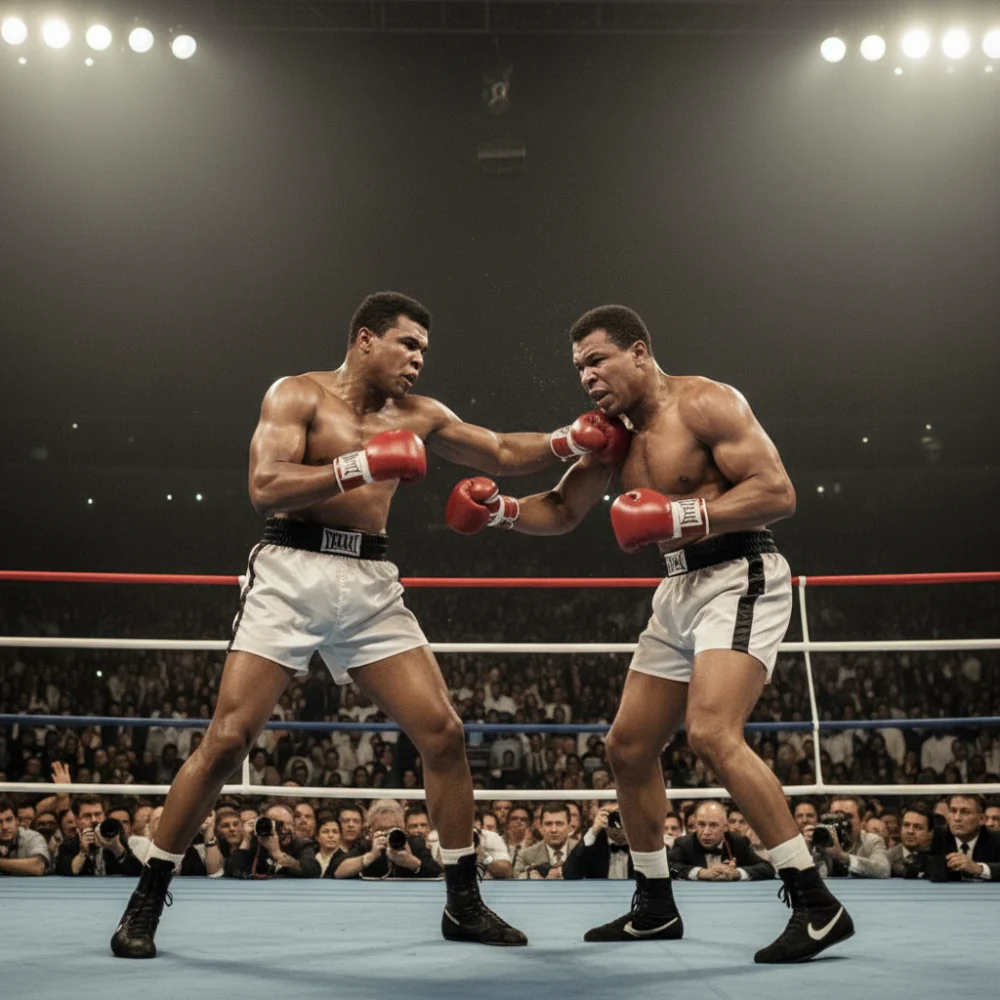
In the annals of sports history, few rivalries have captured the global imagination quite like the trilogy between Muhammad Ali and Joe Frazier. While their bouts were masterclasses in pugilism, the friction between these two titans extended far beyond the ring ropes. It was a clash of styles, personalities, and political ideologies that divided a nation and defined an era. To understand Ali vs. Frazier is to understand the cultural turbulence of the 1970s.
The rivalry was fueled by a perfect storm of circumstances. Muhammad Ali, stripped of his title and exiled from boxing for three years due to his refusal to be drafted into the Vietnam War, represented the anti-establishment movement. He was the voice of the counterculture, Black pride, and religious freedom. On the other side stood Joe Frazier, the relentless workhorse from Philadelphia who had claimed the heavyweight throne during Ali’s absence. Frazier, though apolitical, was inadvertently cast as the establishment’s champion, the “Great White Hope” in black skin, a narrative Ali cruelly exploited.
The Fight of the Century: March 8, 1971
The anticipation for their first meeting, dubbed “The Fight of the Century”, was unprecedented. Held at Madison Square Garden, it was the first time two undefeated heavyweight champions met for the undisputed title. The atmosphere was electric, with the world polarized between Ali’s flashy charisma and Frazier’s blue-collar grit. Ali had spent months taunting Frazier, calling him an “Uncle Tom” and mocking his intelligence, insults that cut deep and fostered a genuine hatred in Frazier.
Inside the ring, the fight lived up to the hype. Ali, still shedding ring rust, tried to control the distance, but Frazier’s bob-and-weave style allowed him to get inside. Frazier relentlessly targeted Ali’s body, wearing him down round after round. The climax came in the 15th round when Frazier unleashed his signature left hook—a punch that had been honed in the slaughterhouses of Philadelphia. It connected flush with Ali’s jaw, sending “The Greatest” crashing to the canvas. Frazier won by unanimous decision, handing Ali his first professional loss.
Super Fight II: The Tactical Interlude
It would take nearly three years for the rematch to materialize. By January 1974, the landscape had changed. Both men had lost to George Foreman, removing the aura of invincibility that surrounded their first encounter. Consequently, Super Fight II was a non-title bout, but the personal stakes remained sky-high. Held again at Madison Square Garden, this fight was a more tactical affair.
Ali had learned from his mistakes. He clinched frequently to stifle Frazier’s momentum and utilized his superior hand speed to score points from the outside. While it lacked the raw drama of the first fight, it showcased Ali’s adaptability. He won a unanimous decision, setting the stage for his eventual title reclamation against George Foreman in the “Rumble in the Jungle.” However, the score between Ali and Frazier was now tied at one apiece, necessitating a rubber match.
The Thrilla in Manila: October 1, 1975
The finale of their trilogy, known as the “Thrilla in Manila”, is widely regarded as the most brutal heavyweight fight in history. Taking place in the stifling heat of the Philippines, the bout transcended sport and entered the realm of survival. In the lead-up, Ali had taken his trash talk to a new, vicious low, referring to Frazier as a “gorilla” and carrying a rubber toy gorilla around during press conferences. This dehumanization enraged Frazier, who entered the ring ready to die if it meant taking Ali with him.
For 14 rounds, the two men battered each other with a ferocity that frightened spectators. Ali dominated the early rounds, but Frazier surged in the middle, landing heavy blows that would have felled any other man. In the later rounds, Ali, exhausted and near collapse, found a reserve of energy to batter Frazier’s swelling eyes. By the end of the 14th round, Frazier was virtually blind.
Frazier’s trainer, Eddie Futch, made the compassionate decision to stop the fight before the 15th round began, telling his fighter, “Sit down, son. It’s all over. No one will forget what you did here today.” Ali, upon realizing he had won, collapsed in his corner, later describing the experience as “the closest thing to dying that I know.” Both men left a piece of themselves in that ring, never truly being the same fighters again.
The Lingering Aftermath
The physical toll of the trilogy was immense, but the emotional scars ran deeper, particularly for Joe Frazier. While Ali eventually expressed regret for his cruel words, acknowledging that he went too far to sell tickets, Frazier held onto the bitterness for decades. He felt betrayed by a man he had once supported financially during Ali’s exile. The narrative Ali spun—painting Frazier as a traitor to his race—damaged Frazier’s reputation and hurt his family.
It wasn’t until the twilight of their lives that the ice began to thaw. Ali, silenced by Parkinson’s disease, and Frazier, mellowing with age, found a quiet respect for one another. They realized that their legacies were inextricably linked; you could not tell the story of Muhammad Ali without Joe Frazier, and vice versa. They were two halves of the greatest whole in boxing history.
Why This Rivalry Matters Today
The Ali-Frazier trilogy serves as a masterclass in athletic greatness, but also as a cautionary tale about the power of words. It demonstrated how sports can reflect the sociopolitical tensions of the real world. Their fights were not just about who was the better boxer, but about what kind of man America wanted to embrace.
- Contrast in Style: The Dancer vs. The Smokin’ Joe pressure.
- Political Divide: The Vietnam protestor vs. the establishment figure.
- Endurance: The sheer will displayed in Manila remains the benchmark for toughness in sports.
Ultimately, the rivalry was bigger than boxing because it forced the world to pick a side. It challenged viewers to confront their own biases regarding race, war, and patriotism. Today, when we look back at the golden age of heavyweights, Ali and Frazier stand tallest, locked forever in a combative embrace that defined a generation.