
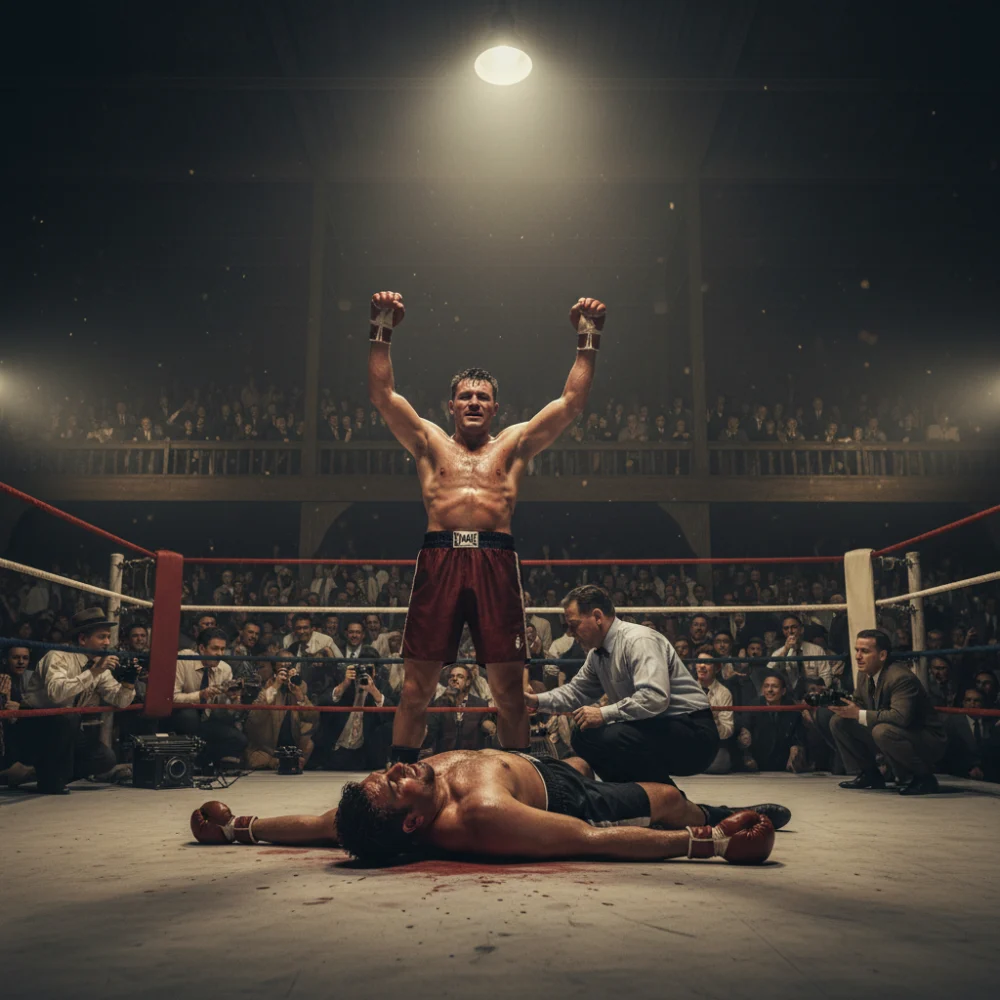
In the long and storied history of boxing, few names resonate with the same mythical quality as Rocky Marciano. Retiring with a perfect record of 49-0, including 43 knockouts, Marciano stands alone as the only heavyweight champion to ever hang up his gloves without suffering a single defeat or draw. His legacy is not merely defined by the zero in his loss column, but by the sheer ferocity and determination with which he competed during a transitional yet brutal era of the sport.
Born Rocco Francis Marchegiano in Brockton, Massachusetts, Marciano was never the prototype for a heavyweight king. Standing only about 5 feet 10 inches tall and possessing a reach of just 67 inches—the shortest of any heavyweight champion in history—he faced significant physical disadvantages every time he stepped through the ropes. Yet, what he lacked in stature, he made up for with unparalleled conditioning, an iron chin, and devastating punching power.
The Unorthodox Style of the Brockton Blockbuster
Marciano’s fighting style was a chaotic masterpiece of aggression. Critics often called him clumsy or unrefined, but this assessment missed the genius of his approach. Under the tutelage of trainer Charley Goldman, Marciano turned his awkwardness into a weapon. Goldman taught him to fight from a crouch to make himself an even smaller target, forcing taller opponents to punch downward, which left them vulnerable to Rocky’s overhand counters.
His signature weapon was the “Suzie Q,” a thunderous overhand right that holds a place in boxing lore as one of the most powerful punches ever thrown. This wasn’t just raw strength; it was the result of kinetic linking. Marciano threw his entire body weight into his shots, often leaving his feet to deliver maximum impact. When the Suzie Q landed, fights didn’t just change momentum; they ended.
Another critical component of his success was his relentless pressure. Marciano did not know how to take a backward step. He swarmed his opponents, hammering their arms and shoulders if he couldn’t hit their heads. This body attack was designed to atrophy the opponent’s strength, causing their guard to lower in the later rounds, inevitably setting the stage for a knockout.
Defining Fights: The Road to Immortality
Marciano’s resume features victories over some of the greatest names in light heavyweight and heavyweight history. Perhaps his most iconic victory came on September 23, 1952, against Jersey Joe Walcott for the world title. Behind on the scorecards and struggling against Walcott’s slick boxing skills, Marciano needed a miracle. In the 13th round, he delivered it: a short, straight right hand that collapsed Walcott instantly, cementing one of the most dramatic comebacks in sports history.
His rivalry with the legendary Ezzard Charles further solidified his reputation for toughness. In their first bout, Marciano won a grueling decision. However, their second encounter proved to be a bloodbath. Charles split Marciano’s nose wide open—a gruesome injury that threatened to stop the fight. Realizing he was on the verge of losing his title on a medical stoppage, Marciano attacked with reckless abandon, knocking Charles out in the 8th round to retain his belt.
Marciano’s final fight took place in 1955 against the ancient but crafty Archie Moore. Moore, the light heavyweight champion, managed to drop Marciano early in the fight—a rare occurrence. However, Rocky’s recuperative powers were legendary. He rose from the canvas, shook off the cobwebs, and proceeded to batter Moore into submission, scoring a knockout in the ninth round to close the curtain on his career.
The Myth of the Weak Era
Modern critics often attempt to diminish Marciano’s legacy by claiming he fought in a weak era or faced opponents who were past their prime. While it is true that Joe Louis was old when Rocky retired him, and Walcott and Moore were in their late 30s or early 40s, this narrative ignores the context of the 1950s. Boxing was a far more active sport then; fighters like Moore and Charles had hundreds of professional bouts and possessed a level of ring IQ that is rare in the modern game.
Furthermore, Marciano cleared out his division entirely. He fought every contender available, including Roland La Starza, whom he stopped in a technical knockout in their title rematch, and heavy hitter Rex Layne. You cannot fault a champion for the era they live in; you can only judge them by how dominantly they dispatch the challengers in front of them, and Rocky did so with ruthless efficiency.
Conditioning and Discipline
The secret to Marciano’s undefeated record was arguably his training camp discipline. He lived a monastic life while preparing for a fight, often isolating himself from his family for months. His stamina was limitless. While other heavyweights faded in the championship rounds (rounds 11 through 15), Marciano seemed to get stronger. He trained to fight 15 rounds at a sprinter’s pace, ensuring that if he didn’t knock you out early, he would drown you in deep waters late.
He reportedly ran continuously uphill and chewed on resin to strengthen his jaw muscles. This obsession with fitness meant that he was never the tired man in the ring. Even when his face was swollen and bleeding, his legs remained fresh, allowing him to maintain the pressure that broke the spirits of technically superior boxers.
Retirement and Tragic End
Marciano announced his retirement in April 1956 at the age of 32. He resisted the temptation of lucrative comeback offers, a rarity in a sport where champions often stay too long and tarnish their legacies. He walked away on top, prioritizing his family and his health over the allure of another paycheck.
Tragically, Rocky Marciano’s life was cut short on August 31, 1969, the day before his 46th birthday, in a small plane crash in Iowa. The world mourned the loss of a true champion, but his legend only grew in his absence. He became the benchmark for perfection, the ghost that every subsequent undefeated heavyweight chases but never quite catches.
Today, Rocky Marciano remains a polarizing yet undeniable figure in sports history. Whether analyzed through the lens of statistics or the eye test of his brutal knockouts, his impact is indelible. He proved that heart, grit, and an unwavering will to win can overcome physical limitations, leaving behind a legacy of 49 fights, 49 wins, and zero excuses.