
In the annals of boxing history, few names polarize and mesmerize quite like Floyd Mayweather Jr. Often referred to as TBE (The Best Ever) by his supporters and a tactical genius by historians, Mayweather’s career is defined not just by his unblemished 50-0 record, but by the philosophy he perfected: the art of hitting and not getting hit. While boxing is fundamentally a sport of physical violence, Mayweather treated it as a high-stakes chess match, prioritizing defensive responsibility over reckless aggression.
To understand Mayweather’s impact, one must first recognize the era he dominated. He fought through generations of heavy hitters and speedsters, from Genaro Hernandez to Manny Pacquiao. Yet, throughout his tenure across five weight classes, he rarely absorbed punishment. This was not merely due to athleticism; it was a result of a calculated reinvention of defensive mechanics that shifted the paradigm of what constitutes a dominant fighter.
The Evolution: From Pretty Boy to Money
Early in his career, operating under the moniker "Pretty Boy" Floyd, Mayweather was a far more offensive machine. He possessed blinding hand speed and significant knockout power, particularly in the super featherweight division. However, as he moved up in weight and encountered issues with brittle hands, he was forced to evolve. This necessity birthed the defensive wizardry seen in the "Money" Mayweather era.
This transition was not a retreat but a strategic adaptation. Mayweather realized that longevity in the sport required minimizing damage. He began to rely more heavily on the Philly Shell defense, a style he did not invent but certainly perfected and popularized for the modern era. By turning his lead shoulder inward and tucking his chin behind it, he created an impenetrable wall that frustrated the world’s best offensive fighters.
Deconstructing the Shoulder Roll
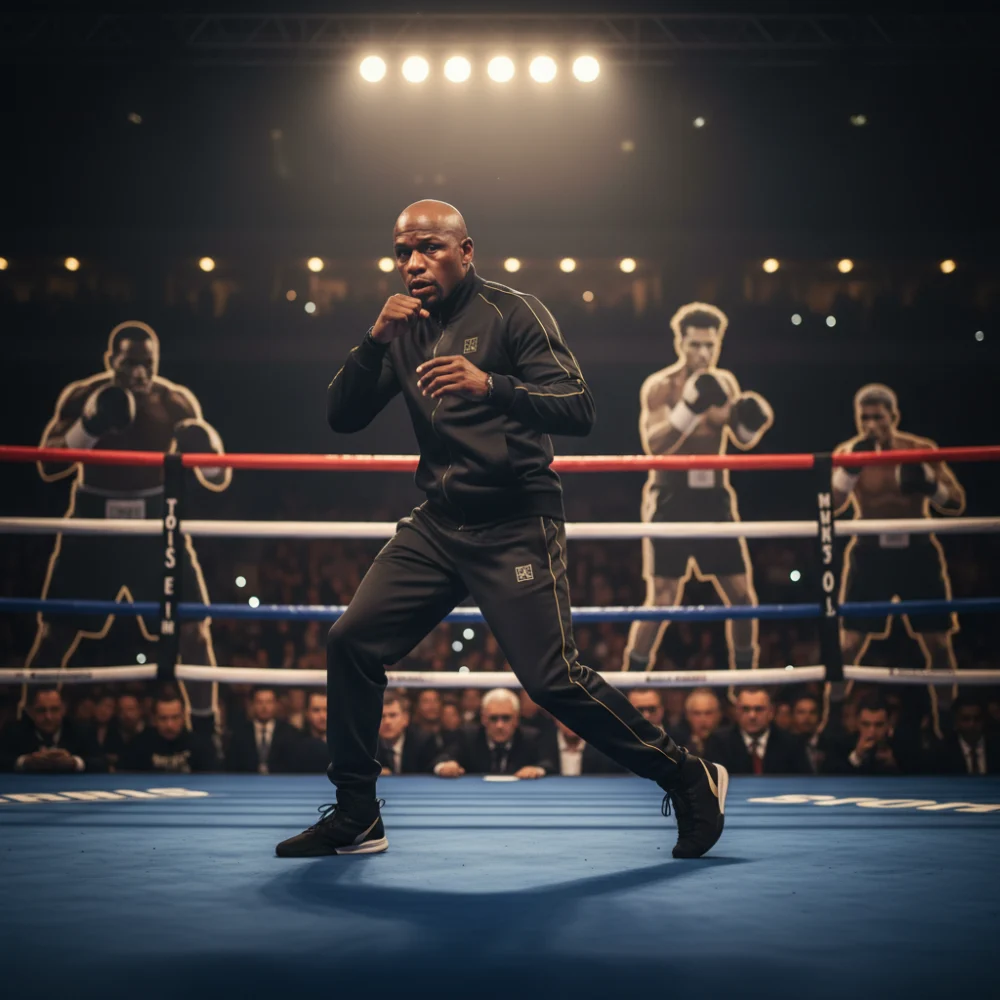
The shoulder roll is the cornerstone of Mayweather’s defensive architecture. Unlike the traditional high guard, which blocks vision and leaves the body exposed, the shoulder roll allows for a full field of view while protecting the vitals. When an opponent throws a right hand, Mayweather would simply rotate his left shoulder to deflect the blow, causing the punch to slide harmlessly off him.
This deflection did more than just stop a punch; it loaded Mayweather’s return fire. The torque generated from rolling with the punch placed him in the perfect position to launch a counter right hand or a check hook. This turned his defense into his most dangerous offense. Opponents became hesitant to throw, knowing that a missed strike would almost certainly result in a stinging counter.
Furthermore, this stance made him an elusive target. By blading his body, he reduced the surface area available for his opponents to hit. He wasn’t just blocking punches; he was making himself disappear. This frustration often led opponents to overcommit, throwing wild shots that Mayweather would easily slip, duck, or pivot away from.
Mastery of Distance and Range
While the shoulder roll gets the most attention, Mayweather’s feet were arguably his most important defensive asset. His understanding of range was mathematical. He stood exactly one inch outside his opponent’s reach, forcing them to step in to land. When they did, he was already gone, or he had intercepted them with a stiff jab to the body.
This control of distance allowed him to dictate the pace of the fight. Against aggressive pressure fighters like Ricky Hatton or Marcos Maidana, Mayweather used subtle pivots and lateral movement to neutralize their forward momentum. He didn’t run; he circled, turning the ring into a trap where his opponents constantly found themselves hitting air or ropes.
His ability to manage the "pocket" was uncanny. Many defensive fighters retreat when under fire, but Mayweather was comfortable staying in the pocket, using head movement and parries to deflect shots at close range. This presence allowed him to break the spirit of his opponents, showing them that they couldn’t hit him even when he was standing right in front of them.
The Mental Aspect of Defense
Defensive greatness is as much mental as it is physical. Mayweather possessed a boxing IQ that is rivaled by few. He was a master at downloading data in the early rounds. He would often sacrifice the first few rounds of a fight to study his opponent’s rhythm, feints, and tendencies. Once he cracked the code, the adjustment was permanent.
Take the fight against Saul "Canelo" Alvarez as a prime example. Facing a younger, stronger, and faster opponent, Mayweather dismantled Canelo mentally. He anticipated every combination Canelo threw, often smiling or shaking his head after making the Mexican superstar miss. This psychological warfare exhausted opponents faster than body shots ever could.
Legacy of Self-Preservation
Critics often labeled Mayweather’s style as "boring" or "safety-first," but this criticism overlooks the fundamental objective of the sport: longevity. By prioritizing defense, Mayweather retired with his faculties fully intact, a rarity in a sport known for its tragic post-career tales. He proved that you could be the biggest draw in sports without engaging in slugfests that shorten careers.
Today, we see the ripple effect of his style in young champions like Shakur Stevenson, Gervonta Davis, and Devin Haney. The "hit and don’t get hit" mantra has become the gold standard for aspiring boxers who view longevity and health as the ultimate prize alongside the belts.
In conclusion, Floyd Mayweather Jr. didn’t just win 50 fights; he reinvented the perception of defensive boxing. He transformed defense from a passive necessity into an aggressive art form. His legacy teaches us that in the brutal theater of combat sports, the greatest victory is not just defeating the opponent, but mastering the science of self-preservation.