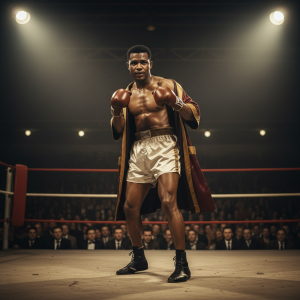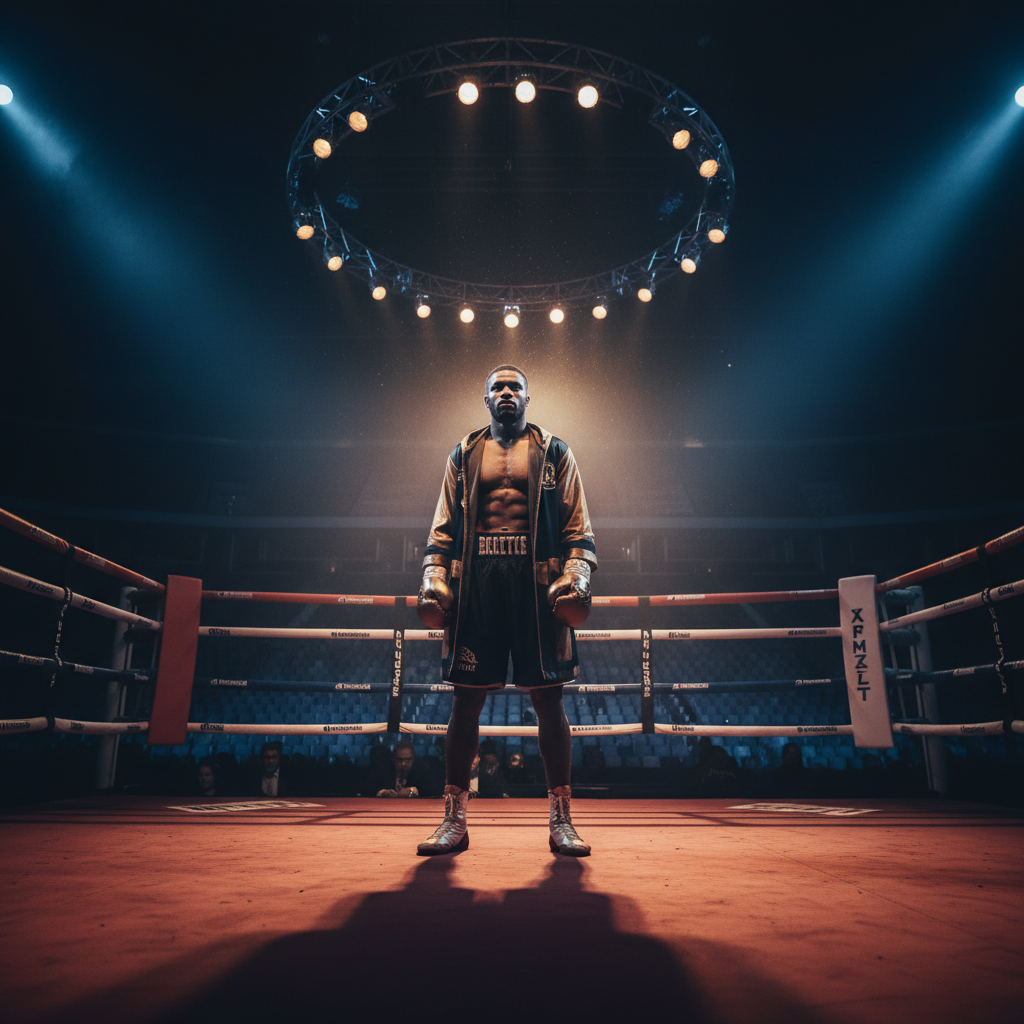

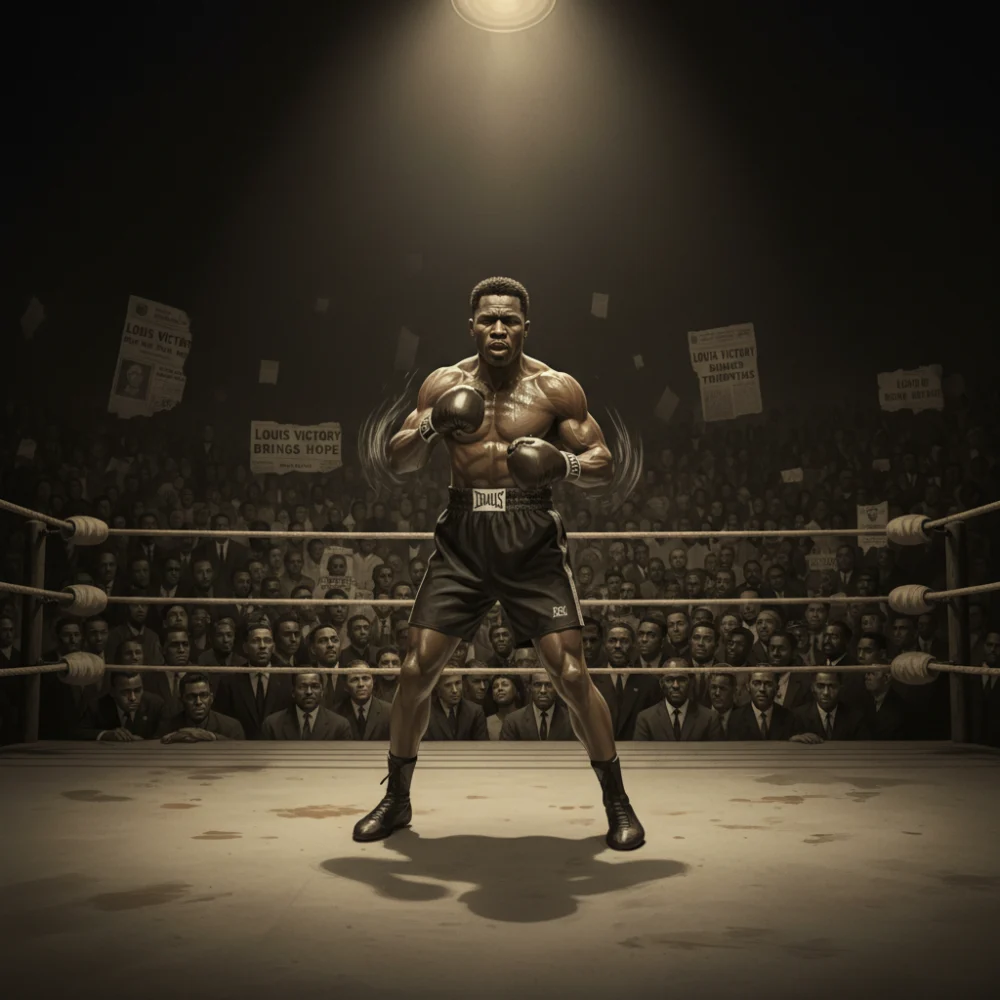
In the annals of sports history, few figures have shouldered the weight of a nation quite like Joe Louis. Rising from the red clay of Alabama to the bright lights of Yankee Stadium, Louis arrived on the scene when the United States was crippled by the Great Depression and the world was teetering on the brink of a second global conflict. He was not merely a heavyweight champion; he was a cultural phenomenon who carried the hopes of Black America on his back while simultaneously becoming the first African American athlete to be widely embraced by white America.
To understand the magnitude of Louis’s impact, one must first understand the era in which he fought. The 1930s were a time of profound economic despair and rigid racial segregation. Boxing, while popular, was still shadowed by the controversial legacy of Jack Johnson, whose reign decades earlier had sparked race riots. The boxing establishment was hesitant to crown another Black heavyweight champion. However, Joe Louis, with his stoic demeanor and devastating punching power, forced the world to pay attention, offering a distraction from the breadlines and a glimmer of excellence amidst national poverty.
The Rise of the Brown Bomber
Born Joseph Louis Barrow in 1914, the seventh of eight children in a sharecropping family, Louis moved to Detroit as a teenager. It was there, in the amateur circuit, that he honed the skills that would earn him the nickname The Brown Bomber. His style was economical yet brutal; he wasted no movement, stalking opponents with a shuffling gait before unleashing combinations of terrifying speed and power. By the time he turned professional in 1934, the buzz surrounding him was palpable.
His management team, mindful of the racism of the era, carefully curated his public image. Unlike the brash and outspoken Jack Johnson, Louis was instructed to be humble, to never gloat over a fallen opponent, and to live a clean life. This strategy, while restrictive, allowed him to navigate the treacherous waters of Jim Crow America. He knocked out opponent after opponent, clearing out the division and setting his sights on the title. However, his journey would hit a significant roadblock that would ultimately define his career.
The Schmeling Rivalry: Democracy vs. Fascism
The defining moment of Joe Louis’s career—and perhaps of 20th-century sports—was his rivalry with German heavyweight Max Schmeling. In their first encounter in 1936, Schmeling studied Louis’s flaws and delivered a shocking upset, knocking Louis out in the 12th round. For Nazi Germany, this victory was propaganda gold. Adolf Hitler and his regime used Schmeling’s win as ‘proof’ of Aryan supremacy, casting Louis as a symbol of an inferior race.
The loss was devastating for Louis and Black Americans, who saw their champion fall to a representative of a regime that espoused hatred. However, the stage was set for a rematch in 1938 that carried geopolitical stakes unlike any sporting event before or since. By this time, Louis had won the Heavyweight Championship, but he stated he would not feel like a true champion until he defeated Schmeling. The atmosphere was electric; the fight was framed not just as man against man, but as Democracy against Fascism.
On June 22, 1938, over 70,000 fans packed Yankee Stadium, and millions more huddled around radios across the globe. President Franklin D. Roosevelt had invited Louis to the White House prior to the bout, famously telling him, "Joe, we need muscles like yours to beat Germany." When the bell rang, Louis attacked with a ferocity that stunned the world. He demolished Schmeling, scoring a technical knockout in just two minutes and four seconds of the first round.
The victory sparked spontaneous celebrations throughout the United States. For one night, racial barriers were temporarily breached as Americans of all colors celebrated the triumph of their countryman over the symbol of Nazi aggression. Journalist Jimmy Cannon famously noted that Louis was "a credit to his race—the human race." This fight solidified Louis not just as a boxer, but as a national hero.
The Bum of the Month Club
Following the Schmeling victory, Louis embarked on a period of dominance that remains unmatched in heavyweight history. He defended his title with such frequency and efficiency that his run became known as the "Bum of the Month" club. While the nickname suggests his opponents were unworthy, the reality was that Louis was simply head and shoulders above a talented crop of contenders. He fought 13 times between January 1939 and May 1941, a schedule that is unfathomable for modern champions.
- Frequency: Louis defended his title 25 consecutive times, a record that still stands.
- Power: Of his 25 defenses, 21 ended by knockout.
- Longevity: He held the title for 11 years and 8 months.
This era of activity kept boxing alive and relevant during the slow drag of the late Depression years. Louis was the reliable titan, the sure thing in an unsure world. His fights were major cultural events, gathering communities around the radio, providing a shared narrative for a fragmented country.
Service and Sacrifice in World War II
When the United States entered World War II, Joe Louis did not seek an exemption. Instead, he enlisted in the Army. Unlike many other athletes who were given comfortable roles, Louis used his platform to boost morale and aid the war effort financially. He famously donated the purses from two of his title fights to the Army and Navy relief funds, a massive financial sacrifice that would haunt his later years due to tax complications.
During his service, Louis was a member of a segregated unit, yet he became a potent symbol of American unity. He traveled more than 20,000 miles staging exhibition bouts for troops. His famous quote, "We will win because we’re on God’s side," became a rallying cry for the war effort. Furthermore, Louis quietly used his influence to advocate for the better treatment of Black soldiers, often refusing to perform before segregated audiences on military bases, thereby chipping away at institutional racism within the armed forces.
A Legacy Beyond the Ring
Joe Louis’s career effectively bridged the gap between the segregated era of Jack Johnson and the civil rights era of Muhammad Ali. He made it possible for Black athletes to be seen as American heroes. While he did not possess the vocal militancy of Ali, his quiet dignity and undeniable excellence forced a re-evaluation of racial stereotypes in the American consciousness. He opened the door for Jackie Robinson, who would break the color barrier in baseball just a few years after the war.
Although his later years were marred by financial struggles and health issues, the debt America owed to Joe Louis could never be fully repaid. He had carried the heavyweight division—and in many ways, the American spirit—through its darkest hours. He proved that a Black man could represent the ideals of freedom and democracy on the world stage, changing the social fabric of the nation with his fists.
Today, Joe Louis is remembered not just for his 66 wins and devastating right hand, but for his character. In a time of global darkness, he was a beacon of light. His story serves as a reminder of the power of sports to transcend boundaries and the capacity of a single individual to lift the morale of a nation.